
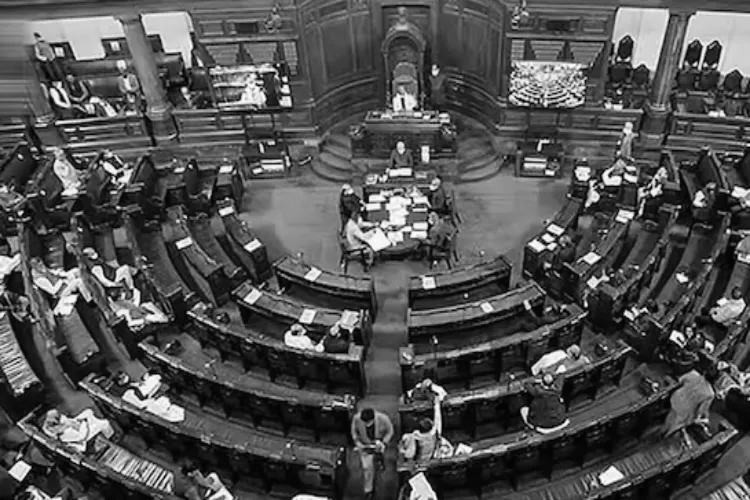
Four-year vacancy ends: J&K Rajya Sabha elections on October 24
Nearly four years after its Rajya Sabha seats fell vacant, Jammu and Kashmir is finally poised to regain representation in the Upper House. The Election Commission of India (ECI) has announced that biennial elections,regular elections held every two years to fill seats whose terms are expiring, for the four vacant seats will be held on October 24, 2025. On the same day, a Rajya Sabha bypoll in Punjab will take place following AAP member Sanjeev Arora’s resignation after his election to the Punjab Assembly.
The prolonged absence of representation in J&K stems from the 2019 bifurcation of the erstwhile state into two union territories: Jammu & Kashmir (with legislature) and Ladakh (without legislature). Rajya Sabha members are elected by MLAs, and with no assembly in place for several years, the territory lacked the necessary electoral college. The terms of the previous members,Ghulam Nabi Azad, Nazir Ahmed Laway, Fayaz Ahmed Mir, and Shamsheer Singh Manhas,ended in February 2021.
The NDA government has not yet fulfilled its repeated promise of restoring full statehood for Jammu and Kashmir, leaving the union territory in political limbo for more than six years. Delays in forming the legislative assembly, under the central government’s administration, prolonged the absence of representation in Parliament and prevented the territory from having a voice in critical policy and development decisions.
Why it took four years for elections:
The Rajya Sabha elections in Jammu & Kashmir could not be held immediately after the previous members’ terms ended because the Election Commission requires a functioning legislative assembly to constitute an electoral college. Without MLAs, there was no body to vote for Rajya Sabha candidates. The J&K assembly was only constituted recently, allowing the ECI to schedule the biennial elections now. Additionally, the delimitation exercise in the union territory, which redefined constituencies and adjusted legislative representation, played a role in delaying the full operationalization of the assembly, making it legally and practically necessary to wait before holding the elections. This combination of factors explains the four-year gap.
The consequences of this vacancy were tangible. For almost four years, J&K had limited influence over national debates, policy formulation, and allocation of funding crucial for its development. Infrastructure projects, social programs, and other regional priorities lacked direct advocacy in Parliament. Restoring representation through the upcoming elections will allow MLAs to elect members who can articulate the union territory’s priorities and hold the government accountable.
Political analysts predict a highly competitive contest, with parties leveraging their strength in the legislative assembly to maximize influence in the Rajya Sabha. In Punjab, Sanjeev Arora’s resignation highlights AAP’s strategic focus on consolidating power at the state level, reflecting the careful balance of national and regional priorities.
Polling will take place on October 24, with counting scheduled in the evening, one hour after voting concludes. Beyond restoring J&K’s voice in Parliament, these elections serve as a critical reminder of the need for timely administrative action, accountable governance, and the fulfillment of promises such as statehood, ensuring that democratic representation is upheld even in exceptional circumstances.