
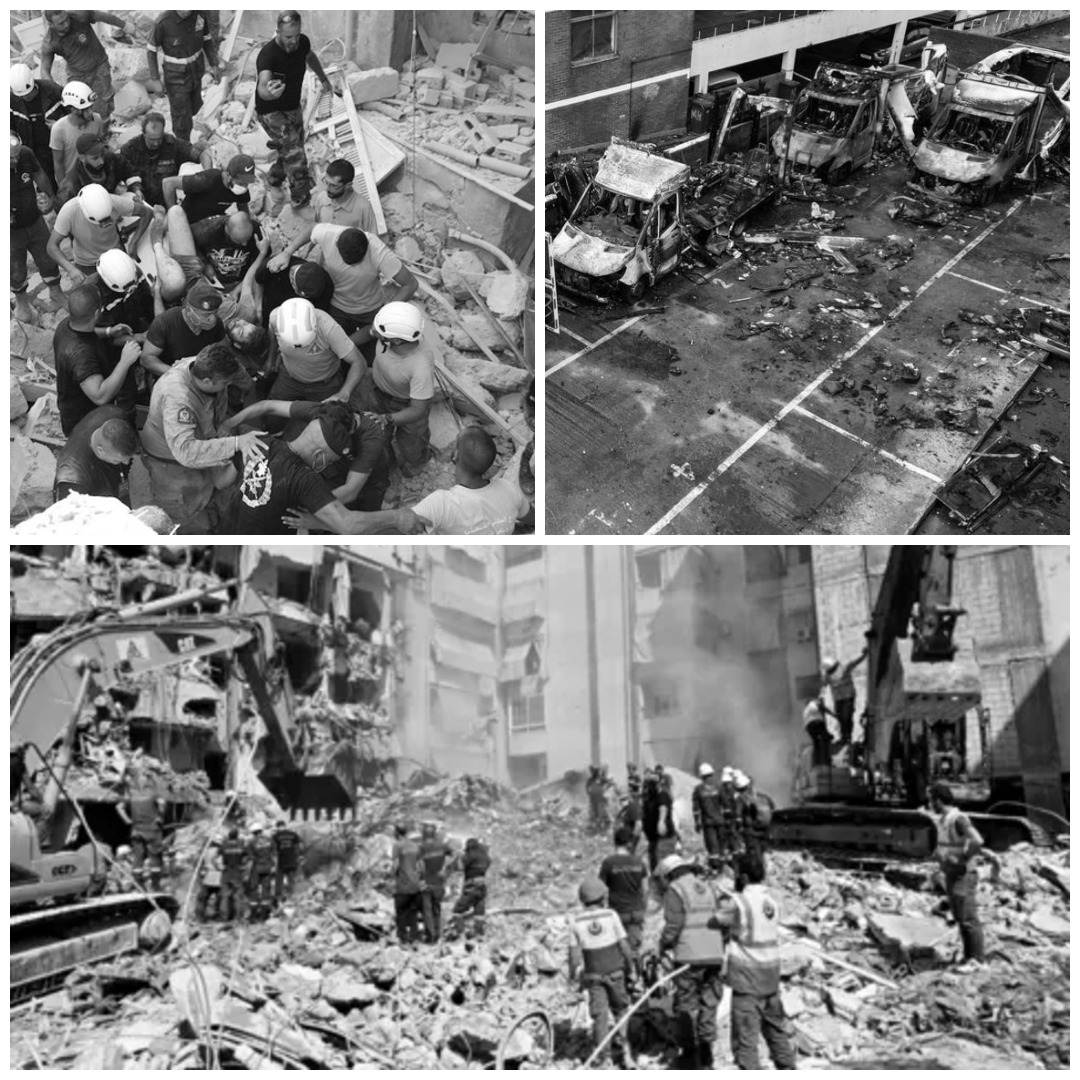
Four Ambulances Set on Fire Near London Jewish Centre Gets Wider Global Coverage Than 1,000 Killed in Lebanon Strikes
The burning of four ambulances belonging to a Jewish volunteer emergency service in London has triggered relentless global coverage across Western media. Networks such as CNN, BBC, The New York Times, and MSNBC carried the story prominently, with live segments, political reactions, and extensive discussion panels. The incident was framed as a suspected antisemitic attack, drawing strong condemnation and sustained attention.
There is no dispute that the attack is serious and deserves coverage. It is a targeted act. It is news.
But what followed reveals a deeper imbalance in how stories are told.
Over the same period, more than 1,000 people have been killed in Lebanon in strikes linked to the expanding Israel–Iran conflict escalation 2026. Entire neighbourhoods have been destroyed. Civilians have died in large numbers. Families have been displaced or erased.
These deaths have been reported by the same outlets, including CNN, BBC, The New York Times, and MSNBC, but in a markedly different manner. The coverage is episodic, often tied to broader developments, and the casualties are presented as aggregated figures. The reporting shifts quickly from human loss to military movements, strategy, and regional implications.
In London, four vehicles become a story of identity, fear, and community trauma, told through eyewitness accounts, visuals, and continuous updates. In Lebanon, a thousand deaths are reduced to numbers, appearing in brief reports that struggle to hold attention beyond the immediate news cycle.
This is not a question of whether Lebanon is covered. It is a question of how it is covered.
Western media often gives depth, voice, and sustained focus to events that resonate more closely with its audiences. Meanwhile, large scale civilian casualties in conflict zones are framed within geopolitics, stripped of individual narratives, and quickly absorbed into a broader storyline.
The result is a visible asymmetry. Some tragedies are told as stories with faces and voices. Others are reduced to statistics without identity.
Four ambulances burned is a tragedy.
One thousand lives lost is a catastrophe.
If journalism is meant to bear witness, then the measure of that witness cannot depend on geography or familiarity. When coverage assigns emotion to one event and abstraction to another, it shapes not just what the world sees, but how much it is allowed to feel.