
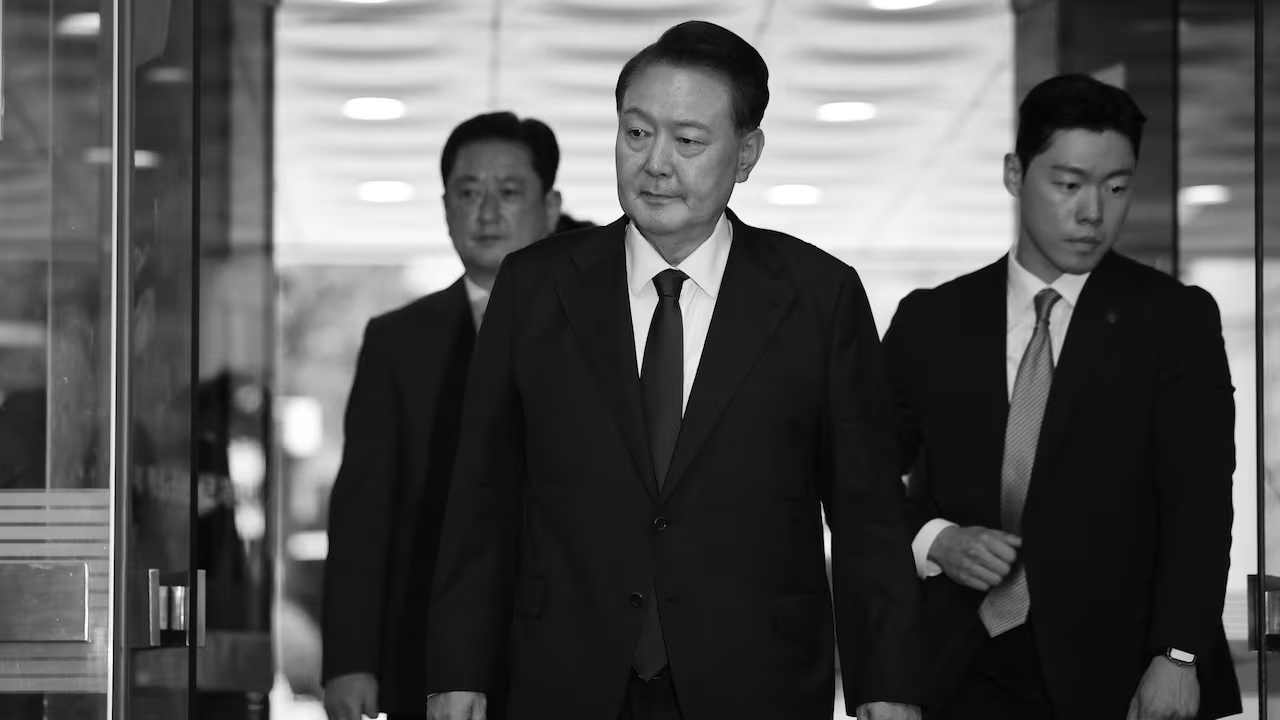
Former SK President Yoon Suk Yeol found guilty in Martial law case, life sentence expected
Former South Korean President Yoon Suk Yeol was convicted of rebellion on Thursday for his brief but unprecedented imposition of martial law in December 2024, a move the court said amounted to an illegal attempt to seize control of the government.
The Seoul Central District Court ruled that Yoon mobilised military and police forces to block and overpower the liberal-led National Assembly, with plans to arrest political opponents and establish unchecked authority for a “considerable” period of time.
Presiding judge Jee Kui-youn said the actions constituted rebellion under South Korean law because they directly challenged constitutional order and democratic institutions.
The verdict marks the final chapter in a case that shook the country’s politics and led to Yoon’s impeachment and removal from office earlier this year. His martial law decree lasted only about six hours before lawmakers broke through a military cordon and unanimously voted to overturn it.
A special prosecutor had sought the death penalty , arguing that Yoon’s actions posed a grave threat to democracy and amounted to an attempted coup . However, the court declined to impose capital punishment, instead handing down a life sentence.
Legal analysts said the decision reflected the limited impact of the failed power grab. While Yoon’s move was deemed illegal and dangerous, it did not result in civilian deaths or prolonged military rule. South Korea has also not carried out an execution since 1997, maintaining what is widely viewed as a de facto moratorium on the death penalty.
Several former military and police officials involved in enforcing the martial law order were also convicted and received lengthy prison terms for their roles in planning and executing the operation.
Yoon has consistently defended his actions, claiming the decree was necessary to counter what he described as “anti-state” forces in the opposition-dominated parliament. He is expected to appeal the ruling.
The case stands as one of the most dramatic episodes in South Korea’s modern political history, underscoring the judiciary’s stance against any attempt to use force to undermine democratic governance.