
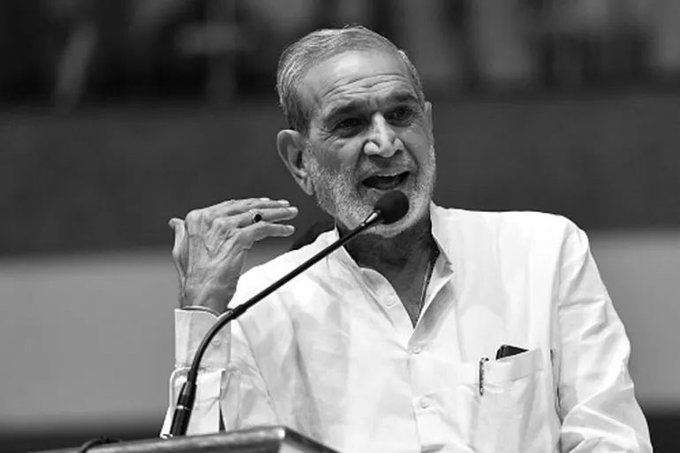
Former Congress MP Sajjan Kumar, Serving Life For 1984 Anti-Sikh Riots, Dies At 80
Former Congress MP Sajjan Kumar, who was serving two life sentences in cases linked to the 1984 anti-Sikh riots, died in New Delhi on Thursday at the age of 80.
Kumar was brought from Tihar Jail to Safdarjung Hospital around 11 am after his condition deteriorated. The hospital said he was admitted with an altered state of consciousness and doctors immediately began resuscitation and life-support measures. Despite their efforts, he died at 12:30 pm.
According to the hospital, Kumar had a history of high blood pressure and Parkinson’s disease and had been admitted to hospital several times in the past. He is survived by his wife, two daughters and a son. His cremation is scheduled for Friday.
Kumar’s death came on the day the Supreme Court was scheduled to hear his plea seeking three weeks of medical parole to visit his ailing wife. The matter, however, did not come up for hearing.
Kumar began his political career as a municipal councillor from Nangloi and later became general secretary of the Delhi Pradesh Congress Committee. He was elected to the Lok Sabha three times, in 1980, 1991 and 2004.
His political career was eventually overshadowed by the cases arising from the 1984 violence. On December 17, 2018, the Delhi High Court sentenced him to life imprisonment for his role in a case involving the killing of five Sikhs and the burning of a gurdwara. He resigned from the Congress after his conviction.
In February 2025, a Delhi court handed him another life sentence for the killings of two Sikh men during the riots.
The violence erupted after then Prime Minister Indira Gandhi was assassinated by her Sikh bodyguards on October 31, 1984. Delhi was among the worst affected areas, with thousands of people killed across the country.
The Nanavati Commission recorded 587 FIRs in Delhi, but only 28 resulted in convictions, underscoring the long and contentious pursuit of justice after the violence.
Kumar’s death closes a significant chapter in one of the most painful and politically charged episodes of independent India’s history.