
Ford makes EV U-turn, writes off nearly $19.5 billion
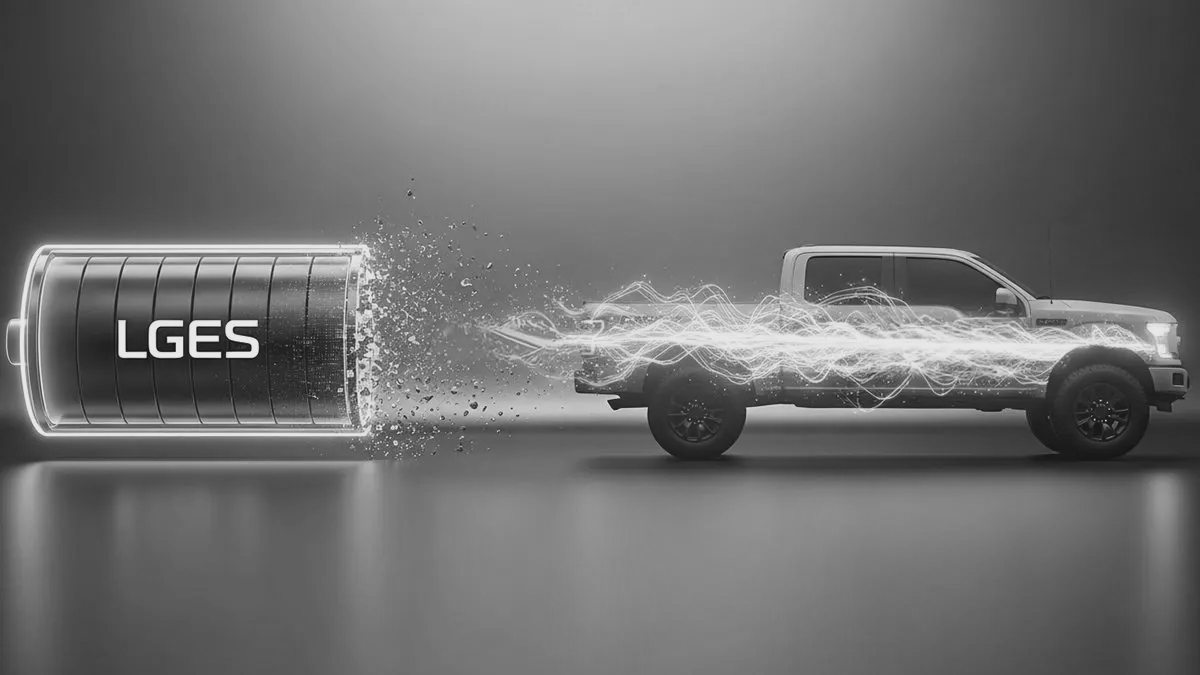
South Korean battery maker LG Energy Solution Ltd . on Wednesday announced the cancellation of a major battery supply agreement with Ford Motor Co ., after the US automaker formally withdrew from the contract as part of its retreat from large-scale electric vehicle production.
Ford said on Monday it would take a $19.5 billion writedown and scrap several electric vehicle models , marking one of the clearest signs yet of the auto industry’s retreat from battery-powered cars amid policy changes under the Trump administration and weakening EV demand.
Ford’s standout EV models posted strong sales and outsold several legacy EV rivals in key markets, however, as incentives faded and demand weakened , the sales declined and future outlooks now point towards reduced market and a strategic shift back to hybrids and conventional vehicles.
Policy shifts under the Trump administration have materially altered the economics of electric vehicles in the United States. Federal support measures that had encouraged EV adoption including the longstanding $7,500 consumer tax credit for EV purchases were ended after the credit’s expiry in late 2025, removing a key incentive that had helped make EVs more affordable for buyers. In addition, deregulation of emissions and fuel-efficiency standards reduced mandates for automakers to prioritise zero-emission vehicles, further weakening the policy case for heavy investment in battery-only models. These legislative changes have been cited by industry observers as central to the retrenchment in EV strategies by major automakers, including Ford.
Weakening consumer demand has also played a major role in Ford’s EV retreat. Sales of battery-electric vehicles declined sharply in the United States after the removal of subsidies, with U.S. EV volumes dropping about 40% in November 2025 compared with previous levels, reflecting reduced consumer willingness to pay premium prices without incentives. Ford’s own EV business has posted substantial losses, contributing to its decision to take a $19.5 billion writedown and cancel several fully electric models , including shelving the F-150 Lightning in its current form and abandoning planned electric vans and trucks. The shift in buyer preferences toward more affordable hybrids and extended-range vehicles rather than expensive large battery-only EVs has become an important factor in reshaping the company’s product strategy.
Several legacy automakers beyond Ford are now recalibrating or rolling back their EV ambitions in response to weakening demand, policy reversals and profitability challenges. General Motors has cut EV production forecasts and shifted some assembly capacity back to ICE vehicles, while Renault is scaling back EV charging infrastructure and low-profit EV initiatives to prioritise profitability. European carmakers like Porsche and others have delayed or reduced electrification targets, reflecting broader industry uncertainty over the pace of EV adoption.
Electric vehicles are widely seen as a key solution to urban air pollution and rising emissions, especially in congested cities struggling with deteriorating air quality. However, industry executives and policymakers say strong and sustained government support remains crucial for EV adoption, with incentives, charging infrastructure and clear policy direction playing a decisive role in driving penetration and scaling the technology across urban transport systems.