
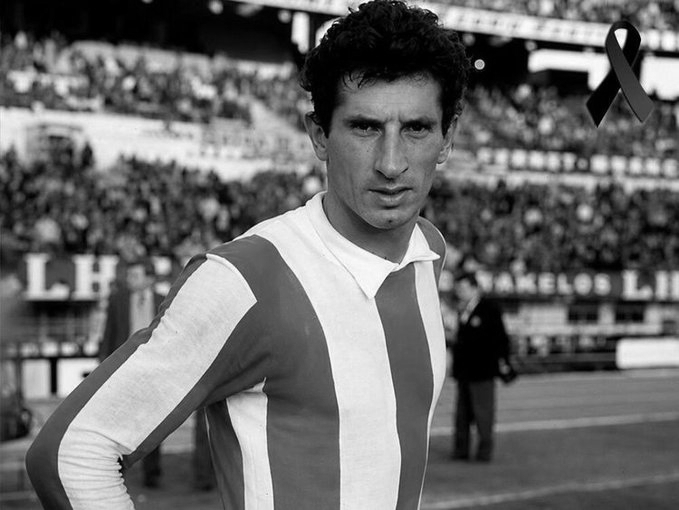
Football Legend Antonio Rattín Dies at 89, The Man Behind the Yellow and Red Card Revolution
Argentine football legend Antonio Ubaldo Rattín , a towering figure for Boca Juniors and the Argentina national team , has died at the age of 89 . Remembered as one of the greatest midfielders in Argentine football history, Rattín also became a central figure in an incident that ultimately inspired the introduction of football’s yellow and red card system .
A commanding defensive midfielder known for his leadership, toughness and tactical intelligence, Rattín spent his entire professional career with Boca Juniors from 1956 to 1970 . During those 14 remarkable years, he made hundreds of appearances, won multiple Argentine league titles and helped the club reach the 1963 Copa Libertadores final , earning a place among Boca’s all-time legends.
Rattín represented Argentina throughout the 1960s and played in both the 1962 FIFA World Cup and the 1966 FIFA World Cup , captaining the team in England. His most famous moment came in the 1966 World Cup quarterfinal against England at Wembley Stadium . After being sent off by German referee Rudolf Kreitlein for dissent, Rattín refused to leave the field immediately, claiming he had not understood the referee. The dramatic protest, which included sitting on a carpet reserved for the British royal family and crumpling a corner flag, became one of the tournament’s most controversial scenes.
The confusion surrounding the incident exposed the difficulties referees faced when communicating with players from different countries. FIFA official Ken Aston later developed the now-famous yellow and red cards , inspired by traffic lights, and the system was officially introduced at the 1970 FIFA World Cup .
After retiring as a player, Rattín briefly coached Boca Juniors and later served in Argentina’s Congress. Yet he remained most proud of the two shirts he wore throughout his life — Boca Juniors and Argentina . His passing marks the end of an era, but his influence on the game will continue to be seen every time a referee reaches for a yellow or red card.