
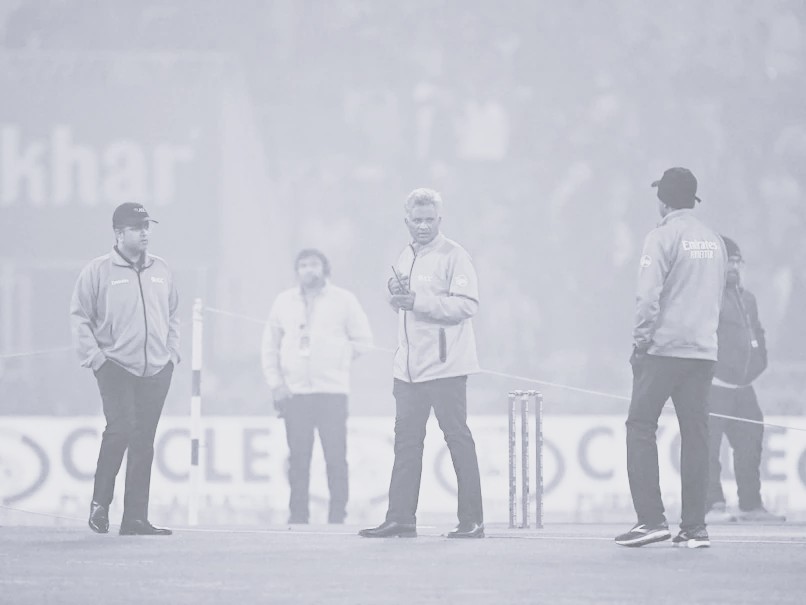
Fog or smog? What really forced the abandonment of the 4th T20I
What was officially described as “excessive fog” was, in reality, a dangerous blanket of smog as the fourth T20 International between India and South Africa was abandoned without a ball being bowled on Wednesday, raising fresh questions about the BCCI’s scheduling of matches in north India during peak winter months.
A thick layer of pollution engulfed the Ekana Stadium, forcing umpires to delay the toss and conduct multiple inspections before calling off the match at 9:30 pm, more than two hours after the scheduled start. Visibility steadily worsened as the evening progressed, leaving officials with little choice but to abandon the game.
The Air Quality Index (AQI) in Lucknow remained above 400 throughout the day, placing it in the ‘hazardous’ category and intensifying concerns over player health and safety. India all-rounder Hardik Pandya was seen wearing a surgical mask during warm-ups, underlining the severity of the conditions.
Players from both teams began warming up ahead of the 7 pm start but returned to their dressing rooms by 7:30 pm as visibility failed to improve. By 9 pm, spectators who had braved the cold conditions also started leaving the stadium as the likelihood of play diminished.
The washout has once again brought the BCCI’s venue selection policy under scrutiny. The home series against South Africa was scheduled across several northern and central cities, including New Chandigarh, Dharamsala and Lucknow, a period when pollution and cold weather routinely disrupted outdoor sport.
Although the BCCI follows a rotational policy while allotting venues, critics argue that greater flexibility was needed. Swapping some fixtures with the upcoming white-ball series against New Zealand, which will largely be played in western and southern India from January 11, could have helped avoid such disruptions.
BCCI vice-president Rajeev Shukla was seen walking onto the field during one of the inspections. His disappointment was evident after discussions with match officials, with the outcome appearing inevitable given the worsening conditions.
With no reserve day scheduled, both teams will now travel to Ahmedabad for the fifth and final T20I on Friday, with India currently leading the five-match series 2–1.
This was not an isolated incident. Earlier in the series, the second T20I in New Chandigarh was played under ‘severe’ AQI conditions, while Dharamsala recorded ‘poor’ air quality on the day of the third T20I.
That match in Dharamsala was also played in sub-10-degree temperatures. After the game, India spinner Varun Chakravarthy admitted the cold conditions posed a significant challenge for him. “I’ve never played at a ground this cold, so I did find it quite challenging,” he said.
The repeated weather and pollution-related disruptions have raised questions about the BCCI’s operational planning. Critics believe a closer study of historical air quality and weather data, or even considering afternoon starts during winter, could help ensure safer conditions and avoid disappointing players and ticket-paying fans.