
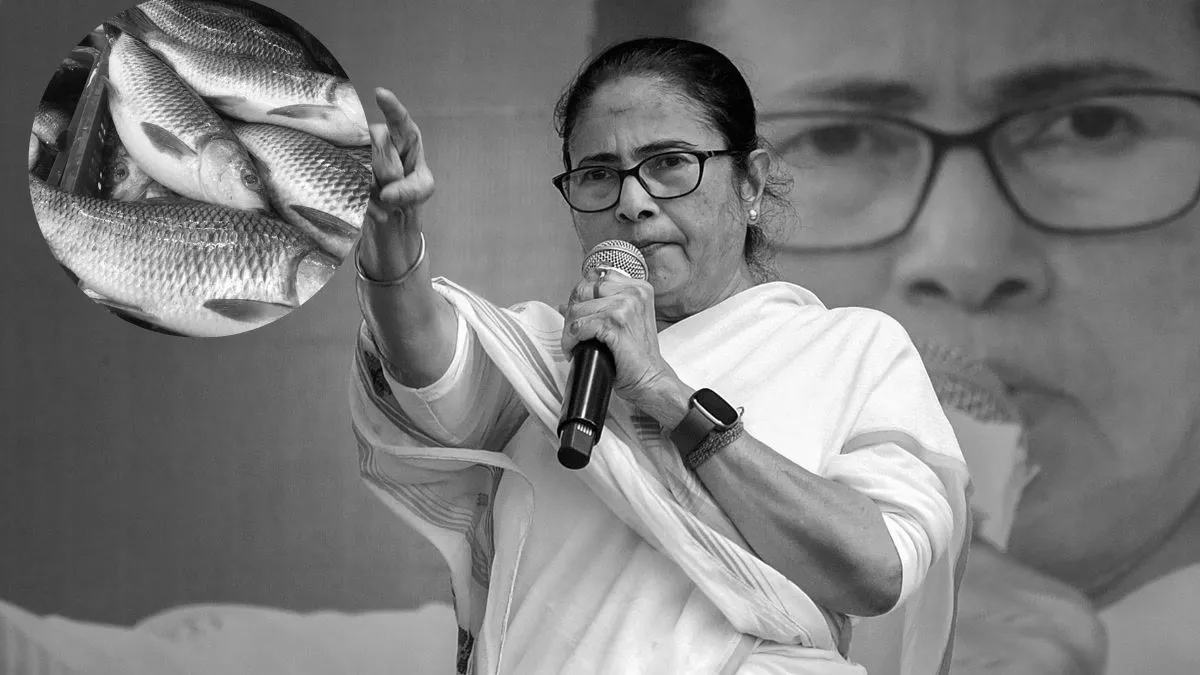
Fish and identity: How Bengal’s favourite meal became its political battlefield
In West Bengal , politics has found a surprising culinary ally. Fish , the state’s beloved staple, has leapt from the dining table straight into the election campaign, becoming a symbol of Bengali identity and a sharp political weapon.
From giant katla displayed at roadshows to ilish, pabda, and chingri making their way into speeches and social media posts, elections are turning food habits into a contest over culture and pride . The old saying “mache bhate Bangali” , a Bengali is defined by fish and rice, has become the unofficial slogan of the season.
The ruling Trinamool Congress (TMC) has woven this sentiment into its campaign, portraying the BJP as culturally alien. Chief Minister Mamata Banerjee linked food, language, and identity in sharp terms, warning, “They will not let you eat fish. You cannot have meat, you cannot have eggs, you cannot speak in Bengali. If you do, they will call you Bangladeshi.”
This strategy allows the TMC to shift the conversation from governance, unemployment, and corruption toward Bengali pride . Social media posts showcase local delicacies like ilish bhapa, pabda jhal, chingri malai curry, and kosha mangsho, often in response to Union Home Minister Amit Shah’s campaign visits.
Analysts note the TMC positions West Bengal as a “Bengali project” , with fish as a key cultural marker . “Fish-eating is more than cuisine, it’s identity,” says Maidul Islam . Suman Bhattacharya adds that BJP leaders carrying fish in campaigns shows how deeply this narrative has taken root.
The BJP , historically associated with vegetarian symbolism , now finds itself defending the non-vegetarian habits of Bengalis . Candidates like Sharadwat Mukherjee and Jitendra Nath Tiwari have paraded with baskets of fish to signal respect for local culinary traditions.
For Bengalis , fish is more than food. It carries memory, ritual, and heritage , from a baby’s first rice ceremony to weddings and mourning rites. A Kolkata-based Indologist notes, “To challenge fish is to challenge Bengal itself.”
In 2026, the humble fish has become the political emblem of identity and culture in West Bengal, where cuisine defines community and every election rally serves a plate of symbolism.