
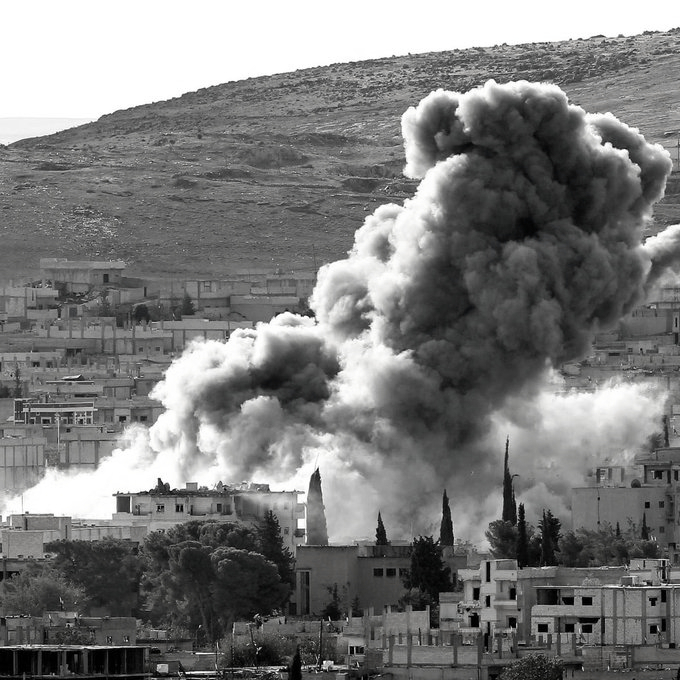
First military action by U.S. forces under the Trump administration: U.S. and Nigeria launch joint strikes on ISIS camps in Sokoto
In the first military action by U.S. forces under the Trump administration, the United States military, in coordination with Nigerian authorities, carried out air and missile strikes against camps linked to an ISIS affiliate in Sokoto State after militants killed civilians, most of them Christians. The operation followed months of warnings by Donald Trump, who said Christians in parts of Nigeria were facing what he described as a “ genocide ,” and came after his administration placed Nigeria on the U.S. list of countries of particular concern, citing violations of religious freedom.
Nigeria is sharply divided along religious and regional lines, with the northern part of the country largely Muslim-majority and the south predominantly Christian . Sokoto, where the strikes were carried out, lies in the far northwest and is considered one of the centres of Islamic authority in Nigeria. Nigerian authorities have repeatedly stressed that armed groups operating in the north target both Muslim and Christian communities, rejecting claims that violence is directed at only one religious group.
Hours before the strikes, Nigerian president Bola Ahmed Tinubu posted a Christmas message on X calling for peace and unity. He said he remained committed to protecting people of all faiths, adding, “I stand committed to doing everything within my power to enshrine religious freedom in Nigeria and to protect Christians, Muslims, and all Nigerians from violence.”
Before the military action, Trump had publicly warned that Washington was prepared to take strong measures if the killings continued, including cutting U.S. aid and reassessing diplomatic and security cooperation. He said the United States would not continue supporting governments that failed to protect religious minorities and made it clear that military action was an option if attacks did not stop.
Trump later announced the strikes on his Truth Social platform, saying they were launched “at my direction as commander in chief” and describing them as “powerful and deadly.” He said the targets were “ISIS terrorist scum” responsible for “viciously killing, primarily, innocent Christians,” adding, “We told them there would be hell to pay, and tonight, there was.” He praised the newly named Department of War under Secretary Pete Hegseth and warned that further action could follow. Trump ended his post with the line, “ Merry Christmas to all, including the dead terrorists, of which there will be many more if their slaughter of Christians continues .”
Video footage released after the announcement showed missiles launching from a U.S. Navy vessel operating in the Gulf of Guinea . Defence officials said the strikes targeted known militant camps used to plan and coordinate attacks, though casualty figures and damage assessments have not been independently verified.
Nigerian authorities confirmed that the operation was conducted jointly and approved by the federal government. Officials said the objective was to disrupt terrorist networks and protect all civilians, regardless of religion or ethnicity. They pointed to previous attacks carried out by extremist groups against Muslim targets as well, including earlier incidents in Borno State, where explosions and suicide bombings have struck mosques and marketplaces.
Boko Haram , which has long operated in northeastern Nigeria, is known for using suicide bombers, including women and children, to spread fear and assert control. The group, along with ISIS-linked factions, has carried out attacks on churches, mosques, schools, and public spaces, fuelling instability across both Muslim- and Christian-majority areas.
The strikes have sparked debate within Nigeria. Some residents and political commentators raised concerns about national sovereignty and foreign military involvement, while others cited unverified reports of possible risks to civilians living near populated areas close to the targeted sites.
The joint action underscores the growing international dimension of Nigeria’s fight against terrorism as violence spreads beyond the northeast into northwestern states such as Sokoto. While U.S. and Nigerian officials maintain that the strikes were precise and necessary, their broader impact on security, inter-religious relations, and public confidence is likely to remain under close scrutiny.