
Fire disrupts COP30 climate talks as UN chief urges deal
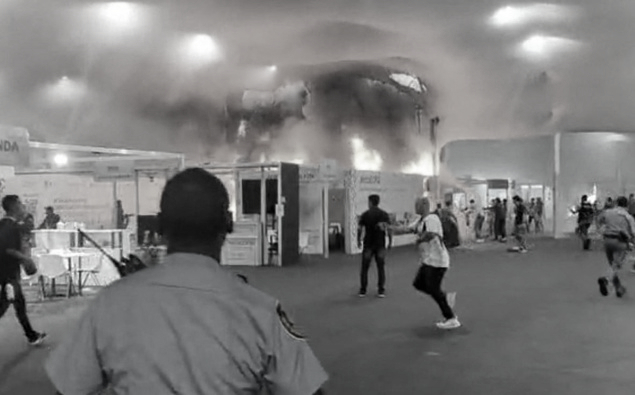
Talks at the COP30 climate summit in Belem, Brazil, were disrupted on Thursday after a fire broke out inside the negotiating venue, forcing the evacuation of thousands of delegates just as countries were intensifying efforts to reach a global climate agreement. United Nations Secretary General Antonio Guterres had earlier urged negotiators to show flexibility and deliver a deal, expressing optimism that compromise remained possible despite sharp divisions.
Security footage showed flames erupting in an exhibition pavilion and spreading rapidly along an internal fabric structure lining the walls and ceiling before being brought under control. Organizers confirmed that thirteen people were treated for smoke inhalation. The local fire service said the blaze was probably caused by electrical equipment, likely a microwave, and added that it was contained within six minutes as security staff formed a human barrier to manage the evacuation.
Negotiations were not expected to resume until Friday morning, although consultations between the Brazilian presidency and negotiating blocs could continue overnight, depending on safety assessments of the venue. There were less than 24 hours remaining until the scheduled close of the summit, which involves nearly 200 countries. Brazil has framed the talks as a vital opportunity to turn years of climate promises made at previous COP summits into concrete action.
Draft deal circulates as deadlines are missed
The summit had already missed a self imposed Wednesday deadline to finalize agreement on key issues, including climate finance and the transition away from fossil fuels. On Thursday, Brazil circulated a draft proposal for part of the COP30 outcome to some governments. The text did not include a roadmap for moving away from fossil fuels, which many countries consider central to tackling climate change.
The draft did, however, propose that countries call for a tripling of financing to help nations adapt to climate change by 2030 compared with 2025 levels. It did not clarify whether this money would come directly from wealthy governments or from other sources such as development banks and the private sector. Brazil’s COP30 presidency did not immediately comment on the draft. Some negotiators said they were working on the text shortly before the evacuation, while others said they had not yet seen it.
It is common practice at COP summits for the host country to negotiate draft agreements with smaller groups of nations before presenting them to the full conference for approval.
Fossil fuel dispute and finance mistrust deepen divides
The two week negotiations have become stalled over two sensitive issues: how and when to move away from fossil fuels, and who will pay for climate action in poorer countries. Dozens of nations, both developed and developing, have backed Brazil’s push for a clear roadmap to transition away from fossil fuels. Several fossil fuel producing countries, however, have resisted such commitments. Although the COP28 summit in 2023 agreed in principle to transition away from fossil fuels, no detailed timetable or method has yet been agreed.
Guterres said he remained convinced that compromise was achievable. At the same time, tensions have grown over climate finance. Some wealthy nations have been reluctant to guarantee funding for adaptation efforts in vulnerable countries. Developing nations have expressed deep mistrust over a 300 billion dollar pledge made at COP29 in Baku, especially as the United States has pulled back from international climate cooperation under President Donald Trump.
Concerns have also been raised over existing climate finance being directed to questionable projects, including those that channel billions of dollars back to rich countries. Steven Victor, Palau’s Minister of Agriculture, Fisheries and the Environment, warned that communities were already losing lives and livelihoods due to stronger storms driven by warmer seas, adding that leaving Belem without a transformative deal on adaptation would amount to failure. European officials said they recognised the importance of adaptation funding but lacked authorization to agree to new financial targets.