
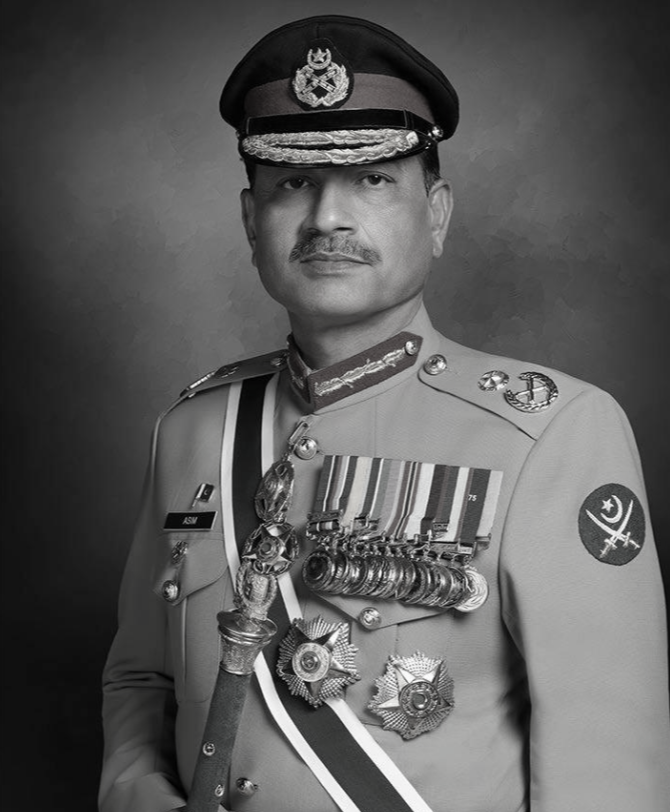
Field Marshal Asim Munir appointed Pakistan’s First Chief of Defence Forces amid civilian constraints
Field Marshal Asim Munir has been formally appointed as Pakistan’s first-ever Chief of Defence Forces (CDF), marking a historic restructuring of the country’s military command. The decision, approved by President Asif Ali Zardari, was recommended by the government led by Prime Minister Shehbaz Sharif.
Munir, who already serves as the Chief of Army Staff (COAS), will now hold consolidated command over Pakistan’s army, navy, and air force. The new role has been created under the 27th Constitutional Amendment, which abolishes the previous Chairman Joint Chiefs of Staff Committee (CJCSC) post, centralizing military leadership under a single head.
The appointment comes with a five-year term and positions Munir as the most powerful uniformed officer in Pakistan’s defence establishment. Analysts note that the restructuring aims to streamline decision-making across all three services but raises concerns about civilian oversight and the concentration of military power.
Field Marshal Munir is only the second officer in Pakistan’s history to hold the five-star rank, following Ayub Khan. His appointment as CDF reflects Islamabad’s intent to modernize and centralize its military command for contemporary defence requirements.
However, the role of Prime Minister Shehbaz Sharif in this process has drawn attention. While Sharif’s government formally recommended Munir for the post, he did not personally sign the official notification, a step performed by the President. Observers suggest this procedural handling may reflect the growing influence of Munir and the military, leaving Sharif with limited authority to assert control over historic defence decisions.
Many analysts note that just as Pakistan’s Presidents historically acted largely as “rubber stamps” for military decisions, the Prime Minister may now occupy a similar position in matters of military appointments. Forwarding the recommendation to the President is legally required, but in practice, civilian leadership appears constrained by the consolidated power of the military, with little room to challenge or modify decisions.
The delay and careful procedural handling of the recommendation underscore the shifting power dynamics in Islamabad. With Munir now wielding unified command over the army, navy, and air force, the civilian government’s role seems increasingly limited to facilitation rather than decision-making. This highlights the recurring pattern of military dominance in Pakistan’s governance, where elected officials operate under the shadow of senior generals.
The appointment of Munir centralizes military authority for operational efficiency and modern strategic requirements. Yet it also starkly illustrates the erosion of civilian control in Pakistan’s defence establishment, raising questions about the balance of power between elected leadership and the military.