
Federal Court Judge in US rules against warrantless immigration detentions
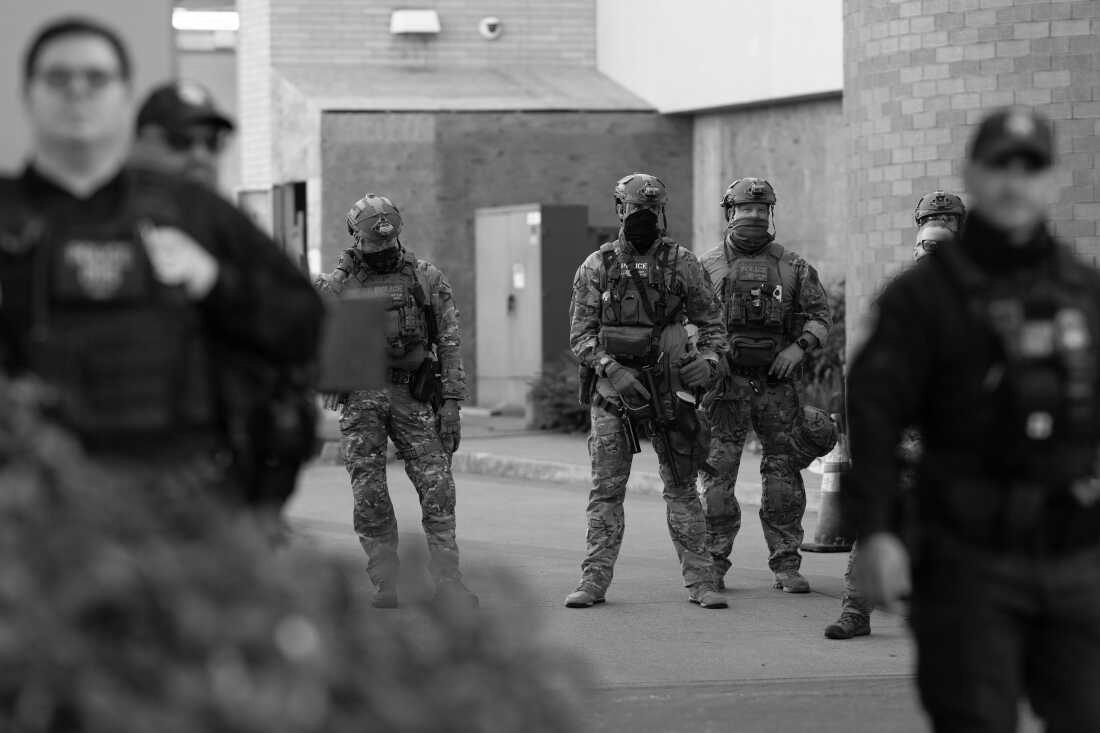
A federal judge in Oregon on Wednesday ordered US immigration agents to stop arresting people without warrants unless there is a clear likelihood that the individual may flee, marking a significant judicial check on aggressive enforcement tactics under President Donald Trump’s mass deportation drive.
US District Judge Mustafa Kasubhai issued a preliminary injunction in a proposed class-action lawsuit challenging the Department of Homeland Security’s practice of arresting immigrants encountered during expanded enforcement operations without judicial authorisation.
The ruling reaffirmed the role of the judiciary as a protector of citizens’ and residents’ rights against executive overreach, stressing that law enforcement power must be exercised with restraint and respect for due process.
“This is how courts are meant to work in favour of constitutional protections, not unchecked executive action,” legal observers said, noting that the decision reinforces judicial oversight over immigration enforcement.
The lawsuit, filed by the nonprofit law firm Innovation Law Lab , alleged that immigration agents in Oregon routinely detained people without court-issued warrants and, in some cases, entered private property without legal authority. Critics described the approach as an “arrest first, justify later” policy.
Judge Kasubhai heard evidence that agents conducted immigration sweeps without determining whether those arrested were likely to escape, despite internal guidance from Immigration and Customs Enforcement (ICE). In a memo issued last week, ICE’s acting director Todd Lyons instructed officers not to arrest individuals without an administrative warrant from a supervisor unless they had probable cause to believe the person would flee.
Testimony in court highlighted individual cases, including that of Victor Cruz Gamez , a 56-year-old grandfather who has lived in the United States since 1999. He told the court he was detained for three weeks in an immigration facility despite holding a valid work permit and having a pending visa application.
In his order, Kasubhai sharply criticised the conduct of immigration agents, describing their actions including drawing firearms during civil immigration detentions as “violent and brutal.” He warned that such practices undermine fundamental legal protections.
“Due process calls for those who have great power to exercise great restraint,” the judge said. “That is the bedrock of a democratic republic founded on this great Constitution. I think we’re losing that.”
Civil rights groups across the country have raised concerns over similar operations, arguing that warrantless arrests and property entries erode constitutional safeguards and disproportionately affect immigrant communities.
The injunction applies to immigration enforcement practices in Oregon while the class-action case proceeds. It represents one of the strongest judicial interventions so far against executive-led immigration crackdowns, underscoring the court’s role as a constitutional counterweight to sweeping enforcement policies.