
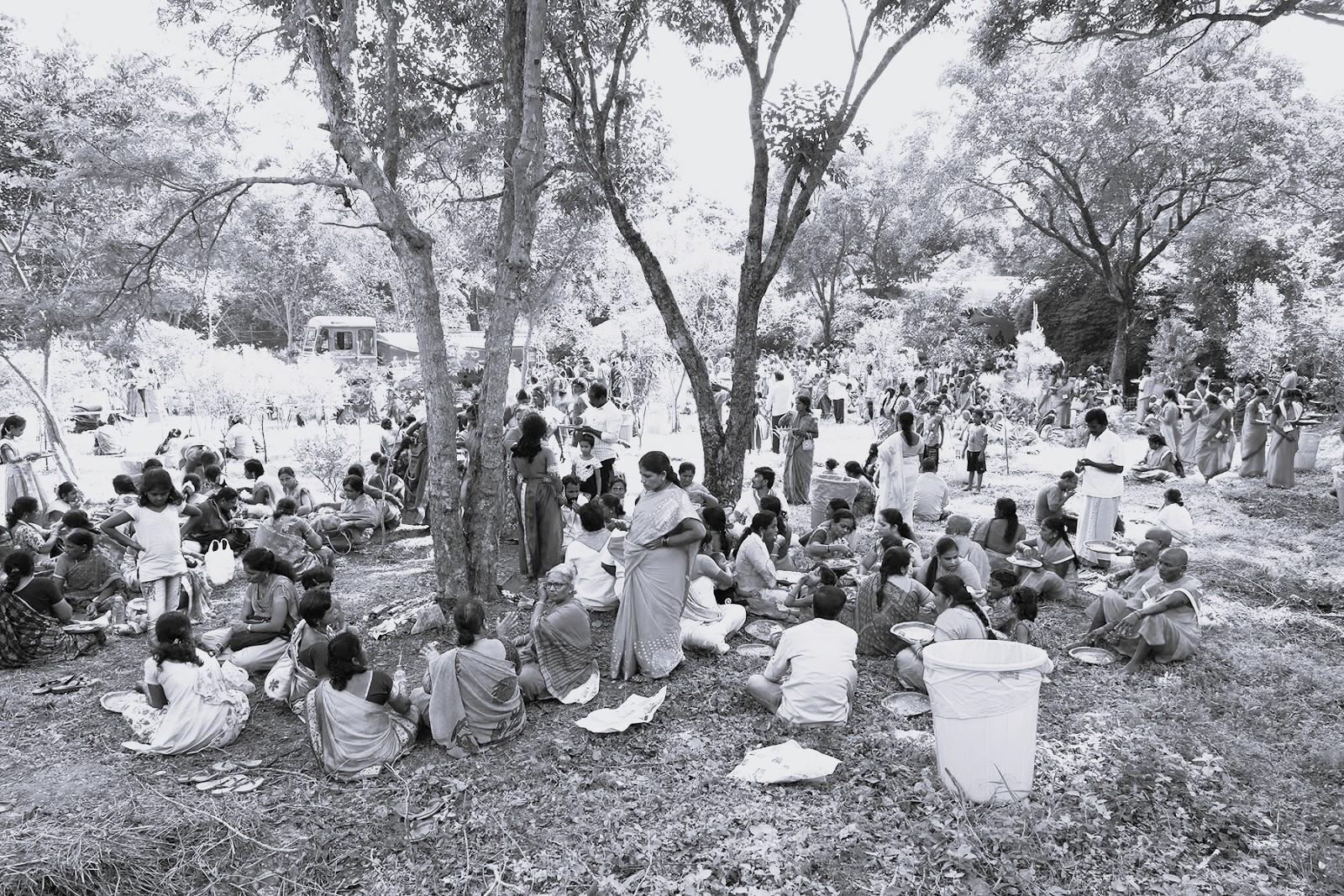
Feasting under the Amla tree - The sacred harmony of Faith, Nature, and Health in Karthika Masam
Karthika Masam - The Month of Light, Faith, and Purity, Among the twelve months of the Hindu lunar calendar, Karthika Masam holds a special sanctity. It arrives right after Diwali, when the glow of lamps still flickers in homes and hearts. This month is considered a bridge between devotion and nature, a time to purify the mind, body, and surroundings.
Rituals like lighting lamps, observing fasts, offering Tulasi pujas, taking holy dips, and performing charity are common throughout this month. Amid these sacred observances lies a unique and deeply symbolic custom Usiri Vanabhojanam, the ritual of having a community meal under the Indian gooseberry tree (Usiri or Amla).
The divine tree - Home of lord vishnu
The Usiri tree (Phyllanthus emblica or Amla) is revered in Indian tradition not just for its medicinal value but for its divine association. According to Hindu scriptures, Lord Vishnu is believed to reside within the Usiri tree.The Skanda Purana mentions that worshipping or even sitting beneath an Usiri tree during Karthika Masam brings immense spiritual merit. On the auspicious day of Karthika Shuddha Dwadashi, families visit groves filled with Usiri trees, offer prayers, and share food together.It is said that having food under the Usiri tree during Karthika Masam is equivalent in merit to performing the great Ashwamedha Yajna.
Spiritual essence - oneness with nature
In ancient Indian philosophy, nature is not separate from divinity. Every tree, river, mountain, and animal is seen as a manifestation of the divine. Feasting under the Usiri tree is, therefore, not merely a social event; it is a spiritual communion with the natural world.
It symbolizes:“Eating in the presence of the Divine, under the shade of Nature’s grace.”
The act of sitting on the earth, under a sacred tree, with family and friends, and partaking in a simple vegetarian meal reflects humility, gratitude, and connection. It’s a reminder that our sustenance comes not from supermarkets, but from Mother Earth herself.
The scientific and Ayurvedic significance
Behind this religious ritual lies a profound scientific rationale. The Usiri (Amla) fruit is one of the most potent natural sources of Vitamin C. Ayurveda calls it a “Divyoushadhi” a divine medicine because it balances all three doshas (Vata, Pitta, Kapha) and strengthens immunity.During Karthika Masam, the season transitions from monsoon to winter. This is when the human body’s resistance tends to weaken.
Eating Amla and spending time near the tree has tangible health benefits:
• It purifies the air by releasing more oxygen,
• The atmosphere beneath the tree is naturally cooler and cleaner,
• Its fruit enhances digestion, vision, and metabolism,
• It builds immunity against cold and seasonal infections.
Thus, a custom that appears purely religious on the surface is, in fact, deeply rooted in environmental science and holistic wellness.
The holy trinity - Tulasi, Vishnu, and Usiri
During Karthika Masam, the Tulasi plant is also worshipped daily, symbolizing purity and devotion. When Tulasi worship is combined with the Usiri tree, it forms a divine trinity Vishnu (the preserver), Tulasi (devotion), and Usiri (health). Devotees offer Tulasi leaves to Vishnu while seated under the Usiri tree.This act represents a sacred synthesis of faith, purity, and healing the three essential pillars of spiritual life.
Usiri Vanabhojanam - A celebration of community
While the ritual has spiritual undertones, it is also a deeply social event. In villages and towns across Andhra Pradesh, Telangana, and parts of South India, people gather in Usiri groves for a day of celebration, the Vanabhojanam or “forest feast.” Families, relatives, and friends come together to cook, eat, sing devotional songs, and enjoy the serenity of nature. Traditional foods like pulihora (tamarind rice), chakkera annam (sweet rice), and curd rice are shared under the shade of the Usiri trees.
This practice fosters:
• family unity,
• intergenerational bonding,
• social harmony, and
• respect for nature.
In essence, it’s an eco-cultural festival that combines religion, recreation, and responsibility.
Inner peace and mental well-being
Sitting under a tree, on the cool earth, away from noise and urban clutter, has an undeniable calming effect on the mind. The gentle rustle of leaves, birds chirping, and the fragrance of nature create an atmosphere of meditation. In that moment, eating becomes not a biological act but a spiritual experience, a form of Prasadam , sanctified by gratitude. Modern psychologists even confirm that eating outdoors in natural settings reduces stress hormones, stabilizes heart rate, and improves digestion.Thus, what our ancestors practiced as “Vanabhojanam” was actually a form of early eco-therapy.
Ecological message - Reverence for nature
The essence of the Usiri Vanabhojanam lies in its environmental message. By venerating a tree, our ancestors created a culture where cutting down trees was unthinkable.By eating under it, they taught generations to view trees as living companions rather than raw resources.In a world facing climate change, deforestation, and pollution, these ancient customs remind us of a timeless truth: “Protecting nature is protecting ourselves.”
When people gather under trees to pray, sing, and eat, they instinctively form a bond with the earth something modern urban life sorely lacks.
Scriptural references
Several Hindu scriptures extol the virtues of this practice:
From the Padma Purana :
“Karthike punyamase cha, usiravanamadhyagah, bhuktva yajnasamam phalam” He who eats beneath the Usiri tree during the holy month of Karthika attains the merit of performing a great sacrifice.
From the Bhavishya Purana :
“Usiravrikshasameepastha bhojanat mokshamapnuyat” Eating near the Usiri tree leads the soul toward liberation.
These lines affirm that the ritual is not merely symbolic, it is a spiritual path to purification and peace.
The ritual in practice
A traditional Usiri Vanabhojanam typically unfolds as follows:
• Families select a grove or a spot with Usiri trees.
• The women prepare food early in the morning — usually vegetarian dishes.
• Upon reaching the grove, devotees light lamps and perform a small Vishnu and Tulasi puja under the tree.
• Prayers are offered, songs are sung, and then everyone sits on the ground in neat rows to share the meal.
• After eating, they circumambulate the tree, offer water to its roots, and take home a few leaves or fruits as blessings.
It’s a ritual that combines worship, wellness, and togetherness — a microcosm of Indian spirituality.
Folk culture and Artistic echoes
In Telugu folk songs and rural poetry, the Usiri Vanam (grove) appears as a recurring image of devotion and joy. Lines such as “Usiri vanamulo bhojanam ayyenu, bhakti paravasam ayyenu” (“Under the Usiri grove I dined, and my heart overflowed with devotion”) echo the deep cultural roots of this practice. It’s a reminder that faith and folklore often walk hand in hand in India’s civilizational journey.
Modern relevance - Reviving Eco-Spiritual traditions
In today’s age of rapid urbanization and digital fatigue, the Usiri Vanabhojanam offers a way back to simplicity, to mindfulness, to community. It encourages families to step out of their concrete homes, switch off their screens, and reconnect with nature.Government and cultural organizations in Andhra Pradesh and Telangana have recently started promoting eco-spiritual festivals inspired by such traditions blending ancient wisdom with modern sustainability goals. The Usiri Vanabhojanam, thus, can serve as a model for eco-conscious celebrations, spiritual yet sustainable.
Conclusion - A sacred feast of Life
To eat under the Usiri tree during Karthika Masam is to experience a sacred dialogue between man, nature, and the divine. It’s a practice that nourishes not only the body but also the spirit reminding us of gratitude, humility, and harmony.