
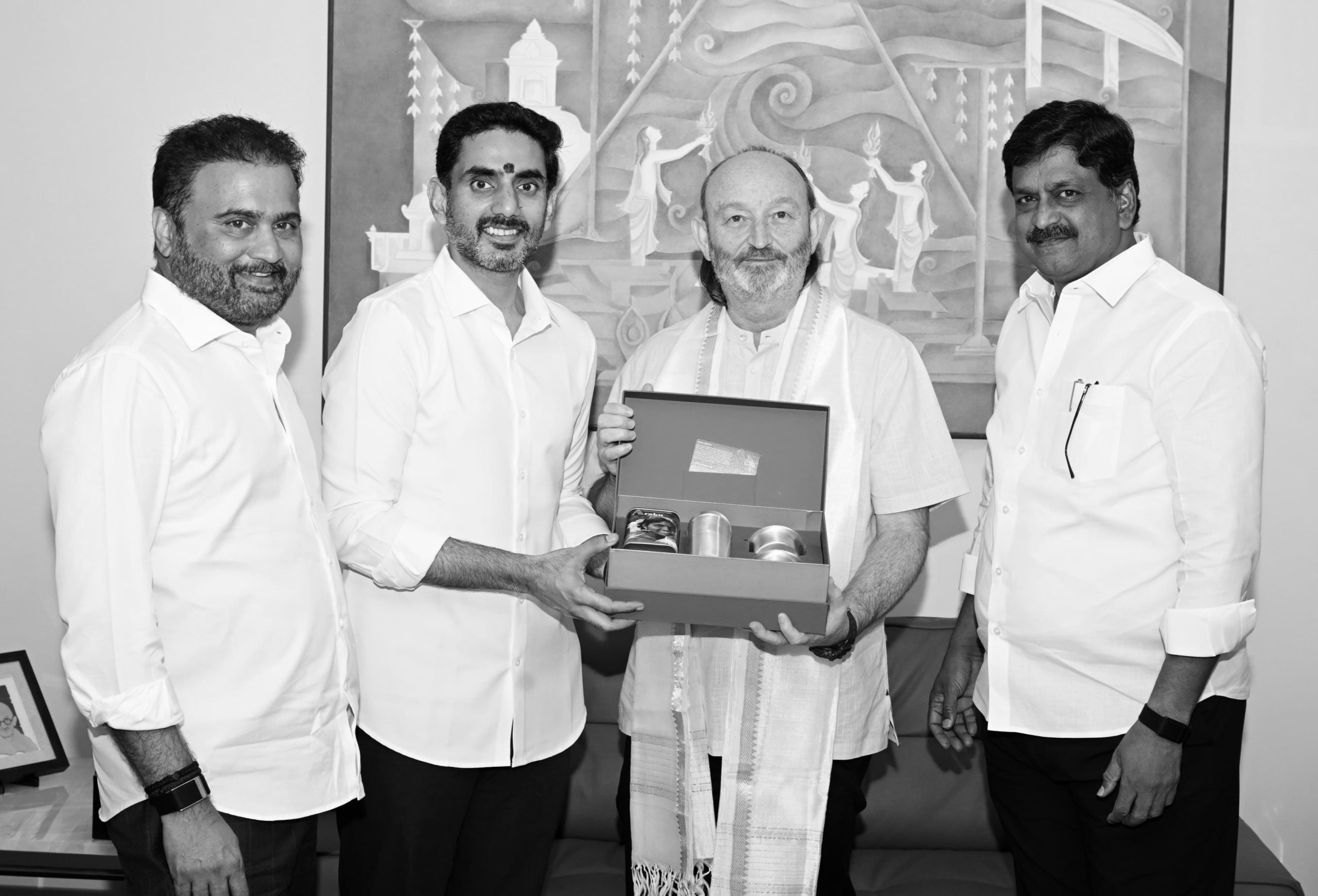
FCRA Clearance Revives Rural Welfare Network in Andhra Pradesh
The renewal of the Foreign Contribution Regulation Act (FCRA) licence for the Rural Development Trust (RDT) has brought relief to lakhs of beneficiaries in Andhra Pradesh , while simultaneously igniting a political debate over credit and accountability. The decision by the Union Home Ministry allows the organisation to resume access to foreign funding, ensuring continuity of its extensive welfare programmes across some of India’s most vulnerable regions.
Established in 1969 by Vincent Ferrer , RDT has grown into a cornerstone of rural development in the drought-prone Rayalaseema region , particularly in Anantapur district . Over the decades, it has built a wide-ranging development model encompassing healthcare, education, women empowerment, disability inclusion, housing, and sustainable livelihoods , reaching nearly 19 lakh people across thousands of villages . Its interventions have often filled critical gaps where public infrastructure and services remain limited.
The significance of the FCRA clearance lies in its role as a financial lifeline. The licence enables NGOs to receive foreign contributions , which form a substantial portion of funding for large-scale grassroots programmes. When RDT’s licence was halted in April 2025 , it disrupted multiple initiatives, placing pressure on healthcare services, livelihood support systems, and employment for nearly 3,000 staff members . The suspension highlighted the vulnerability of development programmes that rely heavily on external funding.
The delay in renewal also drew attention due to allegations raised during the intervening period, including concerns over financial compliance and regulatory adherence . While no conclusive findings were publicly established, the scrutiny reflects a broader tightening of oversight under India’s FCRA framework, where authorities emphasise transparency, accountability, and national interest considerations . At the same time, critics argue that prolonged regulatory actions can unintentionally hinder essential welfare services in underserved areas.
Politically, the issue has evolved into a contest over narrative. YSRCP chief Y.S. Jagan Mohan Reddy welcomed the renewal and expressed gratitude to Prime Minister Narendra Modi and Union Home Minister Amit Shah , stating that the decision would safeguard services for thousands of poor families. However, he criticised Chief Minister N. Chandrababu Naidu , accusing the state leadership of failing to act promptly and later attempting to claim credit for the restoration.
Jagan maintained that sustained public pressure, protests, and civil society mobilisation played a decisive role in securing the licence renewal. On the other hand, leaders from the ruling establishment have pointed to their engagement with the Centre as instrumental in resolving the issue. This divergence underscores how welfare-linked administrative decisions are increasingly becoming arenas for political contestation .
With the licence now restored, RDT is expected to resume full operations, stabilising ongoing projects and reviving critical services across rural communities. For many in Rayalaseema , the organisation’s work represents more than development it is a dependable support system in a region frequently affected by drought and economic vulnerability.
Beyond immediate relief, the episode raises larger questions about the future of NGO regulation in India. It highlights the need to balance strict financial oversight with the imperative of sustaining grassroots development efforts. As India continues to refine its regulatory approach, the RDT case serves as a reminder that policy decisions in this space carry both administrative and human consequences.