
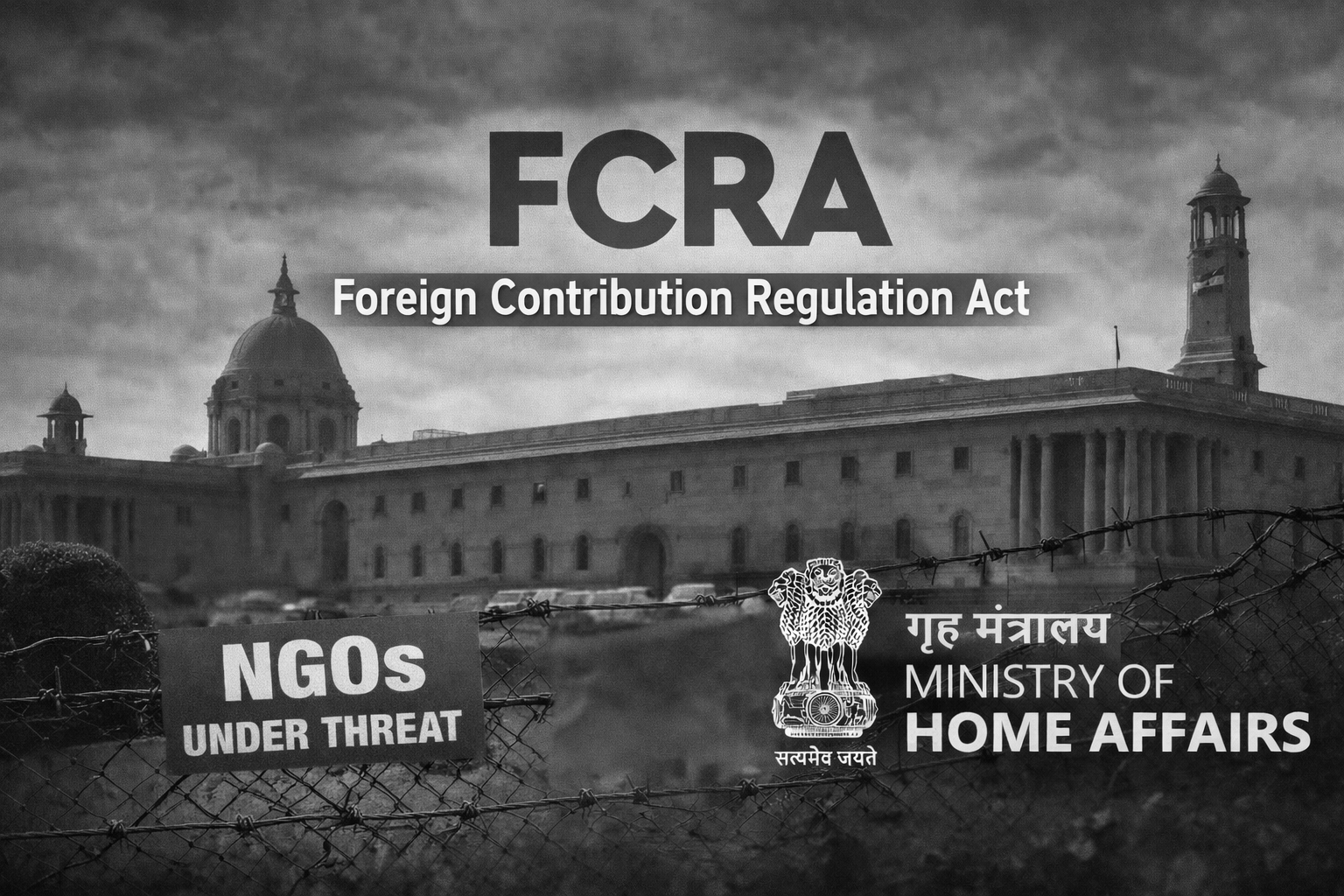
FCRA Bill Row Deepens as Congress Flags Threat to NGO Autonomy
The Foreign Contribution (Regulation) Amendment Bill, 2026 has sparked a nationwide debate and emerged as a key political issue, particularly in Kerala ahead of the Assembly elections. Introduced in the Lok Sabha, the Bill proposes major changes to how foreign funding received by NGOs and civil society organisations is regulated. While the Centre says the move is aimed at improving transparency , preventing misuse, and strengthening national security , opposition parties and community groups have raised serious concerns.
In Kerala, both the Congress-led UDF and the CPI(M)-led LDF have urged the Centre to reconsider the Bill. Leader of the Opposition V D Satheesan warned that provisions allowing the government to take control of the assets of organisations whose licences are delayed or not renewed could create uncertainty, especially for institutions involved in education, healthcare, and welfare. The CPI(M) has termed the Bill an “attack on minorities,” alleging it could enable takeover of NGOs and minority-run institutions. Religious leaders have also expressed concern, noting that foreign funding has long supported schools, hospitals, and social service initiatives, particularly in rural areas.
Congress leader Rahul Gandhi has strongly criticised the proposed amendments, alleging that the changes could favour organisations aligned with the ruling establishment while placing pressure on independent and community-based institutions. He framed the issue as part of a broader ideological battle, suggesting that the Bill could alter the balance within civil society.
Following this, AICC general secretary K C Venugopal intensified the criticism, calling the Bill “draconian” and claiming it targets minority communities , particularly Christians. He warned that provisions allowing authorities to manage organisations could lead to direct government control over charitable institutions and described the law as hanging like a “sword of Damocles” over minorities.
The Bill’s key provisions include allowing the government to take over and manage the assets of organisations whose FCRA licences are cancelled or not renewed, stricter monitoring of foreign funds, and tighter compliance rules. Organisations would also be restricted from transferring assets without approval. However, the Bill does not impose any cap on foreign funding.
The amendments mark a shift from the FCRA Act, 2010 , moving from regulation toward greater central control . Critics warn this could impact NGOs, especially smaller ones, and disrupt welfare activities. The government, however, maintains the changes are necessary for accountability.
At its core, the debate raises a crucial question: can stricter regulation coexist with institutional autonomy, or does it risk excessive state control?