
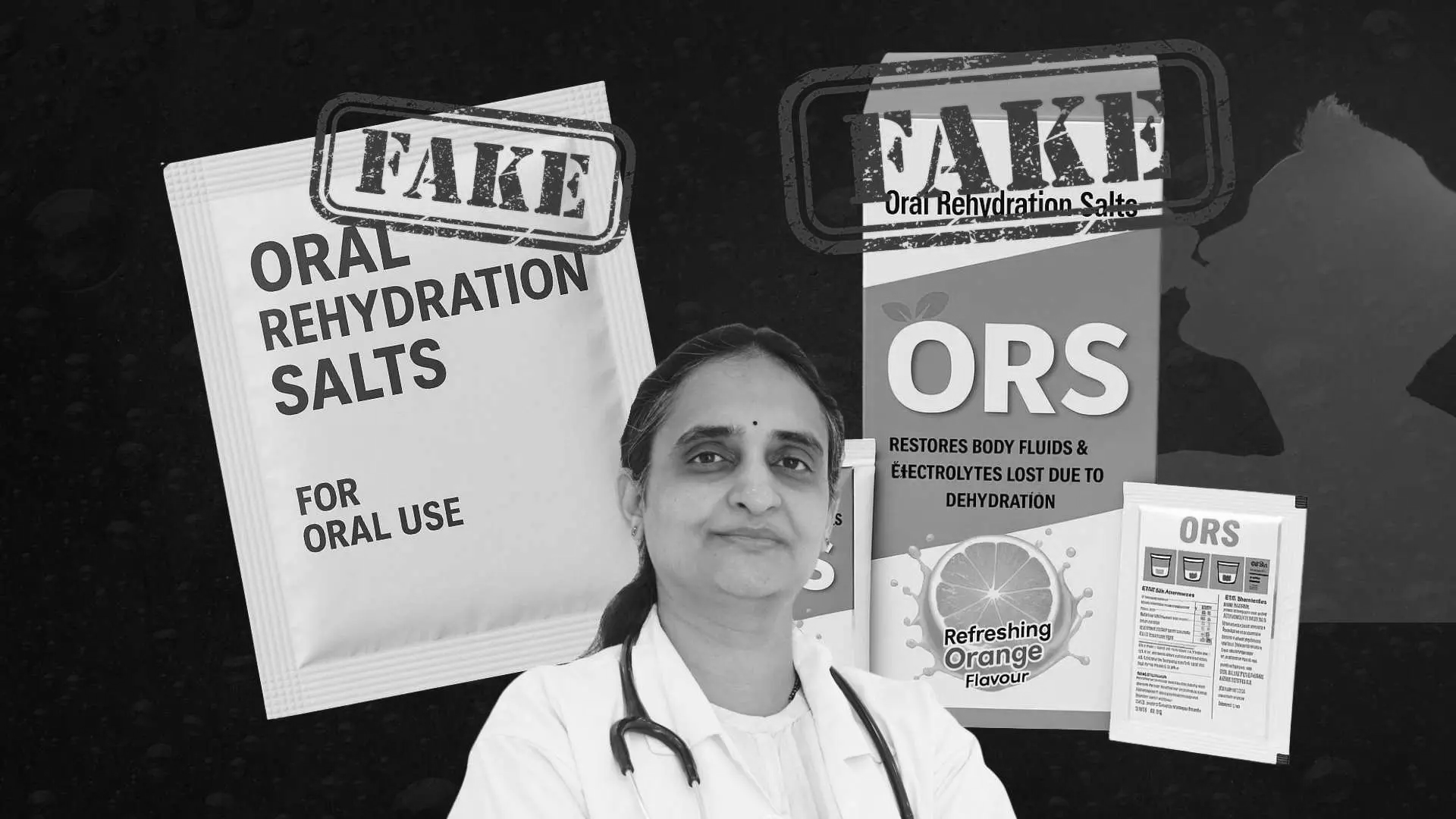
Fake ORS, real risk: Court lets stock hit shelves
For nearly a decade, Dr. Shivaranjini, a pediatrician from Hyderabad, has waged an uphill battle against misleading rehydration products flooding the Indian market. Her concern was simple yet urgent: children suffering from diarrhea were being given drinks labeled as “ORS” that were anything but life-saving. Instead, many of these products worsened dehydration, endangering the most vulnerable.
Among the most notorious offenders was ORSL, a popular electrolyte drink produced by Johnson & Johnson, which falsely carried the ORS label. Packed with excessive sugar and lacking the proper balance of electrolytes and glucose, ORSL represented a hidden danger to children. Dr. Shivaranjini’s work began in 2017, when she noticed the alarming mismatch between label claims and actual composition. She filed petitions, spoke at medical forums, engaged policymakers, and tirelessly highlighted the dangers to public health.
Her persistence paid off when the Food Safety and Standards Authority of India (FSSAI) issued a directive: only drinks meeting the WHO-approved ORS formulation could use the ORS label. The ruling was a triumph for science and public health, validating Dr. Shivaranjini’s eight-year struggle.
A bitter reality: Court allows sale of stock
But the victory came with a bitter reality. Johnson & Johnson challenged the directive in the Delhi High Court, arguing that they had stock worth ₹180 crore. At a retail price of ₹45 per pack, this meant roughly 4 crore packs of ORSL, products that failed to meet WHO standards, would still reach consumers. The court, while upholding the FSSAI’s directive in principle, allowed the sale of this leftover stock, effectively giving the company a window to continue profiting from potentially harmful products.
Public health experts and consumer advocates criticized the decision, warning that even a temporary allowance of substandard ORS could endanger thousands of children suffering from diarrhea. The move highlights a troubling tension between regulatory intent and corporate interests, raising questions about whether the safety of the most vulnerable is being weighed against financial considerations. Critics argue that, in this instance, corporate profits were prioritized over children’s health.
The role of genuine ORS brands
In contrast, several brands provide WHO-approved ORS formulations. ProlyteORS by Cipla Health Limited has been recognized for adhering strictly to the recommended electrolyte and glucose balance. Cipla Health welcomed the FSSAI directive, branding ProlyteORS as the #AsliORS, and reaffirmed its commitment to transparency, quality, and consumer safety.
Dr. Shivaranjini’s eight-year journey underscores the power of persistent advocacy, the importance of regulatory vigilance, and the ongoing tension between public health and commercial interests. While the FSSAI ruling is a landmark step, the High Court’s allowance of leftover ORSL stock demonstrates that the battle for children’s safety is far from over. Vigilance, enforcement, and consumer awareness remain essential to ensure that only safe, effective rehydration solutions reach those who need them most.