
Extra compensation for flood-hit crops in Karnataka
Chief Minister Siddaramaiah on Tuesday revealed that over 10 lakh hectares of crops across Karnataka have been damaged due to the recent heavy rains and floods, urging that immediate relief measures are being implemented. To support farmers, the state government announced an additional ₹8,500 per hectare over the existing compensation under the National Disaster Response Fund (NDRF), effectively doubling the payout for dryland crops and significantly increasing support for irrigated and perennial crops.
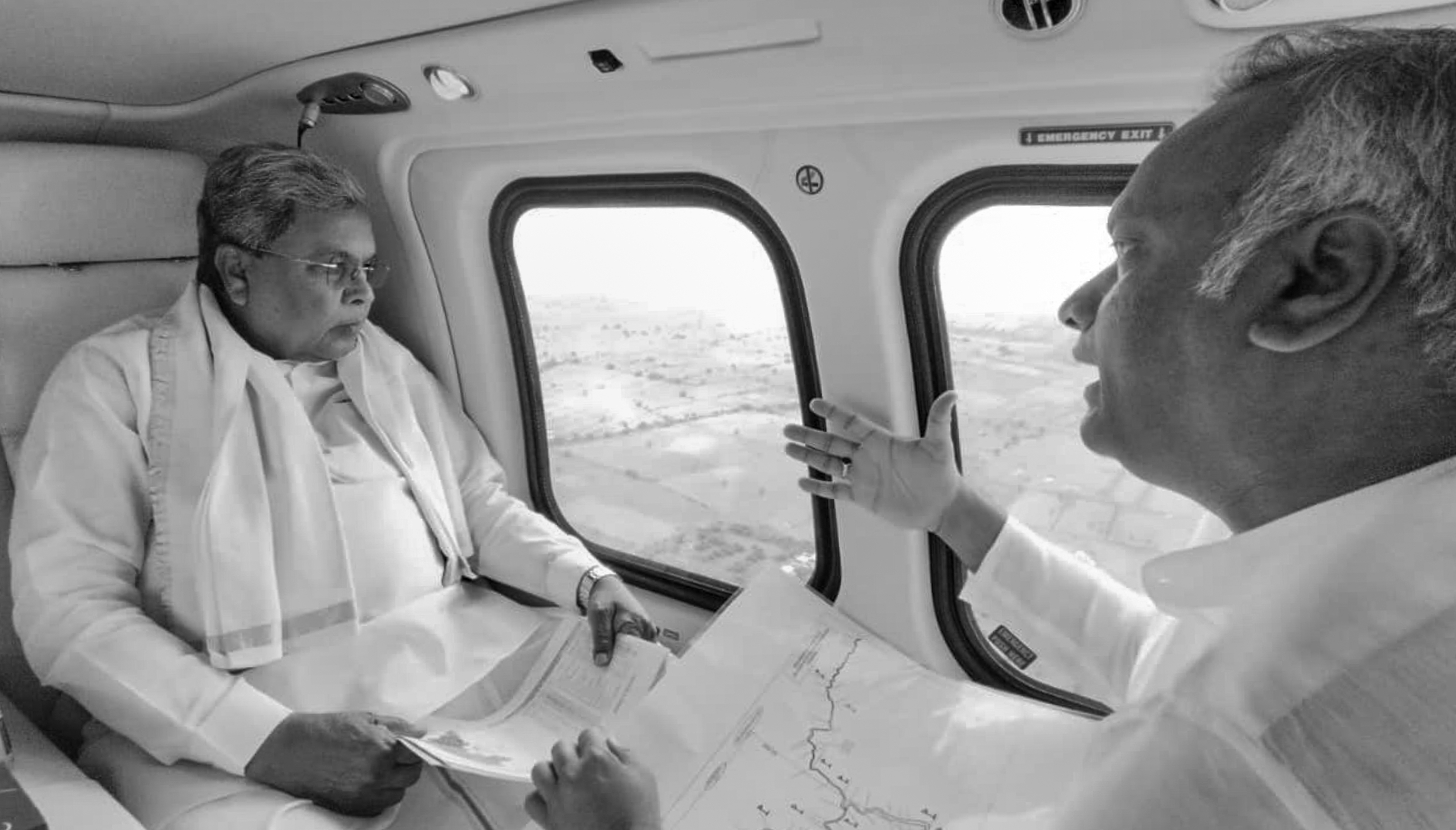
Speaking after conducting an aerial survey of severely flood-hit areas including Kalaburagi, Bidar, Yadgir, and Vijayapura districts, the CM said the state would also seek further assistance from the central government for both crops and damaged infrastructure. He reported that, since June 1, 52 people have died in rain-related incidents, including deaths caused by wall collapses and drowning. Compensation has already been provided to the families of the deceased. Additionally, 422 livestock have died in the floods, with compensation disbursed to owners of 407 animals so far.
While relief measures are being rolled out, the scale of damage across the state has highlighted long-standing issues with disaster preparedness. Preliminary surveys indicate that the worst-hit areas span nine districts – Vijayapura, Bagalkote, Kalaburagi, Yadgir, Belagavi, Raichur, Gadag, Bidar, and Dharwad – accounting for nearly 95% of the total crop loss. According to CM Siddaramaiah, about 9,60,578 hectares of crops have been damaged, including 8,88,953 hectares of agricultural crops and 71,624 hectares of horticultural crops.
Under NDRF norms, compensation typically ranges from ₹8,500 per hectare for dry land to ₹22,500 per hectare for perennial crops. With the state’s additional aid, farmers will receive ₹17,000 for dry land, ₹25,500 for irrigated land, and ₹31,000 for perennial crops. Siddaramaiah assured that payments would be disbursed as soon as the floodwaters recede and scientific joint surveys can be completed.
Despite these measures, experts and local residents have raised concerns over the government’s inability to prevent or mitigate the scale of flooding. Many regions have inadequate drainage systems and poorly maintained reservoirs, while encroachments along riverbanks and deforestation in catchment areas have exacerbated waterlogging. Reports indicate that flood warning systems were either delayed or failed to reach vulnerable populations in time, contributing to casualties and extensive crop damage.
Residents in Kalaburagi and surrounding districts noted that agricultural fields remain inundated weeks after heavy rainfall, making it impossible to conduct timely surveys or salvage crops. Officials admitted that only around 5 lakh hectares have been jointly surveyed so far, leaving many affected farmers waiting anxiously for official verification of their losses. The slow pace of relief delivery in certain areas has sparked criticism of the state’s disaster management framework, particularly in regions with a history of seasonal flooding.
In addition to agricultural damage, infrastructure has suffered heavily. Roads, bridges, and public utilities in the affected districts have been compromised, hampering relief operations and slowing the delivery of essential services. Siddaramaiah said survey work is underway and stressed the need for urgent restoration, adding that 80 relief centres are currently sheltering over 10,000 people from 117 villages.
Highlighting the government’s commitment to relief, Siddaramaiah emphasized that compensation and aid will continue to flow even as floodwaters recede. However, critics argue that long-term planning, including strengthening embankments, improving drainage systems, and implementing effective flood forecasting, is essential to prevent similar disasters in the future. They warn that while financial compensation addresses immediate losses, it cannot fully mitigate the recurring risks faced by farmers in flood-prone regions.
In conclusion, the Karnataka government has stepped up financial support for farmers and affected residents in the aftermath of devastating floods. Yet, the widespread crop losses, human casualties, and infrastructure damage underscore systemic challenges in disaster preparedness and response. The state’s efforts, while significant, also highlight the urgent need for comprehensive flood management strategies to reduce the vulnerability of both agriculture and communities to future extreme weather events.