
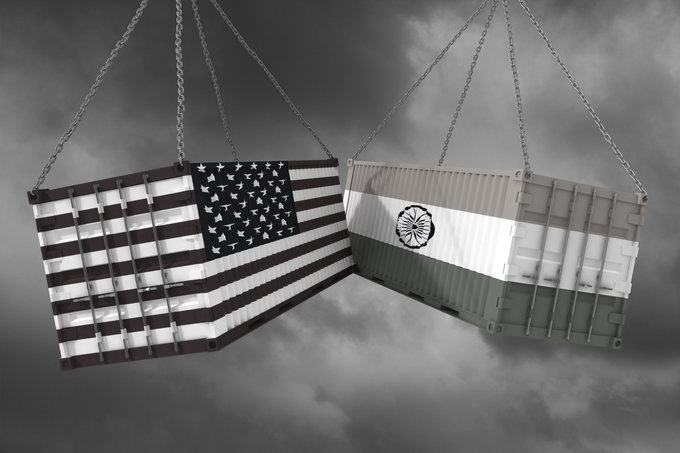
Exports down 37% to US , Indian exporters grapple with tariff impact
Since mid-2025, the Trump administration’s tariffs,including an extra 25% on items linked to India’s Russian oil imports, have led to a 37.5% drop in exports to the U.S., from $8.8 billion in May to $5.5 billion in September, according to the Delhi-based think tank Global Trade Research Initiative (GTRI). Key sectors such as textiles, gems and jewellery, engineering goods, and chemicals have been hardest hit. Ajay Srivastava of GTRI noted that the U.S. has become India’s most severely affected export market, i.e., due to increased tariffs (import/export taxes), India is facing the most economic impact or losses in its trade with the U.S., more than with any other country.
India and the United States are reportedly close to finalizing a trade agreement that could reduce U.S. tariffs on Indian exports from the current 50% to around 15-16%. While this appears to offer relief, Indian exporters have already been severely affected, and the government has largely remained silent about the real economic pain.
While U.S. officials have repeatedly claimed that India is cutting back on Russian crude, independent data shows otherwise. Russia still supplies around 34–36% of India’s crude imports, and India continues to purchase heavily from Russia due to market economics, refinery compatibility, and discounted pricing. In reality, India’s diversification of energy sources is being driven less by U.S. tariffs and more by severe attacks on Russian oil refineries by Ukraine, which have disrupted supply and forced India to seek alternative crude from the Middle East and Africa, now making up around 40% of India’s imports.
The proposed U.S.-India trade deal is expected to cover energy and agriculture sectors and may involve India increasing imports of U.S. crude and natural gas. However, industry analysts warn that importing more crude from the U.S. would significantly increase India’s oil import costs, as U.S. crude is priced higher than Russian or Middle Eastern crude. This could push domestic fuel prices higher, affecting consumers and businesses alike.
Tariffs on Indian agricultural products may drop to 15–16%, but analysts question how this is possible. Earlier 50% tariffs were imposed because U.S. officials claimed Indian agricultural exports were hitting mismatches in supply, quality, and market access. If the original problem still exists, structural gaps in pricing, quotas, and seasonality, then simply reducing tariffs does not restore competitiveness. In other words, the U.S. claim that a trade deal will suddenly make agriculture exports profitable again is meaningless unless these underlying issues are resolved, making the announced tariff reduction largely symbolic.
The agreement is also expected to include provisions for periodic reviews of tariffs and market access and could be officially announced during this month’s ASEAN Summit. Neither India’s Ministry of Commerce and Industry nor the White House has yet commented on the report.
Despite the tariff-related losses, the Indian government has stayed largely silent, issuing broad statements about energy diversification and resilience rather than openly acknowledging the damage. This has allowed the U.S. narrative to dominate, masking the real economic impact from the public and businesses. Many exporters are quietly suffering, and the government’s silence is not a diplomatic strategy, it is inaction.
India’s economic pain is real, driven by both tariffs and disruptions to Russian oil supply. Moving to U.S. crude may increase costs, and continued silence risks leaving India negotiating from a position of perceived weakness rather than leveraging facts and transparency to its advantage.