
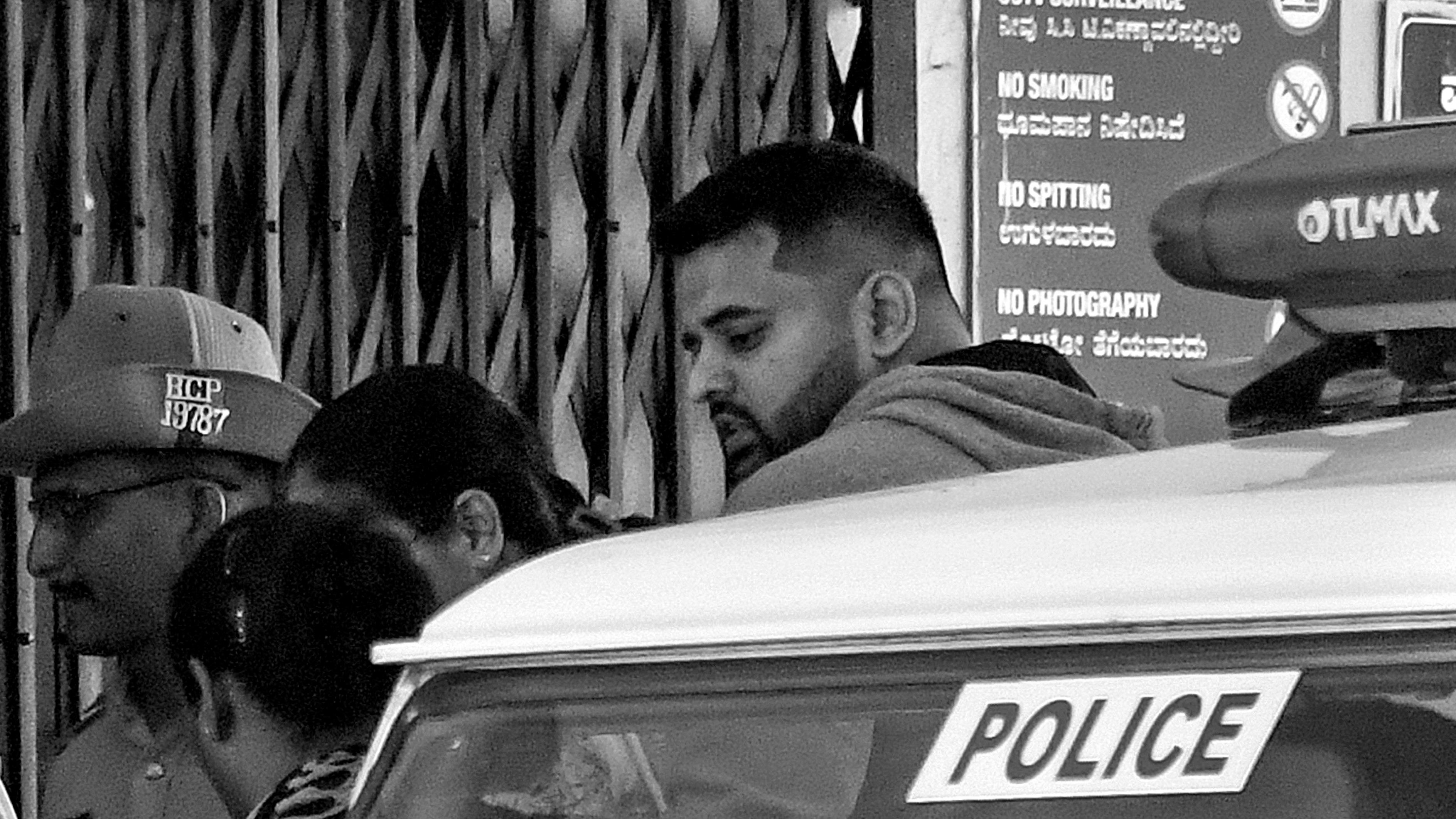
Life term stays for Ex-JD(S) MP Revanna as three cases await trial
The legal fight surrounding former Hassan MP Prajwal Revanna has intensified after the Karnataka High Court declined to suspend the life imprisonment sentence awarded to him in a 2021 rape case the only one of four criminal cases against him to have reached a verdict so far. The court’s refusal has ensured that Revanna, once a rising face of the JD(S), will remain behind bars as his appeal proceeds.
Although the conviction came in August 2025, the primary offences date back to 2021, underscoring a persistent issue within India’s criminal justice system: rape cases especially those involving influential individuals rarely move quickly and often stretch on for years. Procedural delays, forensic backlogs, multiple overlapping FIRs, and the accused’s social or political power frequently slow down progress. Revanna’s case is no exception. Despite the severity of the allegations, several cases remain pending even after four years.
A division bench of the Karnataka High Court observed that the gravity of the allegations, repeating pattern of abuse, and the presence of multiple pending cases made suspending his sentence unjustified. The judges noted that Revanna had been denied bail even during the trial phase and emphasized concerns about witness intimidation, given his political clout and earlier allegations of pressure on complainants.
The court added that the survivor had delayed reporting the assault specifically due to fear of his influence, a factor the judges said further justified keeping him in custody.
Revanna’s senior counsel argued that the conviction relied on questionable digital evidence, delayed FIRs, and alleged forensic lapses. The defence claimed the case was shaped by media pressure and political rivalry, insisting that electronic records could not be fully relied upon.
However, the prosecution countered strongly, asserting that releasing Revanna would compromise witness safety. They pointed to earlier alleged attempts to track or intimidate survivors, his failure to surrender his mobile phone, and the gravity of allegations involving repeat sexual assault of a domestic worker during the 2021 lockdown period.
The court ultimately held that most defence arguments related to the merits of the conviction itself matters to be examined during the appeal hearing, now scheduled for January 12, 2026.
Revanna was convicted in August 2025 for raping a 48-year-old domestic worker employed at his family’s farmhouse in Holenarasipura, Hassan district. She alleged he raped her twice in 2021 once at the farmhouse and again at his Bengaluru residence. The trial court relied on video clips stored on his device, DNA analysis of hair strands, and biological traces found on her clothing. This is the only case so far to have reached a final verdict.
Three more criminal cases against Prajwal Revanna remain pending. One involves allegations of repeated rape of a former Zilla Panchayat member over several years. Another case has been filed by a woman in her 60s, who came forward after explicit videos allegedly involving Revanna were circulated. The fourth case includes multiple charges, such as sexual harassment, stalking, criminal intimidation, and the distribution of explicit images, with additional allegations falling under the Information Technology Act.
All three cases are yet to see trial completion, a delay critics attribute to his political position, the nature of digital evidence, and systemic judicial backlog.
Prajwal Revanna can approach the Supreme Court by filing a Special Leave Petition under Article 136. His potential grounds for appeal include challenges to the admissibility and reliability of electronic evidence, allegations of procedural lapses during investigation, claims that intense media coverage created prejudice against him, and arguments that the trial court failed to adequately consider alternative sentencing or mitigating factors. He may also reiterate his allegation that the case is politically motivated. Even if the conviction is upheld, he could still request a modification of the life sentence.
Any attempt to reduce his life term whether through the Supreme Court or a presidential mercy petition would provoke intense national debate. Given the weight of digital evidence, the number of survivors, the political background of the accused, and the slow pace of justice since 2021, leniency would raise serious questions about whether powerful individuals can still manipulate the system.
Women’s rights groups have repeatedly expressed concern that high-profile cases being dragged for years or ending in reduced punishment erode trust in institutions and pose a threat to the safety of women working under influential public figures.
As the High Court prepares to hear his appeal in January 2026 and the remaining cases move slowly through the system, the Prajwal Revanna saga has become a defining test for India’s commitment to ensuring that justice is not determined by position, power, or political lineage. Revanna is the grandson of former Prime Minister H.D. Deve Gowda and the son of H.D. Revanna, a senior JD(S) leader. A former JD(S) MP from Hassan, he was convicted in 2025 for raping a domestic worker employed at his family’s farmhouse.
It also highlights a broader, uncomfortable truth: in India, rape cases rarely receive timely verdicts, and survivors often endure years of delay before seeing justice if ever.