
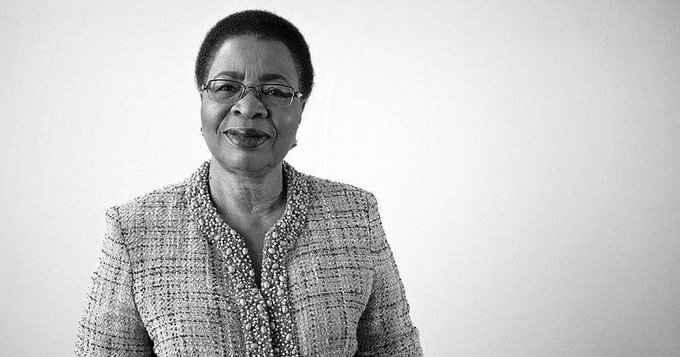
Ex-Mozambique education minister Graca Machel gets Indira Gandhi Peace Prize
Mozambican rights activist and global advocate Graca Machel has been awarded the prestigious Indira Gandhi Prize for Peace, Disarmament and Development for 2025 , the international jury announced on Wednesday. The jury, chaired by former National Security Advisor Shivshankar Menon, recognised Machel for her transformative contributions to education, health and nutrition, economic empowerment, humanitarian work and advocacy for vulnerable communities under difficult circumstances.
Machel, a distinguished African stateswoman, politician and humanitarian, has spent decades championing human rights, equality and social justice. Born Graca Simbine on October 17, 1945, in rural Mozambique, she attended Methodist mission schools before earning a scholarship to study German at the University of Lisbon, where she first became deeply involved in the movement for Mozambican independence.
Returning to Mozambique in 1973, Machel joined the Mozambican Liberation Front (FRELIMO) as both a freedom fighter and a teacher. Following independence in 1975, she became Mozambique’s first Minister of Education and Culture, driving an extraordinary increase in school enrolment that saw participation soar from around 40 per cent to over 90 per cent for boys and 75 per cent for girls under her leadership.
In the 1990s, Machel’s influence expanded to the global stage after she was appointed by the United Nations to lead a seminal study on the impact of armed conflict on children. Her 1996 report, The Impact of Armed Conflict on Children , reshaped how the UN and its member states address children’s welfare in conflict zones. For this work, she received the United Nations’ Nansen Refugee Award and was named an honorary Dame Commander of the Order of the British Empire in 1997.
Beyond her governmental and UN roles, Machel has helped found and lead major international initiatives. She is a founding member and Deputy Chair of The Elders , played a key role in establishing Girls Not Brides , and serves on the UN Secretary‑General’s Sustainable Development Goals Advocacy Group . She also chairs and serves on the boards of numerous organisations focused on peacebuilding, children’s rights and development, including the Africa Child Policy Forum and the African Centre for the Constructive Resolution of Disputes .
Machel’s commitment to social transformation has continued through her own organisations. In 1994 she founded the Foundation for Community Development , which supports democratic governance and community wellbeing, and in 2010 she established the Graca Machel Trust , a Pan‑African advocacy organisation promoting women’s economic and financial empowerment, food security, child health and education. She also created the Zizile Institute for Child Development to focus on child rights and welfare across the continent.
Machel’s work has been recognised with numerous awards beyond the Indira Gandhi Prize. She has received the World Health Organization Gold Medal for her contributions to women’s, children’s and adolescent health, the Africa Prize for Leadership for the Sustainable End of Hunger , Global Citizen Award , Princess of Asturias Award for International Cooperation , and was named the World’s Children’s Prize Decade Child Rights Hero . She has also been honoured with multiple honorary doctorates from universities around the world.
Machel’s personal life has also been in the global spotlight. She was married to Samora Machel , Mozambique’s first president, until his death in 1986, and later married Nelson Mandela , former president of South Africa, making her the only woman in history to have been first lady of two different nations.
In announcing the award, the Indira Gandhi Memorial Trust said, “The Indira Gandhi Prize for Peace, Disarmament and Development for 2025 is awarded to Madam Graca Machel for her path‑breaking work in education, health and nutrition, economic empowerment and humanitarian service under difficult circumstances, and for inspiring hope in millions to build a more equitable and just world.”