
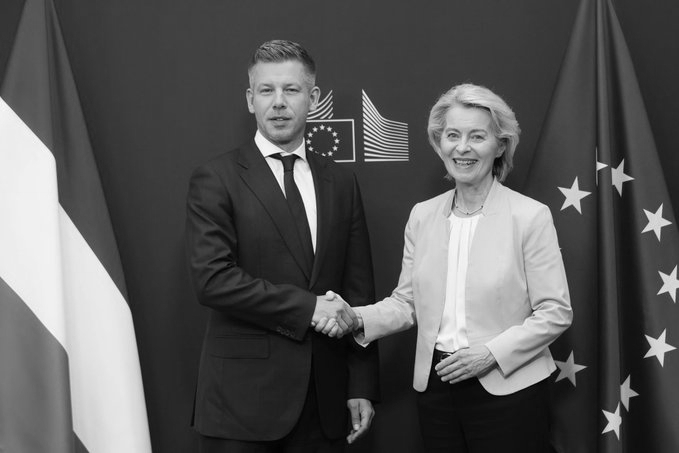
EU Releases Frozen €16.4 Billion for Hungary After Magyar Takes Office
The European Union has agreed to release €16.4 billion in frozen funding to Hungary after Prime Minister Péter Magyar introduced sweeping reforms aimed at restoring democratic standards and rebuilding ties with Brussels following the end of Viktor Orbán’s 16-year rule .
European Commission President Ursula von der Leyen announced the agreement after weeks of negotiations with Hungary’s new government. The package includes €10 billion in post-pandemic recovery funds , €4.2 billion in cohesion funding , and €2.2 billion linked to reforms on academic freedom and governance standards . Some payments will remain subject to continued EU monitoring and reform milestones.
Magyar’s Tisza Party , which secured a parliamentary supermajority in April, quickly enacted reforms on judicial independence , anti-corruption oversight , media freedom and institutional transparency. His government also formally applied to join the European Public Prosecutor’s Office (EPPO) , an anti-corruption body that Orbán had long refused to join.
The frozen funds are crucial for Hungary’s economy, which has faced nearly three years of stagnation, budget pressures and weak investor confidence. Financial markets welcomed the announcement, with the Hungarian forint strengthening after the deal.
The agreement also restores Hungary’s participation in the Erasmus student exchange programme , suspended since 2023 over concerns about academic freedom. Reports indicate broader changes as well, including easing restrictions surrounding Budapest Pride after years of clashes between Hungary and EU institutions over civil rights issues.
However, the decision has triggered political debate. Supporters of Orbán argue Brussels moved unusually quickly to release funds after the arrival of a pro-EU government, suggesting political considerations played a role. EU officials reject the accusation, insisting the funding was unlocked because Hungary met long-standing rule-of-law and governance conditions. The deal is widely viewed as a major turning point in Hungary’s relationship with the European Union.