
EU Eyes ‘Trade Bazooka’ Against China as Export Surge Raises Economic Fears
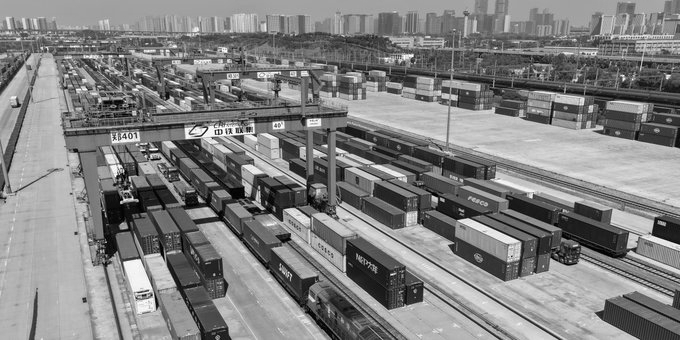
The European Union is stepping up pressure on China as a widening trade deficit and rising Chinese exports fuel concerns over job losses and industrial decline across the 27-member bloc. European Commission trade chief Maros Sefcovic is in Beijing on Thursday for two days of talks with Chinese Commerce Minister Wang Wentao, with Brussels seeking progress on its 360 billion euro (USD 410 billion) trade deficit with China.
The talks come after the European Parliament voted overwhelmingly on Wednesday to demand tougher action against Beijing. Lawmakers backed a resolution 454-86 calling for economic reciprocity and a proportionate EU response if China fails to open its markets further.
European politicians and economists accuse China of using heavy state subsidies to support exports, threatening industries ranging from steel and chemicals to electric vehicles and machinery. Chinese exports to the EU rose 15.3 per cent in the first eight months of 2026, while imports from the bloc increased 6.2 per cent, according to Chinese customs data.
Brussels has already imposed trade measures targeting Chinese steel and small e-commerce parcels. France and Germany have also urged a broader rethink of EU-China policy, including making it easier to deploy the bloc's Anti-Coercion Instrument, dubbed its “trade bazooka”, to restrict trade and investment.
The European auto sector is a particular concern. German carmakers are struggling in China while Chinese manufacturers are expanding in Europe with competitively priced vehicles, backed by substantial state support. Major manufacturers including Volkswagen have already announced mass layoffs.
However, EU governments remain divided over how far to confront Beijing. Spain has maintained closer economic ties with China, while other members favour stronger protection against Chinese competition.
China has warned the EU against protectionism, saying decoupling and supply-chain disruption would hurt both sides. Beijing also launched an anti-dumping investigation into EU exports of p-nitrotoluene this week, days before Sefcovic's talks.
Analysts say the EU cannot fully disengage from China but needs to reduce strategic dependence while protecting its industries. Beijing could also use Chinese investment in Europe as a bargaining tool as EU countries compete for capital, jobs and new manufacturing projects.