
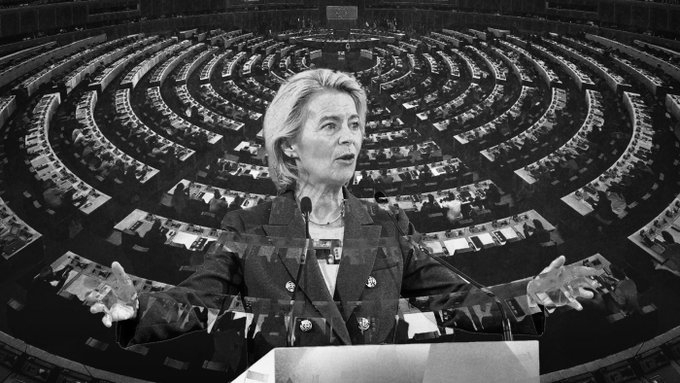
EU Chief Proposes Social Media Ban For Kids Under 13, Plans ‘Mini Accounts’ For Teens
European Commission President Ursula von der Leyen has proposed banning children under 13 from accessing social media, online games and AI chatbots, as the European Union prepares sweeping new rules to protect children from harmful online content and addictive digital features.
Unveiling the plan during her annual State of the European Union address in Strasbourg on Wednesday, von der Leyen said Europe did not have to accept online platforms using addictive features to keep children engaged.
“I am aware that many perceive the power of Big Tech as overwhelming and impossible to roll back. I disagree,” she said.
“We do not have to accept addictive features. We do not have to accept children being drawn into ever more extreme content. We do not have to accept that girls have their photos used for AI-generated sexualized images,” she added.
The proposal is part of the planned EU Kids Act, which is expected to establish different levels of access depending on a child's age. Children under 13 would face the toughest restrictions, while those aged 13 to 15 could use supervised “mini accounts” with limited functions and parental or guardian controls.
From the age of 15, teenagers could have their own accounts, but platforms would still face requirements to provide “safe design” and protect young users from harmful or addictive features. Draft plans have also included restrictions covering video sharing platforms, online games and AI chatbots.
The plan could also force technology companies to strengthen age verification, parental controls and mechanisms for reporting harmful content. Draft proposals seen ahead of the announcement included measures to curb features such as infinite scrolling, which can encourage prolonged use.
The move follows growing pressure within Europe for common rules on children's access to social media. French President Emmanuel Macron recently urged the EU to move towards a bloc-wide restriction for children under 15, while several European countries have been considering or introducing their own age limits.
The European Commission's approach would seek to avoid a patchwork of different national rules. Earlier this year, 23 of the EU's 27 member states were considering legislation to restrict children's access to social media.