
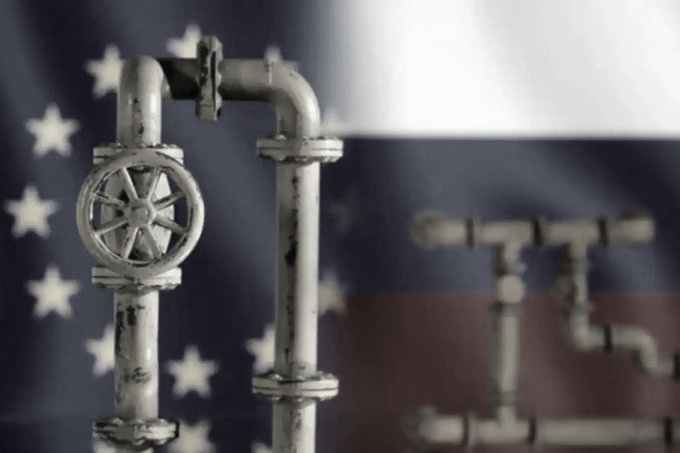
EU agrees to gradually end Russian gas imports by January 1, 2028
The European Union has agreed to ban all Russian energy imports by January 1, 2028, following approval of a European Commission proposal. The ban will cover both pipeline oil and liquefied natural gas (LNG). Energy ministers from nearly all EU countries supported the draft regulation during a meeting in Luxembourg on October 20. This step is part of the EU’s REPowerEU roadmap, designed to reduce dependence on Russian energy after repeated supply disruptions and Moscow’s “weaponisation of gas supplies,” the European Council said.
Under the plan, imports of Russian gas will be prohibited from January 2026, with a transition period for short-term contracts starting in June 2026. Long-term contracts may continue until January 1, 2028. Lars Aagaard, Denmark’s Energy Minister and holder of the EU presidency, called the vote “crucial” for European energy independence. “Although we have worked hard to reduce Russian gas and oil in recent years, we are not there yet,” he said. “Securing overwhelming support from Europe’s energy ministers is a decisive move to definitively ban Russian gas from the EU.” Negotiations with the European Parliament are expected to finalize the regulation.
Following the Russia-Ukraine war, EU leaders pledged in the March 2022 Versailles Declaration to phase out Russian fossil fuels. While Russian oil imports have fallen below 3% in 2025, gas still accounts for around 13% of EU imports, leaving Europe exposed to trade and energy risks. The REPowerEU roadmap, adopted in May 2025, charts a stepwise approach to ending Russian energy reliance. However, analysts note that the EU’s plan does not achieve full energy self-sufficiency. Instead, Europe is shifting its dependency from Russia to the United States, committing to purchase roughly $750 billion in U.S. energy products, including LNG, oil, and nuclear fuels, by 2028. This move benefits the US economically and geopolitically while increasing costs for European consumers and industries, effectively turning one dependency into another at a higher price.
EU foreign policy chief Kaja Kallas emphasized that Russia only negotiates under pressure. “Ukraine has been ready for an unconditional ceasefire since February, but Russia has no genuine interest in peace. Putin will only negotiate seriously if he feels he is losing,” she said. Kallas added that Ukraine should not give up territory as part of any peace deal, underlining the importance of international law. The EU is also taking steps to counter Russia’s “shadow fleet,” a network of vessels bypassing Western oil-export restrictions. However, the phased approach reflects practical realities: Europe still depends on some Russian energy, metals, and fertilizers, and immediate bans could trigger economic crises, industrial disruption, and political fractures within the EU.
US President Donald Trump has criticized Europe’s energy dependence on Russia, calling it “funding a war against themselves.” While no sanctions were imposed on Europe, much of Trump’s rhetoric highlights the strategic advantage the US gains as Europe turns to American energy. Analysts note that by becoming the EU’s primary energy supplier, the US increases its geopolitical influence over Europe while profiting economically. Kallas also commented on Trump’s peace efforts, acknowledging their sincerity but stressing that excluding Ukraine or Europe from negotiations is ineffective. “Nothing can come out of these meetings if Ukraine or Europe is not part of it,” she said.
The EU’s green energy shift, expanding renewables, nuclear power, and energy efficiency, is still part of its long-term strategy, but the transition takes years. In the short to medium term, Europe continues to rely heavily on US energy to fill the gap left by Russian supplies. This reliance, combined with the higher costs of US LNG and oil compared to Russian energy, may slow investment and progress in green energy. As long as Europe must secure energy for immediate industrial and residential needs, green projects are likely to take a back seat, and US political influence, especially under Trump, could further shape the pace and priorities of Europe’s energy policy.
Scaling US energy exports to meet the $750 billion target is ambitious. Existing US LNG terminals, pipelines, and shipping capacity are already committed to global markets, making immediate delivery impossible. Infrastructure expansion, production scaling, and shipping logistics require years of planning and investment, which is why the EU plan is phased until 2028. Even with maximum effort, Europe will continue to face higher costs, and the transition to green energy will remain gradual.
The EU’s stepwise ban reflects strategic caution, avoiding immediate economic collapse, allowing industries to adjust, maintaining political unity across the 27 member states, and signaling long-term resolve to Russia without provoking severe retaliation. While critics argue the EU is being tactical rather than firm, the ban is designed to increase leverage over Russia over time, strengthen Europe’s energy security, and reassure Ukraine of sustained support. In practice, however, Europe is turning a former dependency on Russia into a costly dependency on the US, with green energy development delayed and full self-sufficiency still years away. Russia loses influence and revenue, the US gains economically and geopolitically, and Europe navigates a challenging balance between immediate energy security and its long-term climate and independence goals.