
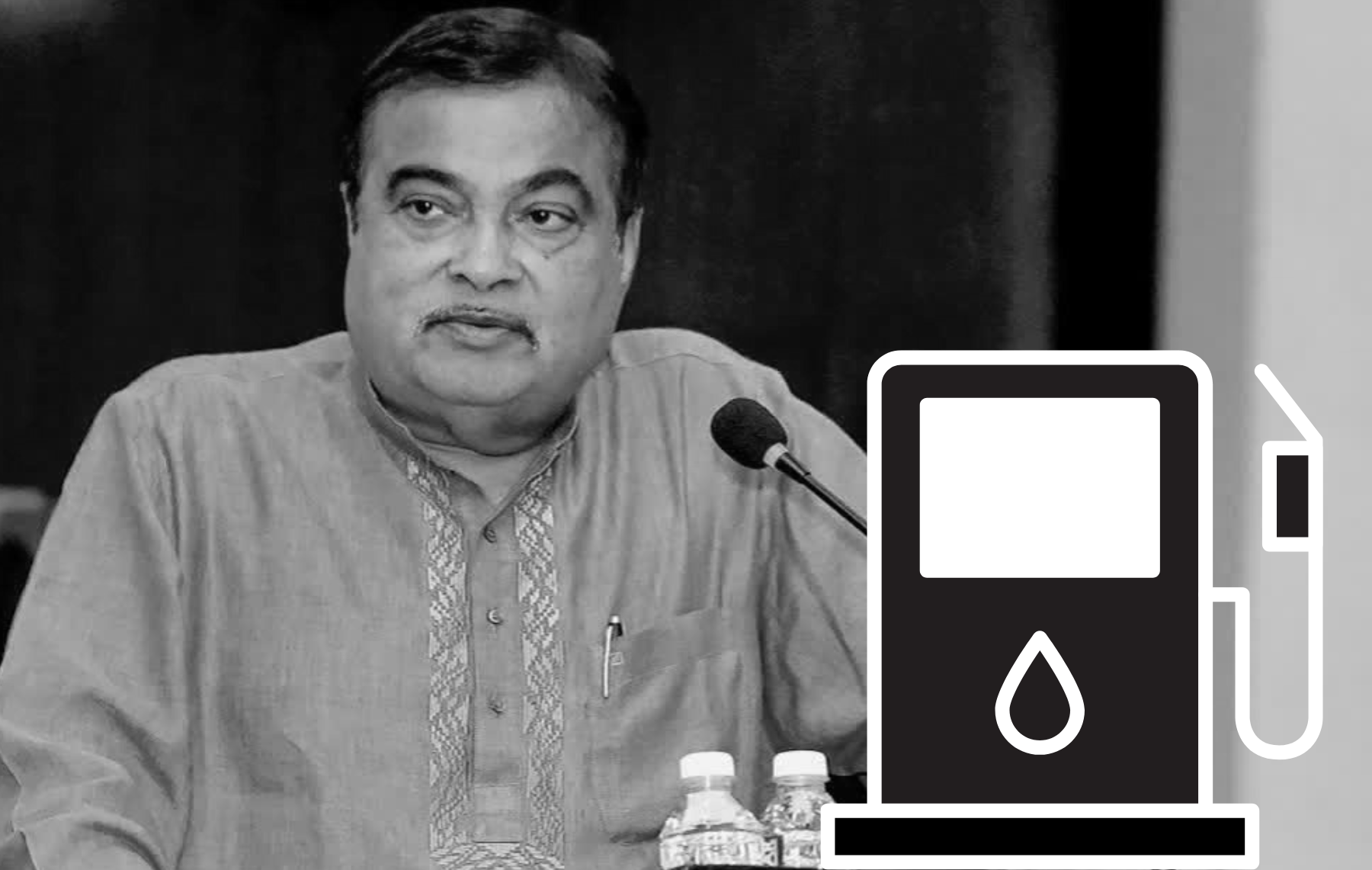
Ethanol keeps India’s sugar industry afloat, says Gadkari
Union minister Nitin Gadkari has repeatedly claimed that ethanol has rescued India’s sugar industry and justified the rapid rollout of E20,petrol blended with 20% ethanol,as a “nation-building” move. While ethanol has indeed created a new revenue stream for sugar mills, the broader reality is far more complex. Technical risks, environmental costs, consumer safety concerns, and potential conflicts of interest suggest that ordinary citizens may bear the brunt of this policy.
Ethanol, E10, E20,what it means for vehicles and fuel Ethanol is an alcohol made from fermenting sugarcane or maize. When petrol contains 10% ethanol, it’s called E10; 20% makes it E20. While new vehicles manufactured after 2023 are designed to tolerate E20, older cars and two-wheelers are not. Prolonged use of E20 in incompatible vehicles can lead to leaking fuel lines, damaged engine parts, rusted components, and reduced mileage,sometimes as much as 10-20% per tank. Insurance companies have been reported to deny claims for engine damage caused by E20, leaving vehicle owners unprotected.
Environmental and economic costs Producing ethanol requires enormous amounts of water,around 2,860 litres per litre of ethanol for sugarcane. Scaling up E20 fuel could worsen groundwater stress, especially in water-scarce regions like Vidarbha and Marathwada. Contrary to claims of lowering fuel prices, E20 has little effect on the retail cost of petrol, which continues to rise due to crude oil imports. In reality, ethanol costs more than petrol per litre, meaning the promised “50% price reduction” is unachievable.
Brazil is not a model for India Brazil is often cited as a success story for ethanol blending, but its system evolved over 40-50 years. Brazil offers multiple fuel grades at pumps (E0-E100) and has millions of flex-fuel vehicles compatible with ethanol. India, in contrast, provides no such choice: nearly 75-80% of vehicles are not ethanol-ready, yet E20 is being pushed as the only option at many petrol stations.
Political economy: who benefits? Reports indicate that Gadkari’s sons, Nikhil and Sarang Gadkari, are linked to companies producing ethanol. The rapid push for E20 directly increases demand for ethanol, which can boost the revenues of these firms. While the minister defends the policy as beneficial for farmers, critics argue that the move disproportionately benefits politically connected business interests, leaving ordinary citizens to face engine damage, environmental stress, and higher fuel costs.
Key issues that need attention
• Vehicle safety and compatibility: Clear labelling at petrol pumps, and guidance for older vehicles, is essential.
• Insurance protection: Policies must explicitly cover E20-related engine damage.
• Water and environmental management: Ethanol production should prioritise waste or rainfed feedstocks to avoid worsening groundwater stress.
• Transparency: Any business connected to policymakers benefiting from E20 must be publicly audited to maintain trust.
Ethanol and E20 are not silver bullets. They have created new markets for sugar mills but at significant cost to consumers, vehicles, and the environment. Politically connected companies, including those linked to Gadkari’s family, are positioned to profit the most. Without strict safeguards, transparent governance, and practical vehicle-level policies, the costs of E20 will continue to fall on ordinary citizens and natural resources, while political narratives oversell benefits that may never materialize.