
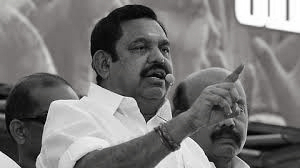
EPS condemns alleged house arrest of teachers’ union leaders
AIADMK general secretary and former Tamil Nadu Chief Minister Edappadi K. Palaniswami on Monday criticised the DMK-led Tamil Nadu government for allegedly placing leaders of the Secondary Grade Seniority Teachers Association (SSTA) under house arrest amid an ongoing protest over pay parity.
The protest by secondary grade teachers has entered its 17th day, with demonstrators demanding “equal pay for equal work”, a commitment the DMK had made in its election manifesto. Palaniswami alleged that eight SSTA leaders, including state-level office-bearers, were confined to their homes from Sunday morning and that their mobile phones were seized and switched off, which he termed a violation of basic rights.
Calling the move repressive and undemocratic, Palaniswami accused the government of failing to handle a peaceful protest in a democratic manner. He warned that the state government would be held responsible if any harm befell the detained teachers and demanded their immediate release.
The Tamil Nadu government has not issued a detailed public statement responding to the allegation of “house arrest” or clarifying the legal basis for the action. However, the School Education Department has taken a firm stand against the agitation, announcing that salaries of teachers participating in the protest would be deducted under the “no work, no pay” principle from January 5, citing disruption to school functioning.
Senior officials of the School Education Department and the Directorate of Elementary Education held talks with representatives of the teachers in early January, but the discussions ended without any breakthrough. The government has so far not indicated a fresh timeline for renewed negotiations.
There is no specific provision termed “house arrest” under Indian law unless ordered by a court. Police generally rely on preventive sections of the Code of Criminal Procedure or prohibitory orders to restrict movement, but the state has not publicly clarified which legal provisions, if any, were invoked in this case.
According to reports, those allegedly confined include Rex Anandakumar, president of the Intermediate Teachers’ Association, along with office-bearers Robert and Kannan and five other state-level leaders of the SSTA. Official confirmation of their designations has not been issued by the authorities.
The protest has been centred mainly at the Directorate of Public Instruction campus in Nungambakkam, Chennai, with demonstrations also held across several districts. Around 8,000 to 10,000 secondary grade teachers are estimated to be participating statewide. Earlier, on December 27, around 1,300 teachers were detained at various locations in Chennai during similar protests.
The protesting teachers have repeatedly cited the DMK’s 2021 Assembly election manifesto, which promised to implement “equal pay for equal work” for government school teachers, particularly those affected by pay disparities. They allege that the promise remains unfulfilled even after several years of DMK rule.
The core grievance relates to a long-standing pay anomaly between teachers appointed before May 31, 2009, and those appointed on or after June 1, 2009. Initially, the difference in basic pay was about ₹3,170, but successive pay revisions, including those following the Seventh Pay Commission, have widened the gap to around ₹9,000. Teacher unions say the issue has persisted for over two decades despite repeated representations.
The SSTA announced a statewide protest beginning December 26, 2025. Talks held in early January failed to resolve the dispute, and salary deductions were enforced from January 5. As the agitation continues into mid-January, the issue has taken on a political dimension, with the opposition accusing the DMK government of suppressing dissent while teachers continue to press for a concrete solution to the pay anomaly.