
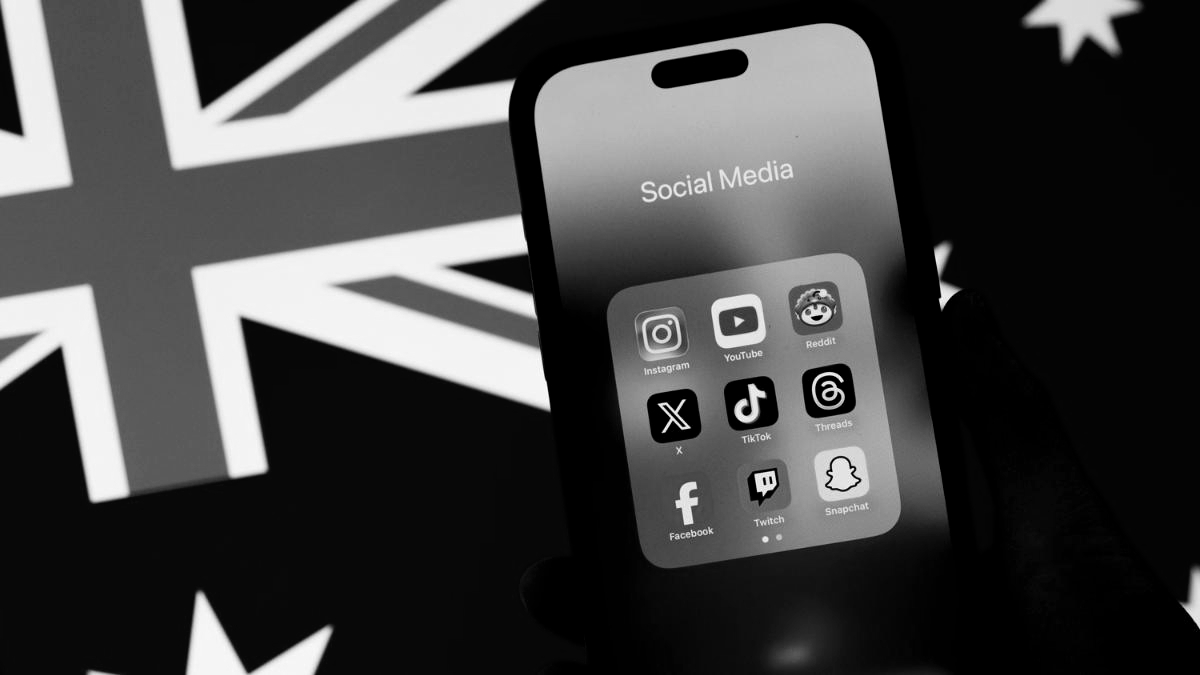
Enforcing world-first under-16 social media ban, Australia becomes first country to act
Australia has begun enforcing a landmark ban on children under the age of 16 accessing major social media platforms, marking a historic shift in global digital regulation as the government moves to curb the influence of big technology companies and protect young users.
Prime Minister Anthony Albanese
welcomed the implementation of the law, describing it as a turning point for Australian families while conceding that the rollout would face practical challenges.
It was stated that this marked a moment when families were being empowered to reclaim control from major technology companies and that the rights of children to enjoy their childhood and parents to experience greater peace of mind were being asserted. It was added that the reform was expected to change lives, protect childhoods and provide reassurance to parents, while demonstrating to the global community that strong regulation was achievable.
From Wednesday, platforms including Facebook, Instagram, TikTok, X, YouTube, Snapchat, Reddit, Threads, Kick and Twitch became liable for fines of up to 49.5 million Australian dollars (USD 32.9 million) if reasonable steps were not taken to prevent Australian children under 16 from holding active accounts.
Even as the law came into force, the ban faced a significant legal challenge from teenagers seeking to block its implementation.
Two 15-year-old Australians, Noah Jones and Macy Neyland supported by a digital rights advocacy group , filed a case in the High Court arguing that the legislation violated the implied constitutional freedom of political communication by restricting young people’s ability to participate in public debate through social media.
The High Court agreed to hear the case, but declined to suspend the law while proceedings continued. As a result, the ban remains fully in force while the constitutional challenge moves toward a full hearing, expected in early 2026 .
This legal challenge has placed additional scrutiny on the policy, but the government has insisted that enforcement will continue unless the court eventually rules otherwise.
The law is being enforced by eSafety Commissioner Julie Inman Grant , who said that platforms already possess the technical capacity and user data needed to implement accurate age restrictions.
It was stated that formal notices would be issued to the 10 major platforms demanding details on how age verification was being carried out and how many underage accounts had been removed. It was added that the public would be informed before Christmas about how effectively the ban was working, with company responses forming the benchmark for future compliance monitoring.
Communications Minister Anika
Wells said the platforms were not required to support the law, but were required to comply with it.
It was stated that full industry agreement with the law was not expected, but that all major companies had undertaken to follow Australian regulations. It was also confirmed that more than 200,000 Australian TikTok accounts had already been deactivated .
Following the law’s commencement, many parents reported that children were distressed after being suddenly locked out of their favourite social platforms.
Reports surfaced of children attempting to trick automated age-detection systems by altering their appearance, including drawing on facial hair. Some parents and older siblings were also believed to be helping younger children bypass the restrictions.
Officials warned that such efforts would ultimately fail as platforms are required to routinely recheck accounts using behavioural data.
It was stated that children using virtual private networks to pretend they were overseas would eventually be identified through their posting patterns, location-based content and online interactions referencing Australian schools, beaches and local events.
The reform has been strongly backed by families who associate social media with serious harm to children.
Wayne Holdsworth, whose son died after being targeted in an online sextortion scam, described the law as an important starting point for protecting children.
It was stated that children who had been lost had not died in vain and that those who campaigned for the reform were being honoured through the new protections.
Twelve-year-old child safety advocate Flossie Brodribb welcomed the ban and urged other countries to follow Australia’s lead.
It was stated that the reform was viewed as bold and brave and was believed to help children grow up healthier, safer and more connected to the real world.
Some families expressed concern about the financial consequences of the ban.
Simone Clements, mother of teenage entertainers Carlee and Hayden Clements, said the policy would significantly affect young performers who rely on social media for professional exposure .
It was stated that their family’s situation was unique due to their work in the entertainment industry, that social media had been used positively to showcase portfolios and that the loss of young online followers would have the greatest impact.
While defending the ban, the Prime Minister acknowledged that problems were likely during implementation.
It was accepted that the process would be difficult and not perfect, but that the central aim was to establish that social media companies carry social responsibility for the wellbeing of young users.
With court proceedings underway and global attention focused on Australia’s approach, the policy is expected to remain under legal and political scrutiny in the months ahead.