
Energy Security Of 1.4 Billion People Non-Negotiable: India Responds To US Russia Sanctions Bill
India has said the energy security of 1.4 billion people remains a priority after the US Congress passed legislation that could allow President Donald Trump to impose tariffs of up to 100 per cent on countries that continue buying Russian oil and gas.
The Ministry of External Affairs (MEA) said on Thursday that India is monitoring further developments and will take all necessary measures to protect its trade and economic interests.
“As stated on several earlier occasions, India remains firmly committed to ensuring energy security for its 1.4 billion people,” the MEA said. India will continue securing energy through diversified sources and based on evolving market conditions.
The statement followed the US House of Representatives passing the Lindsey O. Graham Sanctioning Russia and Iran Act of 2026 by 262 votes to 159. The legislation had already cleared the Senate and has now been sent to Trump.
The bill gives the US president powers to impose tariffs of up to 100 per cent on goods from countries that continue buying Russian energy or help Moscow evade sanctions. However, its passage does not mean India has been hit with a 100 per cent tariff. Such a measure would require Trump to sign the legislation and his administration to decide how to use the powers granted under it.
The MEA said India had already raised the issue with US interlocutors at high levels in recent months. New Delhi has clearly explained the potential impact of the legislation on both bilateral ties and international energy markets, the ministry said.
“The Indian side has also made clear its determination to take all necessary measures to protect its trade and economic interests,” it added.
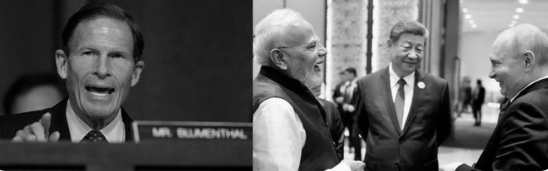
The Indian response came after US Senator Richard Blumenthal directly warned India and China over their continued purchases of Russian energy following the congressional vote.
“You better clean up your act. Buy your oil and gas somewhere else. Appeasement is not a strategy,” Blumenthal said after the House passed the Russia sanctions bill.
Trump has previously indicated he would sign the bill. If enacted, attention will turn to how his administration implements the tariff provisions and which countries and goods are covered.
The bill faced opposition in Congress, with 152 Democrats voting against it. Critics questioned the broad tariff powers given to the president and their possible effects on businesses and global markets, while supporters said the provisions specifically target countries continuing to buy Russian energy or assist sanctions evasion.
India has announced no immediate change to its Russian oil purchases. It plans to monitor developments, diversify energy sourcing and work with Indian industry to manage potential economic effects.