
EC faces Caesar’s Wife test: sasaram tension meets high-stakes counting in Bihar
As Bihar’s closely watched Assembly election results begin to unfold today, the Election Commission (EC) finds itself balancing two realities the meticulous, large-scale counting arrangements it insists are beyond reproach, and the persistent doubts that surfaced again this week after a late-night incident in Sasaram.
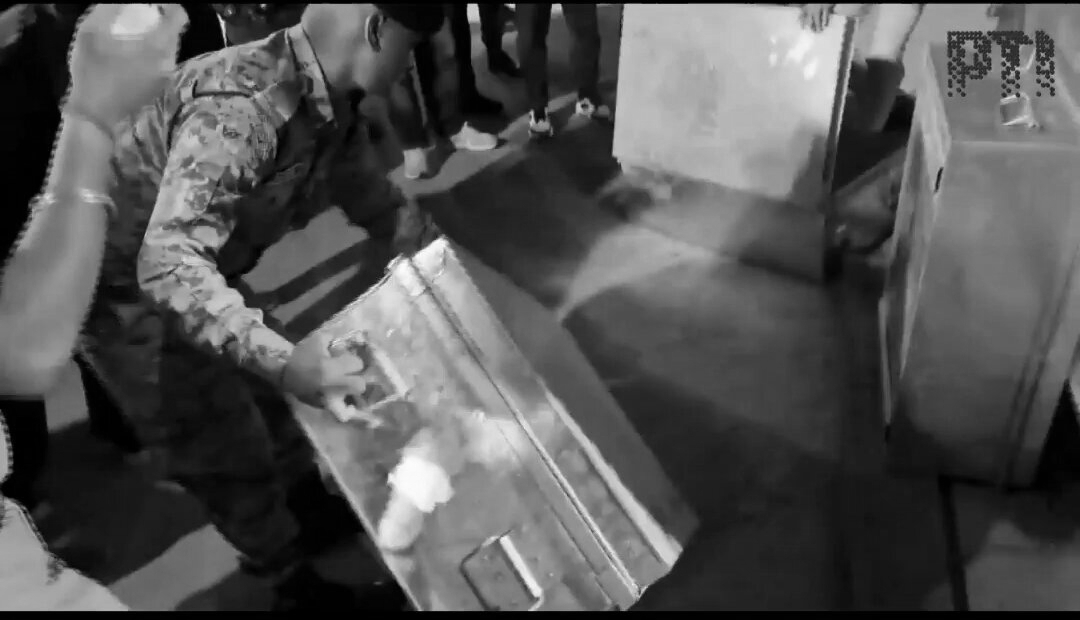
On November 12, RJD workers in Sasaram protested when an unannounced truck entered a strong room, fearing possible EVM tampering. District Magistrate Udita Singh later clarified that the vehicle carried only empty steel boxes needed for counting preparations, opened in the presence of RJD representatives and the media. A brief CCTV blackout, she added, was caused by a temporary power cut. The EC dismissed the allegations as baseless.
In today’s digital, hyper-charged political environment, the EC is expected to be something like Caesar’s wife flawless not just in process, but in optics. Above suspicion. And incidents involving trucks at night, unused EVMs being spotted outside, or even brief power cuts inevitably plant seeds of doubt, however innocent the explanations may be.
This mistrust has surfaced before in Bihar in 2020, Madhya Pradesh in 2018, Uttar Pradesh in 2017, and Maharashtra in 2019 almost always linked to routine administrative movement of counting materials. Each time, the EC defended the practice. Yet each time, the perception gap grew a little wider.
Against this backdrop, the EC on Thursday detailed the state’s elaborate counting-day architecture across all 243 constituencies. Every seat has a designated returning officer (RO) supported by a counting observer. A total of 4,372 counting tables have been set up, staffed by supervisors, assistants and micro-observers. More than 18,000 counting agents appointed by candidates are stationed to monitor every stage.
Counting begins at 8 AM with postal ballots, followed by EVM counting at 8:30 AM. Control units are issued table-wise and round-wise, allowing party agents to verify seals and serial numbers against Form 17C records. Any mismatch mandates counting of VVPAT slips from that polling station. Additionally, five polling stations per constituency will undergo random VVPAT verification.
Round-wise results will be published by respective ROs and updated on the EC’s official results portal. The Commission has urged the public and media to rely solely on this portal and ignore unofficial sources or premature projections. Even as the EC highlights its rigorous protocols, the Sasaram episode serves as a reminder that procedure alone may not be enough.