
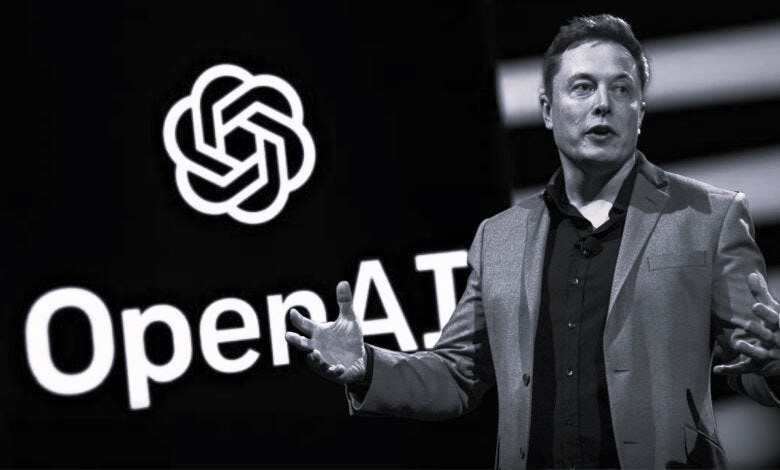
Elon Musk vs OpenAI: $134 Billion Legal Battle Heads to Jury Trial
Elon Musk has intensified his legal battle against OpenAI and its strategic partner Microsoft , filing a petition that seeks up to $134 billion in damages, a figure that could make this one of the biggest compensation claims in modern tech history. The case has quickly drawn global attention because it goes beyond money and directly questions how AI firms uphold their founding principles, governance structures, and public commitments.
At the centre of Musk’s argument is his claim that he was not just an early supporter but a key force behind OpenAI’s rise. Musk’s team says he contributed around $38 million during OpenAI’s early phase in 2015, and that his credibility, influence, and role in attracting top talent helped the organisation gain early momentum. His lawyers argue that without Musk’s involvement, OpenAI may not have reached its current global standing.
The dispute largely revolves around OpenAI’s founding vision. Musk alleges the organisation was launched as a non-profit initiative meant to benefit humanity , but later shifted toward a commercial model. He claims OpenAI abandoned its original mission and grew into a profit-oriented structure closely aligned with Microsoft’s ecosystem something he describes as a betrayal of founding commitments and a violation of the original understanding.
Musk’s compensation demand is backed by a valuation-based damages model. According to filings cited in reports, he argues OpenAI gained between $65.5 billion and $109.4 billion , while Microsoft gained between $13.3 billion and $25.1 billion , adding up to the $134 billion maximum claim. Musk presents this amount as the economic value that the two companies allegedly earned through what he calls a wrongful transformation of OpenAI’s original mission.
OpenAI has strongly denied all accusations, calling Musk’s demand “unserious” and describing the lawsuit as a form of harassment . The company claims Musk’s motives are competitive, pointing out that he now runs xAI , which rivals OpenAI in the generative AI race. OpenAI also argues that the damages figure is exaggerated and far beyond any reasonable measure of Musk’s early support.
Microsoft too has rejected the allegations, maintaining that it is only a technical and cloud partner and had no role in any alleged misconduct. The company has distanced itself from Musk’s claims, arguing that it should not be held responsible for the damages being demanded and that it did not engage in any fraudulent actions.
A major development that pushes this case into the spotlight is the legal process itself: a court has allowed the dispute to proceed, scheduling a jury trial in Oakland, California, in April . This makes the issue more serious than a corporate disagreement, as internal communications, agreements, and decision-making processes could become public, potentially exposing how one of the world’s most influential AI organisations evolved.
The outcome of this case could influence the wider AI industry. If Musk succeeds, it could force stronger legal scrutiny on nonprofit-to-profit transitions , make companies more accountable for their mission statements, and reshape how founders and early donors are treated in tech organisations. If OpenAI wins, it could reinforce the Silicon Valley norm that missions can evolve as funding requirements grow especially in AI, where scale demands massive capital. Either way, this lawsuit is emerging as a defining battle over AI ethics, governance, and commercial power .