
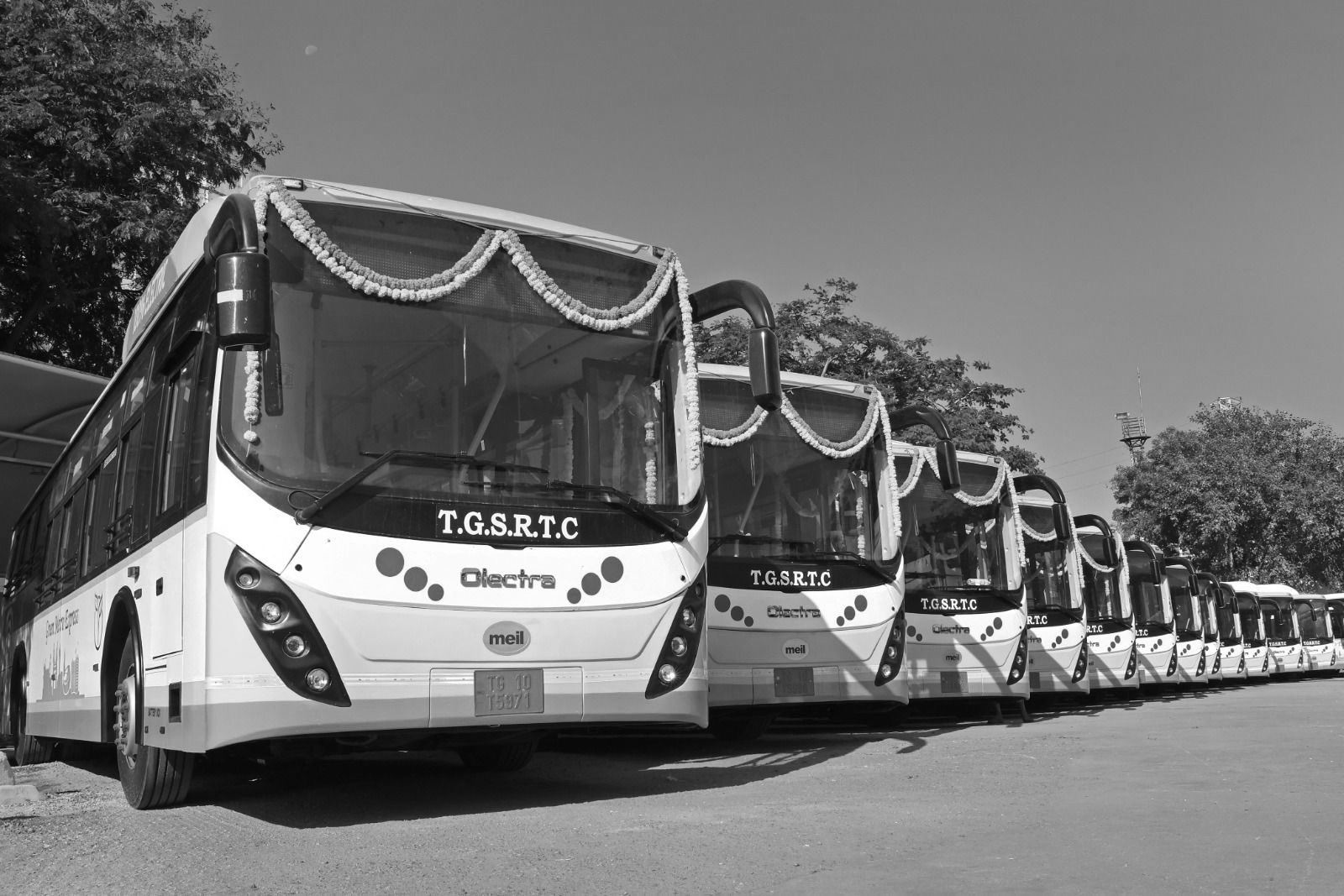
Electric Bus Future: Telangana Expands EV Fleet to 540 and Strengthens Last-Mile Access
Telangana’s public transport transformation gathered fresh momentum today as Transport Minister Ponnam Prabhakar inaugurated 65 new electric buses at the Ranigunj depot, reaffirming the government’s commitment to building a cleaner and more accessible mobility network. Highlighting the state’s rapid progress, the minister noted that 2,476 new buses have been added in just two years, meaning nearly 40% of the current fleet is newly inducted. He emphasized that this expansion is not just about upgrading infrastructure, but about reshaping the future of public transport, improving last-mile connectivity, and empowering women through greater mobility and opportunity.
A major catalyst for this transformation is the state’s aggressive push towards clean and equitable mobility. Today, Telangana operates 810 electric buses across key districts, and Hyderabad’s EV fleet is set for a significant boost as 65 new electric buses were flagged off at the Ranigunj depot. With another 175 expected by January, the city’s EV count will reach 540 buses early next year. The broader ambition is even more striking: over the next two years, Hyderabad alone aims to operate 2,800 EV buses to curb pollution and create a more resilient public transport network. This aligns with the larger goals of Vision 2047, which seeks to raise public transport usage from the current 28% to an impressive 70%, requiring RTC to ultimately scale to nearly three times its present capacity.
The expansion is not limited to buses alone; it is also transforming the reach of public transport within the city. Beginning today, RTC services will operate on 373 newly added colony routes across Hyderabad , dramatically expanding last-mile connectivity for nearly 7 lakh residents . The Hyderabad region alone accounts for 243 of these colonies, spanning Dilsukhnagar, Rajendranagar, Midhani, Bandlaguda, Mehdipatnam, Ibrahimpatnam, Hayathnagar, Falaknuma and Maheshwaram. The Secunderabad region adds another 130 colonies, improving accessibility in Jeedimetla, Chengicherla, Kukatpally, Medchal, Uppal, the University of Hyderabad campus, Miyapur, the Cantonment area, Ranigunj and Kushaiguda. This shift signals an unprecedented decentralisation of transport access, allowing thousands of daily commuters to connect to workspaces, hospitals, markets and schools with greater ease than ever before.
Women remain at the heart of this mobility revolution. The Maha Lakshmi free bus travel scheme has now completed two years, enabling an extraordinary 251 crore free journeys for women and resulting in savings worth ₹8,500 crore for households across the state. Free mobility, especially for low-income and working-class women, plays a critical role in facilitating access to employment, education and healthcare. It also catalyses long-term economic participation, with evidence consistently showing that affordable and safe transport leads to higher female workforce participation and a surge in women-led micro-businesses.
The government is also making strides to bring women into the transport ecosystem itself. Under SERP Mahila Shakti, 152 buses are already operated by women’s groups, with another 448 soon to be added under Mahila Samakhya forming a 600-bus network directly managed by women’s collectives. As the EV fleet scales up, new opportunities are emerging in charging station operations, dispatch and control-room work, cleaning, logistics and depot-based support roles, sectors that traditionally saw low female participation but now stand to generate several thousand indirect and semi-formal employment opportunities for women. In the broader economy, improved mobility is expected to enable lakhs of women to pursue stable employment in the care sector, domestic work, retail, services and small-scale entrepreneurship.
While the government has been transparent about the number of buses added to the fleet, public procurement details such as the exact number of buses ordered versus the number delivered are still not fully available. A more structured disclosure framework, including periodic fleet dashboards, delivery status updates and details of EV tender models, would greatly enhance transparency and public confidence as the state advances towards its bold mobility targets.
Altogether, Telangana’s evolving transport landscape represents much more than infrastructure growth; it reflects a deeper social transformation centred on women’s empowerment, economic mobility and urban inclusivity. The buses rolling out today from the 65 new EVs at Ranigunj to the hundreds of new colony routes across Hyderabad are not merely vehicles but instruments of opportunity. If Telangana maintains its current trajectory, its transport system will become a national model for integrating sustainability, gender equity and economic growth. In the process, it will carry not just passengers, but hopes, aspirations and pathways to a more inclusive future for millions.