
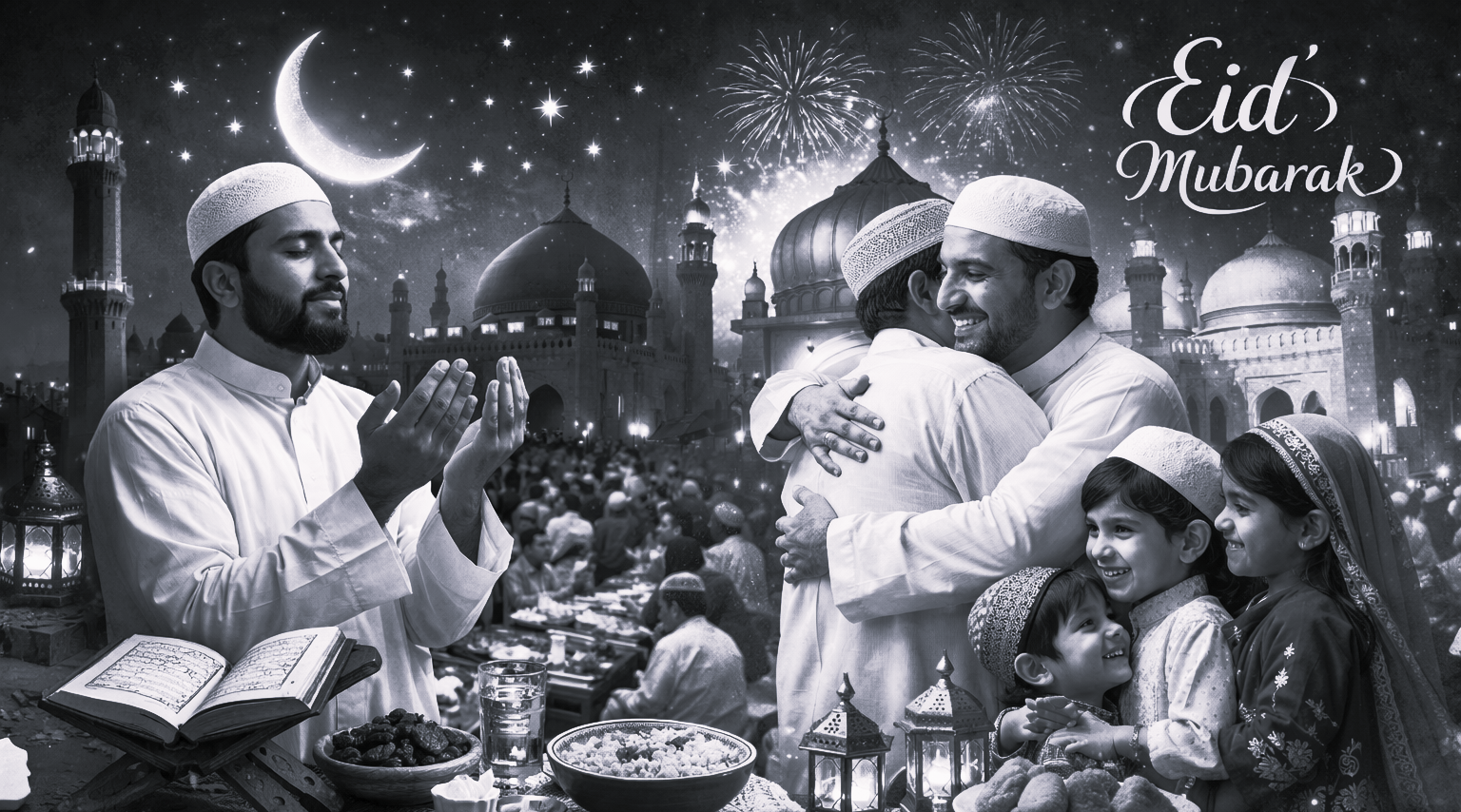
Eid-ul-Fitr: A Confluence of Sacrifice, Discipline, and Joy
Eid-ul-Fitr, meaning the “festival of breaking the fast,” is celebrated on the first day of Shawwal, the tenth month of the Islamic calendar, following the conclusion of the holy month of Ramadan. It is regarded as a divine reward bestowed by Allah upon devotees who observe strict fasting, engage in nightly prayers, and recite the Quran throughout Ramadan. The sighting of the crescent moon marks the end of the fasting period and fills the Muslim world with joy. This moment signifies not only the conclusion of a month but also the beginning of a renewed spiritual journey. The night of the moon sighting, known as Chand Raat, heralds the festive celebrations.
Spiritual Significance of Eid-ul-Fitr
Eid-ul-Fitr is not merely about feasting or new clothes; it symbolises spiritual purification. During Ramadan, individuals practise self-restraint by controlling hunger, thirst, and desires, thereby attaining Taqwa (God-consciousness). The festival celebrates this achievement and expresses gratitude to Allah, especially as the Quran was revealed during this sacred month. The occasion emphasises compassion, reconciliation, and unity, encouraging people to help the needy and foster harmonious relationships.
On the evening of the 29th day of Ramadan, Muslims worldwide look towards the western sky for the crescent moon. If sighted, Eid is observed the next day; otherwise, fasting continues for 30 days, with Eid following thereafter. Once the moon is sighted, announcements are made from mosques, and celebrations begin. Women apply mehendi, children enjoy festivities, and markets bustle with activity as families prepare for the occasion.
Fitra Donation: Responsibility Towards the Poor
A key aspect of Eid is Fitra or Sadaqat al-Fitr. Before offering the Eid prayers, every Muslim is required to donate a fixed amount of money or food grains on behalf of themselves and their family members to the poor. This ensures that no one goes hungry on the day of celebration and that even the underprivileged can partake in the festivities. It is also believed that this act purifies any minor shortcomings during fasting and reflects the charitable spirit of the community.
Eid Prayers
On the morning of Eid, Muslims perform Ghusl (ritual bath), wear new clothes, apply attar (perfume), and proceed to the Eidgah, an open ground designated for prayers. Thousands gather to offer collective prayers, standing shoulder to shoulder irrespective of social or economic status. After the prayer, the Khateeb (religious leader) delivers the Khutbah (sermon), emphasising values such as humanity, peace, and brotherhood.
“Eid Mubarak”: Warmth in Embrace
Following the prayers, people greet one another with “Eid Mubarak” and exchange embraces, symbolising unity and forgiveness. Differences are set aside, and bonds are renewed. Many also extend charity to the needy outside mosques before returning home, sharing greetings with everyone they meet along the way.
Sheer Khurma and Festive Delicacies
Eid-ul-Fitr is often called “Meethi Eid” (the festival of sweets). A signature dish prepared in every Muslim household is Sheer Khurma, made with milk, vermicelli, dates, and dry fruits. In addition, delicacies such as biryani and kebabs are served to guests and loved ones. The spirit of hospitality transcends religious boundaries, reflecting India’s inclusive cultural ethos.
Eidi: A Festival for Children
For children, Eid is especially joyful due to the tradition of Eidi monetary gifts given by elders. Dressed in new clothes, children greet elders respectfully and receive these tokens of affection, which they often spend on toys and sweets. Beyond its monetary value, Eidi symbolises blessings and strengthens family bonds.
Social Harmony and Secular Spirit
In a diverse country like India, Eid stands as a symbol of secularism and unity. Muslim families often invite friends from different communities to Iftar and Eid feasts. Public figures and leaders host Eid Milan gatherings, spreading messages of peace and togetherness. The festive atmosphere in streets and markets reflects the shared joy of the occasion.
Although Eid-ul-Fitr marks the end of Ramadan, its teachings endure. The discipline, honesty, and compassion practised during the month should continue beyond the festival. The experience of hunger instills empathy, discouraging waste and encouraging care for the less fortunate. Ultimately, Eid conveys timeless values of love, peace, patience, and sacrifice, with prayers for global harmony and happiness.