
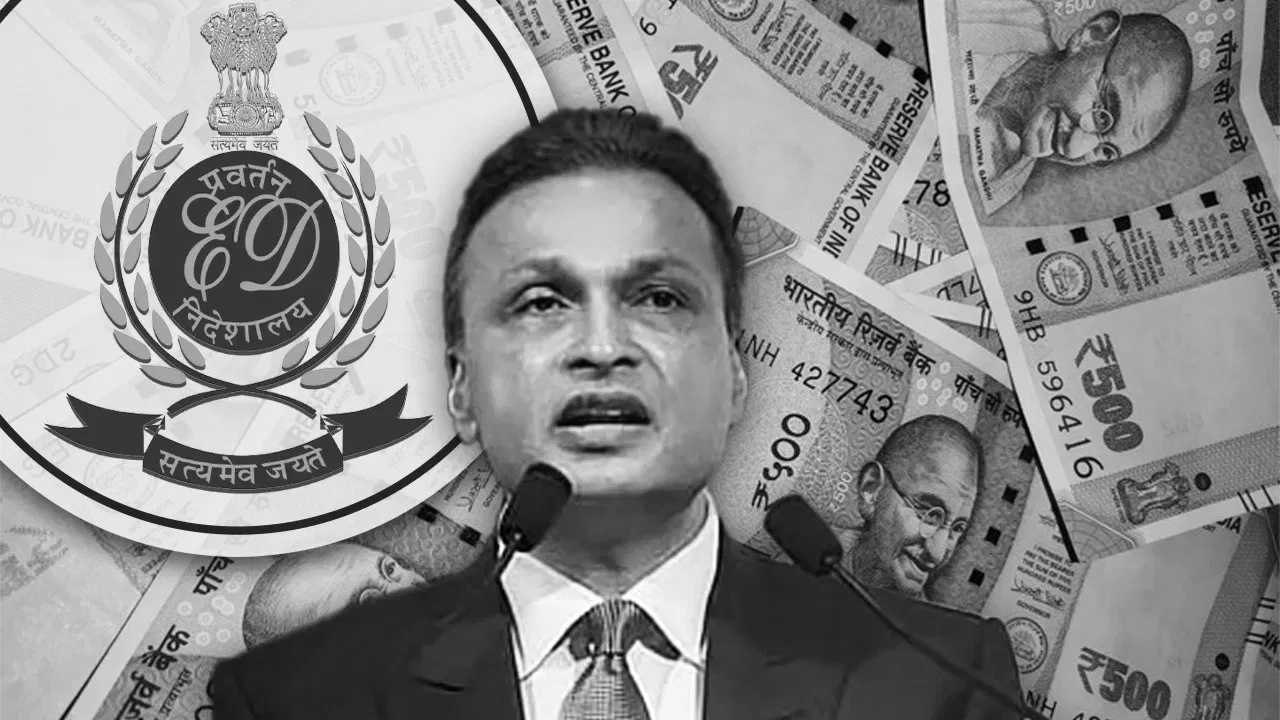
ED attaches ₹3,000 crore worth of Anil Ambani assets, probe points to massive fund diversion
The Enforcement Directorate (ED) has provisionally attached 40 immovable properties worth over ₹3,000 crore belonging to companies under the Anil Ambani-led Reliance Group in connection with an alleged money laundering case. According to the agency, the attached assets include land parcels and buildings spread across Mumbai, Navi Mumbai, Thane, Pune, Surat, and several other locations. The case pertains to the alleged diversion of public funds raised by Reliance Home Finance Ltd (RHFL) and Reliance Commercial Finance Ltd (RCFL).
The ED claims the funds were “diverted and disguised” through multiple group entities, eventually causing a major loss to lenders, most notably Yes Bank. Between 2017 and 2019, Yes Bank reportedly lent nearly ₹5,000 crore to the two Reliance subsidiaries. By the end of 2019, most of that money had turned into non-performing assets, a technical phrase for “gone.”
The trouble began in 2017 when the loans were extended during a phase of aggressive corporate lending. Between 2018 and 2019, signs of stress started showing, and by early 2020, investigations into possible fund diversion were initiated following the collapse of Yes Bank’s balance sheet and the arrest of its former CEO Rana Kapoor. From then on, the case has seen slow progress despite multiple asset attachments and repeated summons.
A closer look at the lending trail reveals how the loans weren’t just risky, they were recklessly handled. Investigators found that many loans were disbursed without proper due diligence, often on the same day applications were filed, and sometimes even before they were formally submitted. Key security documents were allegedly left blank or undated, and loans were extended to companies with negligible or no business operations. Such patterns, the ED notes, point to “intentional and consistent control failures”, bureaucratic language for a complete breakdown in oversight.
However, while the ED’s attachments grab headlines, its conviction rate remains strikingly low. According to data presented in Parliament, the agency’s conviction rate under the Prevention of Money Laundering Act (PMLA) hovers below 1% . With investigations often stretching for years and trials dragging through procedural delays, few cases reach final judgment. In similar large-scale financial probes, the time from initial attachment to actual recovery or repayment has taken five to ten years on average.
For Yes Bank, therefore, even if the attached assets eventually translate into recoverable funds, it could take at least 6-8 years before any significant amount is realized, assuming the courts uphold the ED’s case and the assets are successfully liquidated. In the meantime, the losses remain on the books, and the money lent, public-linked capital, stays locked in a legal limbo.
This case is not just about one corporate group or one bank. It is about the cracks in India’s financial ecosystem, where regulatory vigilance often comes after the damage is done. It exposes how negligence, influence, and institutional complacency can turn structured lending into a systemic liability. When financial institutions forget that their capital represents public trust, accountability becomes blurred and the cycle of defaults begins anew.
At its heart, the Reliance-Yes Bank case is a cautionary tale, a story that began in 2017 and continues in 2025, reflecting how India’s enforcement and recovery systems still struggle to catch up with the pace of financial wrongdoing.