
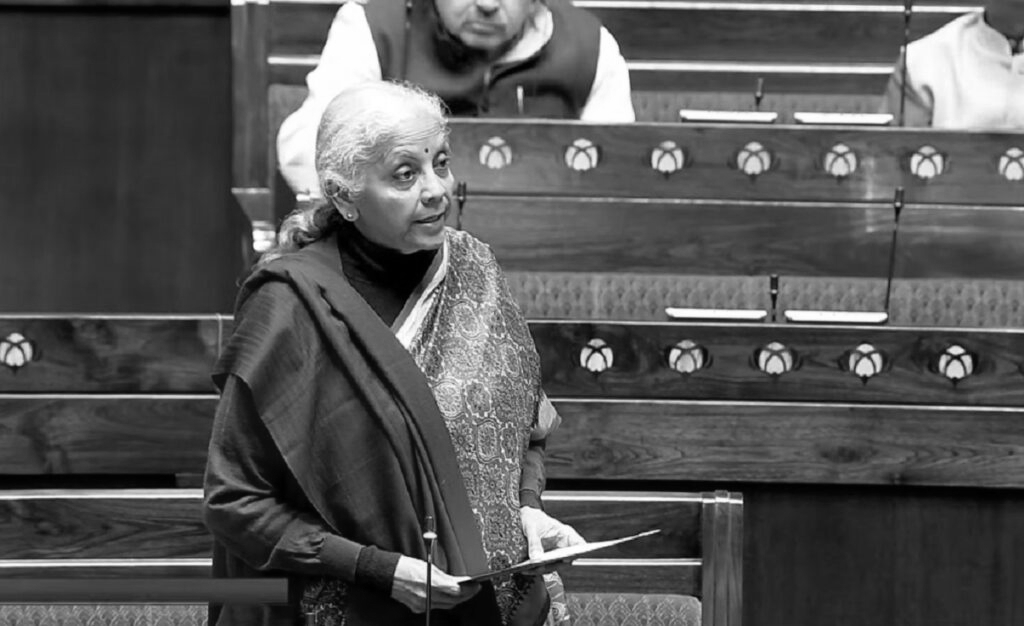
Economic survey 2025-26 tabled in Lok Sabha ahead of Union Budget
Union Finance Minister Nirmala Sitharaman on Thursday tabled the Economic Survey 2025-26 in the Lok Sabha, presenting a comprehensive review of India’s economic and fiscal performance over the past year and outlining the short- to medium-term outlook ahead of the Union Budget 2026-27 .
Prepared by the Economic Division of the Department of Economic Affairs under the supervision of the Chief Economic Adviser, the survey described India’s economy as resilient despite global uncertainty, driven by strong domestic demand, infrastructure investment and steady revenue mobilisation.
The survey estimated real GDP growth for 2025-26 at around 7.3 per cent , keeping India among the fastest-growing major economies. Inflation remained largely within the tolerance band, aided by improved food supply management and stable core prices.
A key focus of the survey was fiscal consolidation. The government pegged the fiscal deficit for 2025-26 at 4.4 per cent of GDP , marking a continued reduction from pandemic-era highs and reflecting tighter control over expenditure alongside higher tax collections.
During the April-November period, the fiscal deficit stood at over 60 per cent of the annual target, mainly due to front-loaded capital expenditure on infrastructure projects such as highways, railways and urban development.
The survey noted that revenue receipts were supported by robust GST collections and steady growth in direct taxes, improving the government’s capacity to fund development programmes without excessive borrowing.
Net market borrowings for the financial year were estimated at around ₹11-12 lakh crore , with gross borrowings used primarily to finance capital expenditure and priority welfare schemes. The survey said the weighted average cost of borrowing moderated slightly, easing pressure on debt servicing.
Public debt levels remained manageable, with the government reiterating its commitment to reducing the deficit to below 4.5 per cent of GDP over the medium term.
The survey highlighted that a large share of government spending continued to be directed towards social welfare and infrastructure , with the most expensive schemes in 2025–26 led by the food subsidy under the PM Garib Kalyan Anna Yojana (PMGKAY) , which accounted for over ₹2 lakh crore and ensured free food grains to more than 80 crore beneficiaries . This was followed by the fertiliser subsidy , which exceeded ₹1.5 lakh crore and was aimed at shielding farmers from high global input costs . The Mahatma Gandhi National Rural Employment Guarantee Scheme (MGNREGS) received an outlay of over ₹80,000 crore to support rural employment , while flagship programmes such as the Jal Jeevan Mission and the Pradhan Mantri Awas Yojana together received more than ₹1.2 lakh crore for expanding drinking water supply and affordable housing across the country.
Capital expenditure remained a priority, with government investment in infrastructure rising by over 10 per cent year-on-year, reinforcing growth and employment generation.
The Economic Survey projected GDP growth in the range of 6.5 to 7 per cent for 2026-27, citing sustained consumption, rising private investment and continued public spending as key drivers. It also flagged risks from geopolitical tensions and volatile global commodity prices.
The findings of the survey will guide policy priorities in the Union Budget 2026-27, which Sitharaman will present on Sunday. This will be her ninth consecutive budget, making her the longest-serving woman finance minister to present the Union Budget in India.
The survey concluded that India’s economic fundamentals remain strong, with fiscal discipline and targeted spending expected to support long-term growth and macroeconomic stability.