
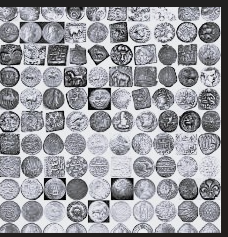
Echoes of history etched in metal: The timeless story of India’s coins
The jingle of a coin in our palm may seem ordinary, a simple symbol of value, a token of trade. Yet, within that tiny disc of metal lies a saga stretching across millennia the economic pulse, artistic essence, and political legacy of India’s civilization. Each coin, whether gold or copper, speaks softly of empires that rose and fell, of kings who stamped their victories into permanence, and of artisans who transformed metal into memory.
When we hold a coin, we don’t just touch currency we hold a fragment of history. Every mark, every emblem, every worn edge whispers stories of dynasties, trade routes, faiths, and cultural exchanges. Coins are, in essence, India’s silent storytellers living witnesses to the evolution of a nation.
What Are Coins?
Coins are officially minted pieces of metal issued by a sovereign authority as a medium of exchange. Beyond their economic purpose, they are miniature historical documents tangible evidence of political authority, religious belief, and artistic sophistication.
In simple terms: “A coin is not just money — it’s a message in metal.”
From Punch Marks to Precision Minting: A Journey Through Time
The Earliest Coins – Punch-Marked Beginnings (6th century BCE)
India’s first coins, known as Punch-Marked Coins , appeared during the Mahajanapada period (6th century BCE). Made of silver or copper, these coins bore symbols punched onto metal sheets of the sun, animals, trees, or wheels representing kingdoms, faiths, and trade guilds. They marked the dawn of India’s monetary system.
Mauryan Age – The Birth of an Imperial Currency
Under Chandragupta Maurya (321–185 BCE), coinage became a state-regulated system. The Arthashastra by Kautilya gives detailed descriptions of minting, weights, and purity checks. Mauryan coins featured motifs such as elephants, wheels, and the sacred bull, symbolising both power and prosperity.
Indo-Greek Influence – Portraits and Dual Scripts
After Alexander’s campaign, Indo-Greek rulers introduced Western-style portrait coins, the first to feature realistic human images. They bore inscriptions in Greek and Kharosthi, blending East and West, and setting a precedent for bilingual coinage in India.
Satavahanas – The Pride of the Deccan
Between the 1st century BCE and 2nd century CE, the Satavahanas established one of South India’s earliest organised monetary systems. Their coins made of lead, copper, and silver -- carried legends in Brahmi script, with symbols like the lion, chariot, or the rising sun.
The discovery of Satavahana coins at Kotilingala , Bodhan , and Dhulikatta in Telangana proved pivotal in mapping the dynasty’s origins and trade networks.
Kushan Empire – The Golden Age of Coin Artistry
From the 1st to 3rd century CE, Kushan rulers like Kanishka issued magnificent gold coins featuring Greek, Indian, and Iranian deities, a testament to religious tolerance and cosmopolitanism.
Gupta Era – The Classical “Golden Age” (320–550 CE)
Gupta coins marked the zenith of Indian numismatic artistry. Struck in pure gold, they depicted emperors performing rituals, hunting scenes, and goddesses like Lakshmi and Saraswati. Each coin was a masterpiece reflecting prosperity, devotion, and aesthetic brilliance.
Medieval Period – The Age of Diversity
As regional powers emerged, each kingdom minted its own distinctive coinage.
Chalukyas and Cholas imprinted dynastic symbols; Kakatiyas used Telugu inscriptions, a first in Indian history. During the Delhi Sultanate and Mughal eras, Persian calligraphy and Islamic motifs flourished, with rulers like Akbar and Shah Jahan producing exquisitely crafted gold and silver coins that unified the subcontinent’s monetary system.
The British Raj – Mechanising the Mint
With the British came modern minting technology. Coins now bore portraits of Queen Victoria and subsequent monarchs. The Rupee was standardised as India’s national currency. Machine-struck coins replaced hand-hammered designs, heralding the industrial age of money.
Independent India – Sovereignty in Symbolism
Post-1947, India’s coins became emblems of national pride. The first coin of independent India, issued in 1950, bore the Lion Capital of Ashoka . Later issues carried the Ashoka Chakra , Mahatma Gandhi’s image , and the ₹ symbol . The transition from the anna system to the decimal system (100 paise = 1 rupee) modernised the nation’s currency.
Telangana’s Silent Testimonies: Coins Beneath the Soil
The soil of Telangana has yielded treasures that speak volumes about its ancient prosperity. Coins found at Kotilingala , Dhulikatta , Phanigiri , and Bodhan have reshaped our understanding of the Deccan’s history.
The Satavahana Legacy
The Satavahanas, ruling from Pratishthana (modern-day Paithan), left an indelible imprint on Telangana. Coins discovered at Kotilingala bearing legends like “Sri Satakarni” confirmed the dynasty’s Telangana roots. The 2023 discovery of over 3,700 lead coins at Phanigiri dated to the Ikshvaku period further illuminated the region’s vibrant trade and religious life.
Trade and Roman Links
Roman coins unearthed in Telangana attest to flourishing Indo-Roman trade. These coins, exchanged for Indian spices and textiles, underscore the Deccan’s integration into global commerce nearly two millennia ago.
Symbols of Faith and Harmony
Satavahana and Ikshvaku coins reflect deep religious harmony with Buddhist dharmachakras, Hindu tridents, and Jain motifs coexisting. Inscriptions honouring royal mothers, like “Gautamiputra Satakarni,” reveal the elevated status of women in ancient society.
From Kakatiyas to Nizams
Kakatiya coins, inscribed in Telugu, embody regional linguistic pride. Later, under the Qutb Shahi and Nizam dynasties, Hyderabad emerged as a minting hub. The Hyderabad Mint issued coins and currency marked with Persian script and Islamic symbols, while the State Bank of Hyderabad later introduced its own notes featuring the iconic Charminar.
Coins: More Than Currency, They’re Our Metallic Manuscripts
Every coin is a capsule of civilization, a blend of art, economy, and faith. Through them, historians reconstruct lost eras: rulers’ reigns, trade routes, artistic styles, and even languages.
Telangana’s discoveries have not just enriched regional heritage, they've redrawn the very map of India’s numismatic history.
A coin may be small in size, but within its circle lies an empire, an idea, and an identity.
Coins do not speak yet their silence echoes through centuries, telling the story of who we were and how we became who we are.