
Echoes from the Himalayas - Ladakh wants its voice back
High in the trans-Himalayan deserts of northern India, the chants of protest have echoed for months across Leh’s bazaar and Kargil’s town square. Monks in maroon robes, Muslim youth in woollen caps, shopkeepers, farmers and environmental activists are marching together an uncommon unity forged around a common fear: that Ladakh, carved out as a separate Union Territory (UT) in August 2019, is adrift without the constitutional protections it once enjoyed. Their banner headline demand is clear: statehood for Ladakh and inclusion under the Sixth Schedule of the Constitution.
From Article 370 to union territory
Until August 5, 2019, Ladakh was part of the erstwhile state of Jammu & Kashmir (J&K), enjoying the special autonomy guaranteed under Article 370. That provision allowed J&K its own constitution, restricted land ownership to permanent residents and limited the Union government’s legislative reach. When Parliament revoked Article 370 and bifurcated the state, Ladakh was detached from J&K and made a separate UT without a legislature.
The change was celebrated by some as long-awaited recognition of Ladakh’s distinct identity. But the honeymoon faded quickly. The absence of an elected assembly meant that local decision-making shifted to bureaucrats in Delhi. Laws on land, jobs and industry once shielded by J&K’s state constitution could now be changed by central legislation. For a region where over 97 per cent of the population belongs to Scheduled Tribes (STs), fears of demographic change and uncontrolled development grew louder.
Why Sixth schedule?
The protesters’ rallying cry is for Ladakh to be brought under the Sixth Schedule of the Indian Constitution, a special framework that currently applies only to certain tribal areas of Assam, Meghalaya, Tripura and Mizoram. Enshrined in Articles 244(2) and 275(1), the Sixth Schedule provides for Autonomous District Councils (ADCs) with powers to make laws on land use, forests, customs, village administration and local taxation.
Key features include:
Control over land and resources: ADCs can regulate transfer of land and prevent alienation to non-tribals.
Legislative autonomy: Councils can make laws on agriculture, water, village courts, inheritance and customary practices.
Revenue powers: They can levy and collect certain taxes and fees.
Protection of culture: Traditional customs and indigenous governance systems receive constitutional backing.
For Ladakh’s tribal communities Buddhists in Leh, Shia Muslims in Kargil and nomadic Changpas on the high pastures these provisions promise a bulwark against outside exploitation, unplanned tourism and mining in a fragile ecosystem already battling climate change.
Comparing Article 370 and the Sixth Schedule
Article 370, prior to its abrogation in 2019, granted the entire state of Jammu & Kashmir a unique political and constitutional autonomy. Under this provision, the state had its own constitution, its own flag, and a fully empowered legislative assembly, giving it broad powers to govern internal matters. Land ownership was strictly regulated, with restrictions on outsiders purchasing property, and Union laws were applied selectively through Presidential Orders. In essence, Article 370 provided a macro-level political autonomy that encompassed the entire state, allowing Jammu & Kashmir significant self-governance while still remaining part of the Indian Union.
In contrast, the Sixth Schedule applies to specified tribal districts in the northeastern states of India, providing administrative autonomy at a more localized level. It empowers district and regional autonomous councils to govern certain subjects, especially land and resource management, giving them the authority to regulate land transfers to non-tribals. However, central and state governments retain control over defence, foreign affairs, and overall law and order. Unlike Article 370’s blanket protections across an entire state, the Sixth Schedule offers micro-level community control, focusing on protecting tribal interests within defined areas. Following the abrogation of Article 370, many argue that regions like Ladakh could benefit from at least the Sixth Schedule’s more limited but concrete safeguards.
The government’s response
The Centre acknowledges Ladakh’s unique tribal character but remains cautious. In 2020, the National Commission for Scheduled Tribes recommended Sixth Schedule inclusion, citing the region’s 97% tribal population. However, Home Ministry officials point out that the Sixth Schedule was originally designed for the Northeast’s complex ethnic mosaic and requires constitutional amendment to extend elsewhere.
Instead, Delhi has floated alternatives:
Article 371-like provisions, similar to those in Nagaland or Himachal Pradesh, which can be tailored to protect land and culture without creating powerful autonomous councils.
Strengthening the existing Leh and Kargil Hill Development Councils with greater financial and legislative powers. So far, these proposals have failed to placate protest leaders such as the Leh Apex Body and the Kargil Democratic Alliance, who insist that only Sixth Schedule status offers constitutional permanence.
Statehood vs. Autonomy
Running parallel to the Sixth Schedule demand is the call for full-fledged statehood. Many Ladakhis argue that without an elected legislative assembly, any form of local autonomy remains hollow. Statehood would give them representation in the Rajya Sabha, control over land and employment policies, and a government directly accountable to the people. Yet New Delhi is wary of setting a precedent. Granting statehood to a sparsely populated, strategically sensitive region bordering China and Pakistan poses security and administrative challenges.
Stakes beyond local politics
Ladakh is not merely a remote desert; it is India’s strategic crown. It hosts the Siachen glacier, key airbases, and sensitive borders along the Line of Actual Control with China. Any constitutional change is viewed through a national security lens. At the same time, the region’s fragile ecology, melting glaciers, scarce water, and booming tourism demands nuanced governance that balances development and conservation.
Economically, Ladakh’s options are limited. Tourism brings seasonal income but also strains water and waste systems. Solar energy and high-altitude agriculture offer promise but require land and investment. Protest leaders fear that without constitutional safeguards, large corporations could acquire land cheaply, altering the social fabric and threatening traditional livelihoods.
Voices from the ground
“We were told Union Territory status would give us direct access to Delhi. Instead we have lost our voice,” says Tsering Dorjay, a shopkeeper in Leh who joins every protest march. In Kargil, student leader Nasir Hussain echoes the sentiment: “The Sixth Schedule is not just about land. It is about survival of our culture.”
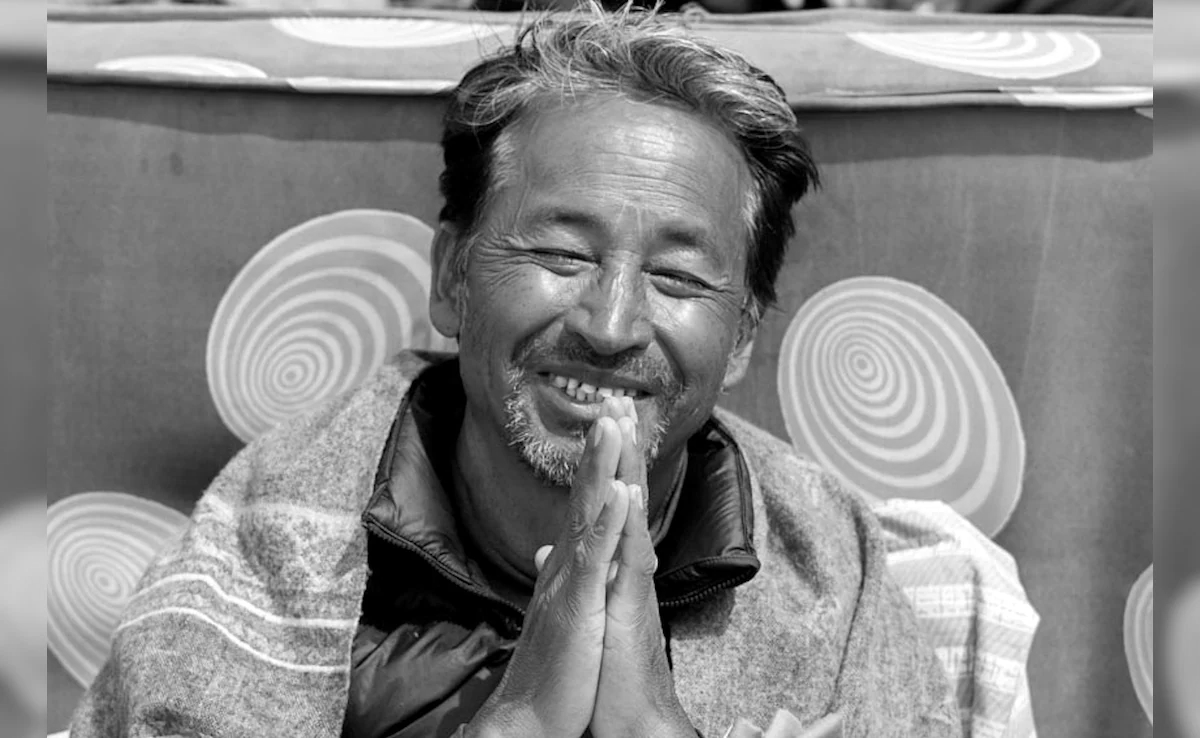
Environmental activist Sonam Wangchuk, whose hunger strike earlier this year drew national attention, warns of ecological peril. “Our glaciers are our lifeline. Decisions on mining and tourism cannot be left to distant bureaucrats. Local councils must have constitutional power to protect our environment.”
The Road Ahead
Talks between Ladakh’s representatives and the Union government continue, but deadlines have repeatedly slipped. The Hill Councils elections, due soon, are likely to become a referendum on the Sixth Schedule demand.
Legal experts suggest several possible outcomes:
1. Direct Sixth Schedule inclusion through a constitutional amendment a politically heavy lift requiring two-thirds majority in Parliament.
2. A bespoke Article 371 provision, customised for Ladakh to protect land and employment while retaining UT status.
3. Enhanced Hill Council powers under existing laws, combined with stronger tribal land regulations.
Each option balances local aspirations against national security and political feasibility.
Ladakh’s agitation is more than a constitutional debate; it is a struggle over identity, environment and the meaning of autonomy in a diverse federation. The removal of Article 370 opened a governance vacuum that Delhi has yet to fill. Whether through the Sixth Schedule, a new Article 371 clause or eventual statehood, the people of Ladakh are demanding a voice in their own future. As winter snows descend on the high plateau, the protests show no sign of melting. The question that remains is not whether Ladakh needs special protection it clearly does but whether India’s political system can craft a solution that honours local aspirations while safeguarding national interests.