
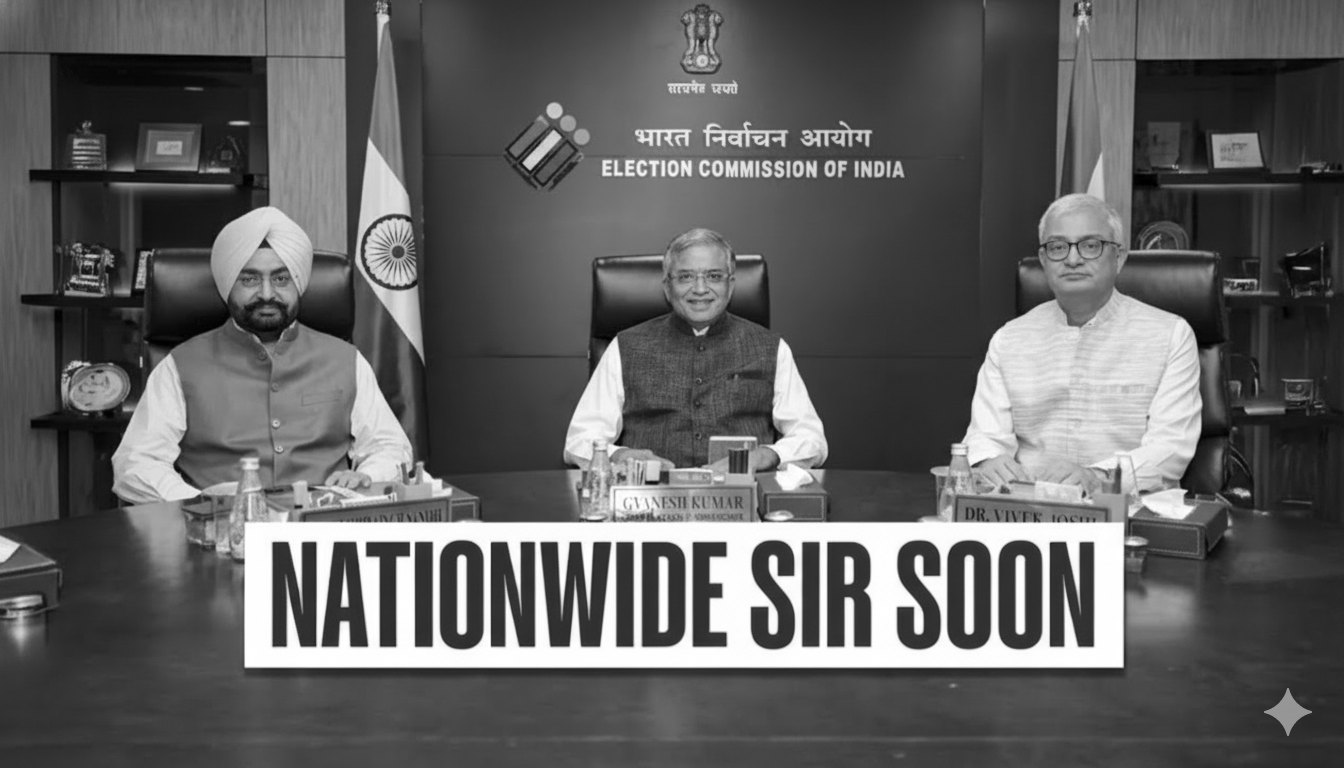
EC takes nationwide action with SIR to fix voter list errors
The Election Commission of India (ECI) is preparing to roll out a nationwide Special Intensive Revision (SIR) of electoral rolls, a move hailed as crucial for electoral integrity but fraught with challenges, as Bihar’s recent experience illustrates. Chief Election Commissioner Gyanesh Kumar, alongside Election Commissioners S S Sandhu and Vivek Joshi, convened state chief electoral officers in New Delhi this week to finalize a phased rollout.
The first phase is likely to cover states scheduled for assembly elections in 2026, including Assam, Kerala, Puducherry, Tamil Nadu, and West Bengal, while avoiding regions busy with local body polls. Officials said the deliberations will continue through Thursday, with the top brass deciding on exact dates and scope for each state to ensure a smooth and effective implementation of the nationwide exercise.
Why SIR matters
At its core, the SIR is about restoring credibility to India’s electoral process. By removing duplicate, deceased, or migrated entries and verifying citizens’ place of birth, the Commission aims to curb fake voting, prevent impersonation, and ensure that every vote cast is genuine. In an age where electoral legitimacy is constantly scrutinized, clean rolls are no longer administrative housekeeping, they are a democratic imperative.
Bihar: a case study in reform and controversy
Bihar completed its Special Intensive Revision (SIR) on September 30, publishing a final voter list of nearly 7.42 crore names. During the exercise, thousands of entries were removed after field verification, including duplicates, deceased voters, and those who had migrated. However, reports emerged that some genuine voters, particularly in rural areas and border districts, were also left off the rolls, either because they were absent during verification, lacked supporting documents, or faced administrative errors. The EC maintained that affected citizens could reapply through Form 6 via the National Voter Service Portal or their local booth-level officers. While the drive improved accuracy, it also highlighted the risks of disenfranchisement and the need for robust grievance redressal.
Balancing reform with inclusion
The challenge for the nationwide SIR lies in striking the right balance. A rigorous cleanup must go hand-in-hand with robust grievance redressal, public awareness, and accessible mechanisms for re-enrollment. Voters whose names are removed can reapply using Form 6 via the National Voter Service Portal or approach local booth officers. The EC’s emphasis on transparency and citizen outreach aims to mitigate exclusion while maintaining the exercise’s integrity.
The broader impact
A successful SIR would do more than tidy up the rolls; it would redefine electoral confidence. In states grappling with illegal migration or rapid demographic changes, updated lists ensure that political representation truly reflects eligible citizens. Yet, the Bihar experience is a cautionary tale: reform without careful oversight risks creating new disputes.
In essence, the nationwide SIR is both a necessary corrective and a test of administrative foresight, a moment where the machinery of democracy must prove it can strengthen voter rights while rigorously defending electoral integrity.