
Ebola Outbreak Nears 10,000 Cases in Congo as Cross-Border Fears Grow
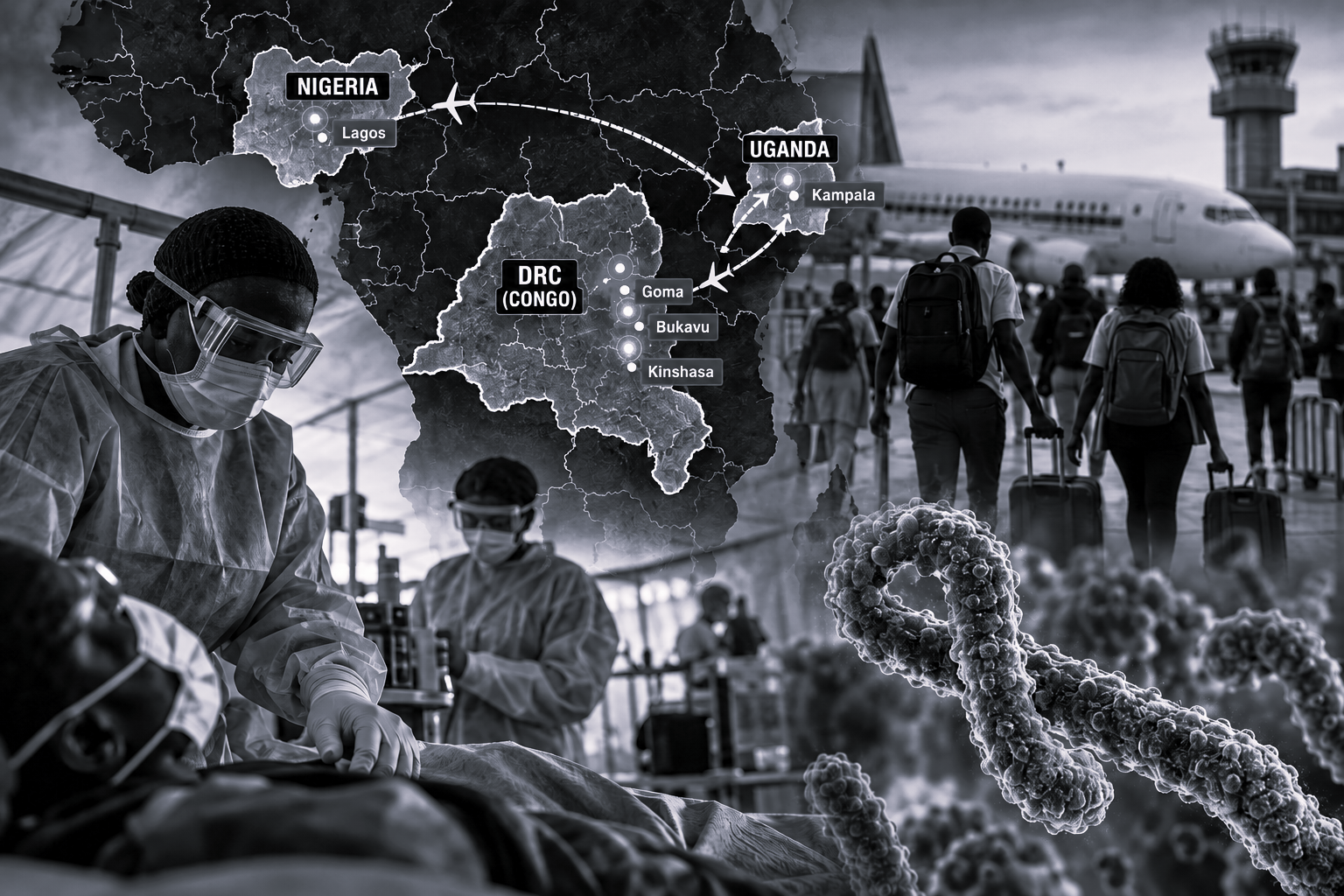
The deadly Ebola outbreak in the Democratic Republic of the Congo (DR Congo) is approaching 10,000 confirmed infections, with nearly 4,700 deaths reported and the virus spreading beyond the country to other parts of Africa. Health authorities are investigating a possible connection between the first Ebola patients detected in Nigeria and Kenya through Uganda’s Entebbe International Airport, raising concerns about cross-border surveillance, delayed diagnosis and the capacity of health systems to contain the rapidly expanding epidemic.
According to the European Centre for Disease Prevention and Control (ECDC), DR Congo recorded 9,704 confirmed cases and 4,687 deaths as of October 21, based on data through October 20. The outbreak has affected eight provinces and 66 health zones. Caused by the rare Bundibugyo virus, it surpassed 1,000 confirmed cases within 40 days of response activation, compared with approximately 235 days during the 2018 Ebola outbreak in Congo.
Nigeria confirmed its first case on October 20, involving a woman who developed symptoms on October 7, four days after arriving from Uganda. She sought medical attention in Abuja on October 11 and subsequently tested positive. Authorities initially identified 44 contacts for monitoring. However, her travel history remains disputed, with Ugandan officials suggesting she had visited Congo, while Africa CDC and WHO officials said there was no indication of such travel in the information available to them.
Kenya had reported nine confirmed cases, including one death, by October 22. The outbreak originated with a traveller returning from Congo through Uganda, followed by infections among relatives and healthcare workers. Investigators are examining whether the Nigerian and Kenyan patients crossed paths at Entebbe airport on October 3. The possible connection remains unconfirmed.
Uganda previously recorded 20 cases before its outbreak was declared over. France also reported an infected doctor returning from Congo; the patient recovered and was discharged in July.
The outbreak has been difficult to contain because of insecurity, population displacement, weak healthcare access and community mistrust in eastern Congo. Ebola spreads through direct contact with infected bodily fluids or contaminated materials. There is no licensed vaccine or specific treatment for Bundibugyo virus disease, making early diagnosis, supportive care and contact tracing essential.
The WHO declared a Public Health Emergency of International Concern on May 17, while Africa CDC has urged stronger regional coordination. The WHO advises against blanket travel and trade restrictions, favouring targeted surveillance and preparedness.
Meanwhile, officials have raised questions about approximately US$700 million in Ebola-related aid whose use has not been adequately accounted for, prompting calls for financial transparency. The concerns do not establish that the funds were stolen.
Health authorities are now prioritising contact tracing, airport surveillance and rapid detection. The Entebbe investigation could clarify the outbreak's cross-border spread, but Nigeria's source of infection remains unresolved.