
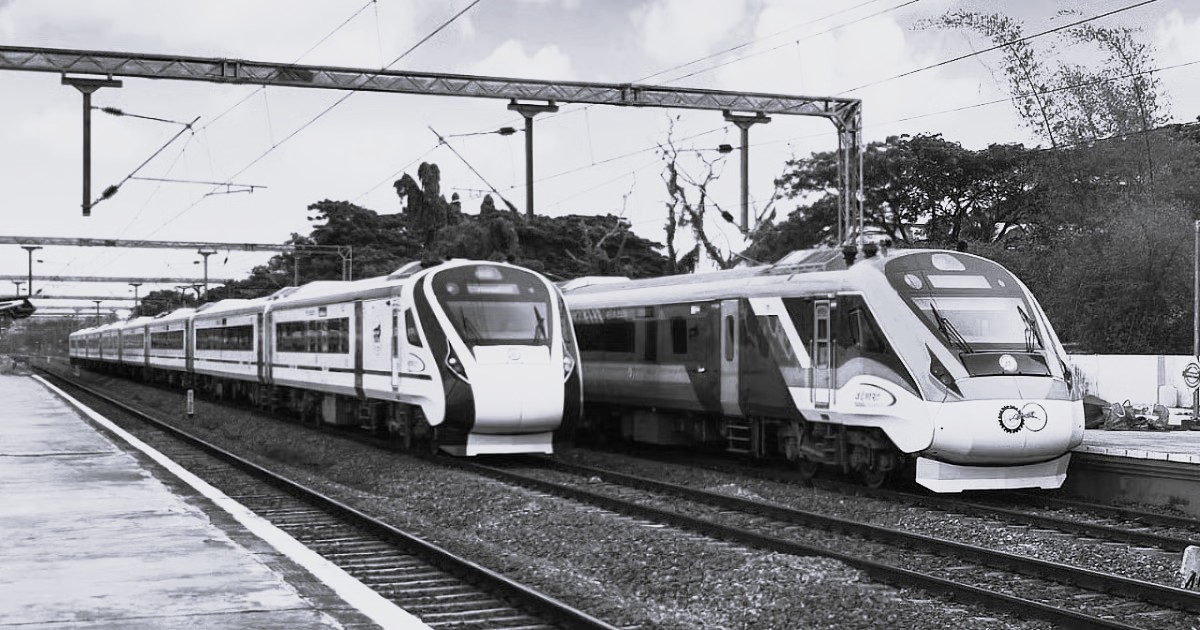
East Central Railway calls for dedicated cleaning teams on long-distance services
To enhance passenger comfort and cleanliness standards on Vande Bharat and other premium trains, the Ministry of Railways has initiated an inquiry into the financial implications of deploying adequate On-Board Housekeeping Service (OBHS) staff across different train variants. This move indicates a possible standardised policy for housekeeping deployment but only after assessing the cost burden on railway zones. OBHS refers to the cleaning and maintenance work done inside trains while they are running.
The ministry has asked the Northern Railway and East Central Railway (ECR) zones to share detailed estimates of the proposed OBHS staffing model. The information must include current practices on Vande Bharat trains as well as comparisons with other premium services like Rajdhani and Shatabdi Express trains.Vande Bharat currently has a better OBHS system compared to many other trains.
Ministry Seeks Financial Clarity
A communication dated November 20, 2025, was sent to general managers of both zones after they sought a standard deployment guideline for OBHS staff. The Finance Directorate, after discussion, asked for complete financial implications before further approval. The zones have been asked to submit their reports by November 25, 2025.
This step followed earlier proposals by Northern Railway and ECR in May 2025, which highlighted the need for dedicated housekeeping staff to maintain the growing service standards on flagship trains.
Northern Railway’s Proposal
In its letter dated May 9, 2025, Northern Railway stressed that Vande Bharat Express trains are among the most prestigious services of Indian Railways, with a strong focus on passenger satisfaction and cleanliness. Currently, it deploys one OBHS staff member for every two coaches in Vande Bharat trains.
However, the zone pointed out that there is no uniform or comprehensive policy for both chair car and sleeper variants. It recommended the following staffing pattern: One OBHS staff per two coaches for both chair car and sleeper variants, One linen attendant per coach for sleeper variants, One executive housekeeping staff per train for supervisory and coordination duties
According to the proposal, standardisation will improve consistency, optimise manpower usage, and reinforce the Railways’ commitment to providing a clean and comfortable travel environment.
East Central Railway’s Stand
The East Central Railway (ECR) wrote to the ministry on May 7, 2025, noting that its Vande Bharat, Namo Bharat and Amrit Bharat trains operate long daily runs up to 1,000 kilometres or 13 hours making regular cleaning essential. ECR emphasised that guidelines designed for normal trains are insufficient for these high-utilisation services.
The East Central Railway (ECR) has recommended different housekeeping deployment patterns for various premium train types, stating that a one-model-fits-all approach will not work due to varying travel durations and passenger loads.
According to the proposal, Vande Bharat and Namo Bharat trains which have high utilisation and long daily runs should have one janitor for every two coaches, supported by one executive housekeeping staff to oversee operations and coordination during the journey.
For Amrit Bharat trains, ECR suggested one janitor for every three coaches, with special attention to unreserved vestibule coaches, given the higher footfall and cleaning requirements in those areas. These trains would also require one executive housekeeping staff to manage cleanliness standards and monitor service delivery on board.
The zone stressed that staff should handle interior cleaning, washroom maintenance, garbage collection and disposal, and removal of passenger leftovers at regular intervals to maintain hygiene.
What Happens Next?
The Ministry of Railways will analyse the cost implications submitted by both zones before finalising a policy. If approved, this could lead to a uniform OBHS deployment model across premium trains improving housekeeping standards while ensuring cost-effectiveness.
A comprehensive policy could also serve as a benchmark for future sleeper variants of Vande Bharat trains, which are expected to expand service coverage in the coming years.
The proposal highlights a growing recognition within Indian Railways: that maintaining a high-quality travel experience requires not just modern trains but also sufficient manpower to keep them clean throughout the journey. The final decision will depend on how much it will cost to maintain those standards onboard India’s fastest-growing train network.