
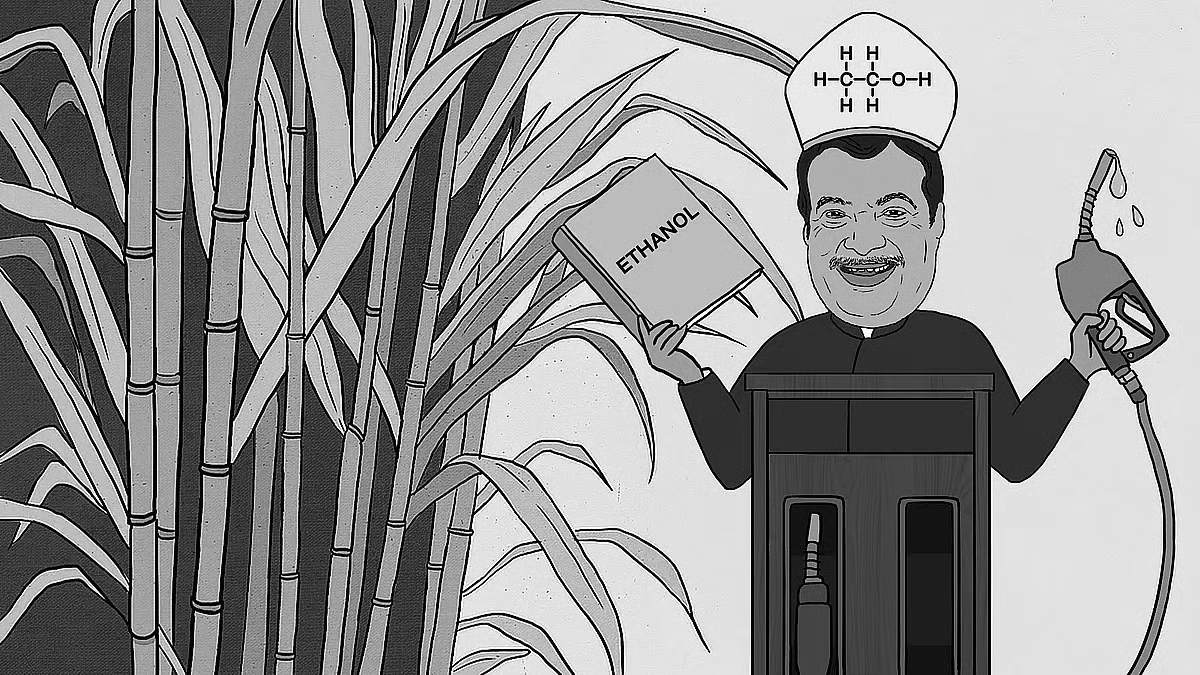
E20 petrol in India: Ambitious green push or policy misfire?
Union Minister for Road Transport and Highways Nitin Gadkari’s recent announcements on the nationwide rollout of 20% ethanol-blended petrol (E20) have sparked both enthusiasm and controversy. The government claims that E20 will reduce fuel costs, cut pollution, and empower farmers. However, experts and vehicle owners warn of potential pitfalls that could affect millions of Indian motorists.
Ethanol, an alcohol-based fuel derived from sugarcane or maize, has been blended with petrol in India for years. While E10 (10% ethanol) was gradually introduced around 2021–22, older vehicles, manufactured before E10 compatibility, experienced reduced mileage and, in some cases, engine damage. With the government targeting 20% blending by 2025, the sudden introduction of E20 fuel has raised serious concerns about engine compatibility. Extended use of E20 in vehicles not designed for it can cause leaking pipes, corrosion, and other mechanical issues. Insurance companies have reportedly denied claims for damages caused by E20, leaving many vehicle owners unprotected.
Gadkari has defended the policy, insisting that incidents of damage are isolated. Petroleum Minister Hardeep Singh Puri cited Brazil as a model, highlighting its long-standing ethanol program. However, Brazil’s approach differs substantially: the country began ethanol blending in the 1970s and offers a range of fuel options from E0 to E100, with 91% of vehicles designed as flex-fuel compatible. India, by contrast, currently mandates E20 without providing alternatives or proper labelling at fuel stations, affecting an estimated 75-80% of vehicles that are not ethanol-compatible.
Economic claims of E20 reducing petrol prices by 50% also face scrutiny. Ethanol production is water-intensive, requiring nearly 2,860 liters of water per liter, which may strain local resources. Moreover, ethanol costs more than domestically refined petrol, challenging the narrative of affordability. Early calculations suggest E20 may even lower fuel efficiency slightly, potentially increasing CO₂ emissions.
Adding to the controversy, CIAN Agro Industries, led by Gadkari’s son Nikhil Gadkari, has seen revenues surge from ₹17 crore to ₹510 crore in just a few years, coinciding with the push for ethanol blending. Other family-linked businesses have also reportedly benefited, raising concerns about conflicts of interest and transparency in policy implementation.
While the E20 initiative aligns with global trends toward renewable energy, India’s rapid rollout, without clear labeling, alternatives for older vehicles, or adequate infrastructure, could result in unintended consequences. For the public, the move risks vehicle damage, insurance disputes, and rising costs, while benefits appear to accrue primarily to select industries and politically connected stakeholders.
The promise of a green revolution in fuel is appealing, but without careful implementation and safeguards, India may find itself navigating a policy trap that tests both vehicles and public trust.