
E20 Fuel Row Escalates: Kejriwal Demands Petrol Choice, Announces March to PM Modi’s Residence
A political debate over E20 blended petrol intensified on Saturday after Aam Aadmi Party (AAP) national convenor Arvind Kejriwal demanded that consumers should have the option to choose between ethanol-blended fuel and conventional petrol at fuel stations.
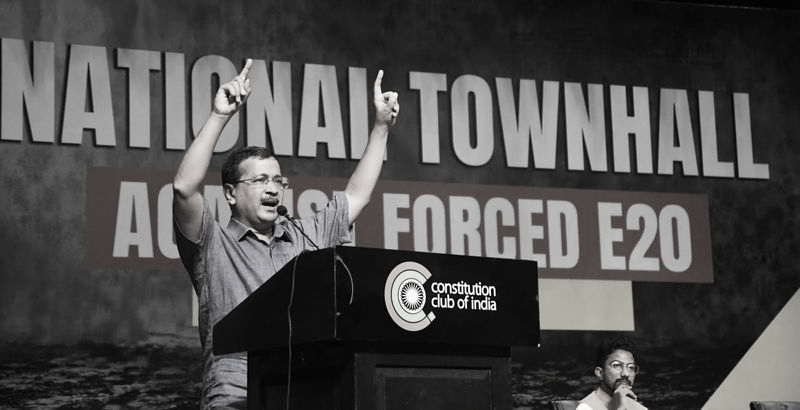
Addressing a town hall meeting on E20 fuel at the Constitution Club of India in New Delhi, Kejriwal announced that he would lead a march to Prime Minister Narendra Modi’s residence on August 4 to submit petitions highlighting concerns raised by vehicle owners regarding the use of E20 fuel.
Kejriwal said he would collect petitions from citizens at noon on Tuesday before proceeding towards Lok Kalyan Marg with a group of around 100 people. He urged the government to introduce a system where motorists can decide whether they want to purchase E20 petrol or regular petrol.
The former Delhi chief minister also demanded that E20 fuel should be priced lower than regular petrol and called for a reduction in overall petrol prices. He questioned the government’s claims that E20 fuel does not cause damage to vehicles and sought the release of the studies and reports used to support the assertion.
“The government says studies have shown that E20 does not harm vehicles. Those reports should be made public,” Kejriwal said while addressing the gathering.
During the meeting, vehicle owners and participants from different states shared their concerns and personal experiences related to E20 petrol, including issues they claimed to have faced after its usage.
The Centre has been promoting ethanol blending in petrol as part of its efforts to reduce dependence on crude oil imports, support farmers, and encourage cleaner fuel alternatives. However, the introduction of higher ethanol blending levels has triggered discussions among consumers and automobile users over vehicle compatibility, mileage, and long-term maintenance concerns.
The issue has now emerged as another point of political contention, with the AAP leader seeking greater transparency and consumer choice in fuel purchasing decisions.