
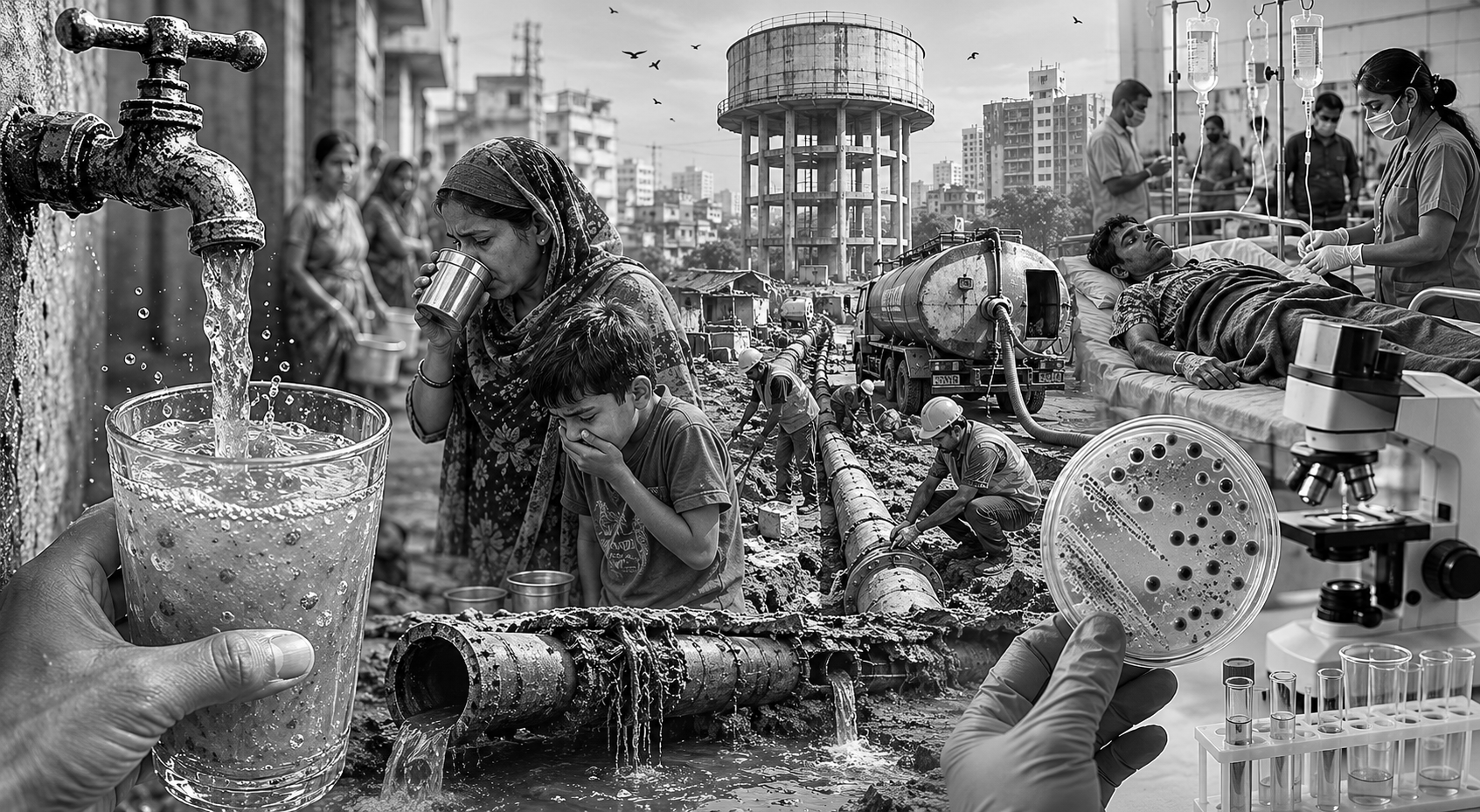
E. coli Outbreak in Indore Sparks National Debate on Urban Water Safety
The drinking water contamination crisis in Indore has triggered serious concerns over urban water safety , governance failures, and the hidden vulnerabilities beneath India’s cleanest city. What began as a local outbreak of vomiting and diarrhoea in Bhagirathpura has now evolved into a larger debate on ageing civic infrastructure, public health preparedness, and the sustainability of rapid urban development.
The controversy intensified after the Madhya Pradesh Congress Committee claimed that more than 90 per cent of nearly 300 water samples collected across the city were contaminated. State Congress president Jitu Patwari alleged the samples were tested through an independent agency following the Bhagirathpura outbreak and accused the ruling Bharatiya Janata Party of failing to ensure safe drinking water despite controlling the municipal corporation, state government, and Centre.
However, Indore Mayor Pushyamitra Bhargava rejected the allegations, accusing the opposition of creating panic and spreading misinformation about the city’s water quality. He challenged Patwari to a public debate on Indore’s water management system.
The issue became particularly sensitive because Indore has consistently ranked as India’s cleanest city under the Swachh Survekshan rankings. Experts say the outbreak exposed a major contradiction between visible sanitation achievements and neglected underground infrastructure such as ageing pipelines and sewage systems.
The crisis first surfaced in late 2025 when residents of Bhagirathpura complained about foul-smelling and discoloured tap water. Within days, hundreds developed severe gastrointestinal symptoms including vomiting, diarrhoea, dehydration, and fever. Laboratory tests later confirmed the presence of E. coli and other sewage-linked bacteria in drinking water samples.
According to official figures presented by the Madhya Pradesh government, at least 22 people died due to contaminated water, although local residents and opposition leaders claimed the toll was higher. More than 1,400 residents reportedly fell ill during the outbreak.
Investigations revealed that sewage likely entered drinking water pipelines through leakages near drainage lines and damaged underground networks. Reports indicated that several pipelines in older localities are between 30 and 50 years old and run dangerously close to sewage lines, significantly increasing contamination risks.
Following the outbreak, the state government launched emergency containment measures. Authorities conducted door-to-door health screenings covering nearly 40,000 residents, repaired damaged pipelines, intensified chlorination drives, and supplied emergency tanker water to affected areas. Contaminated sections of the city’s nearly 3,000-kilometre pipeline network were isolated and disinfected using shock chlorination to eliminate dangerous bacteria.
The crisis also triggered judicial and administrative scrutiny. A commission headed by former High Court judge Sushil Kumar Gupta is investigating the deaths and possible negligence by civic authorities.
Urban policy experts say the Indore episode reflects a wider national challenge. Rapid urbanisation, groundwater depletion, climate stress, and ageing civic systems are placing enormous pressure on water infrastructure across Indian cities. Specialists warn that unless cities invest in modern pipelines, real-time monitoring systems, wastewater treatment, and stronger public health coordination, similar contamination crises could become increasingly common in urban India.