
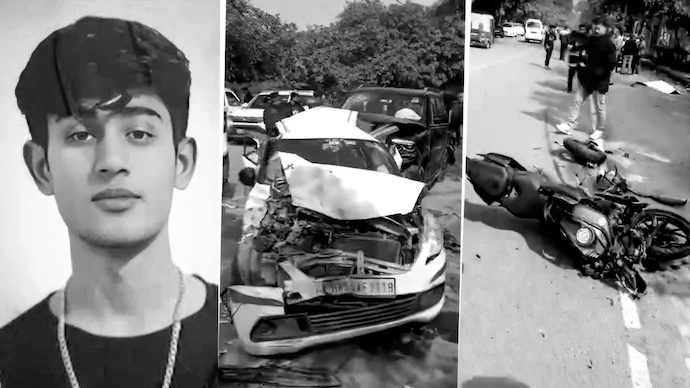
Dwarka SUV crash: Juvenile Board denies bail to 17-year-old accused
In a significant development in the Dwarka fatal crash case , the Juvenile Justice Board (JJB) has refused bail to a 17 year old accused who allegedly drove a speeding SUV that caused a deadly collision earlier this year. The board ruled that releasing the minor at this stage could expose him to physical and psychological dange r and potentially defeat the ends of justice.
The incident occurred on February 3 in Delhi’s Dwarka area , when the SUV allegedly being used to shoot a social media video rammed into a motorcycle and a taxi. The violent collision killed 23 year old Sahil and left a cab driver seriously injured, triggering shock and anger in the locality.
Police investigations found that the minor was behind the wheel of the SUV at the time of the crash.
While hearing the bail application, Presiding Officer Chitranshi Arora observed that releasing the accused could worsen the situation in the area. According to the Board, the accident had already sparked tensions within the community, raising concerns about public order and possible retaliation.
In its order, the Board stated that the premature release of the child in conflict with law could disturb public peace and undermine confidence in the justice system .
The order also stressed that the continued custody of the minor should not be seen as punishment. Instead, the Board described it as protective custody aimed at ensuring care, rehabilitation, counselling and psychological stability , which are central principles under the Juvenile Justice Act, 2015 .
The Board further noted that the current atmosphere in the locality creates a real risk of intimidation, retaliation or emotional harm if the minor were released.
Although the defence raised concerns about disruption to the minor’s education , the Board maintained that issues of safety, protection and rehabilitation must take priority when credible risks exist.
Reiterating that the “best interest of the child” remains the guiding principle under the Juvenile Justice Act, the Board concluded that keeping the accused in a structured environment would ensure access to education, counselling and medical care while the case proceeds.
Consequently, the Board held that granting bail at this stage would expose the minor to danger and defeat the broader goals of justice, and therefore rejected the bail plea.