
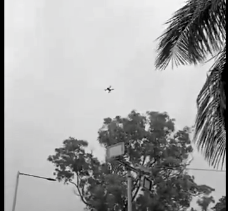
Drone Flying Over Silathoranam Exposes Major Security Chinks
A significant breach of security was reported in Tirumala on Friday after an unauthorized drone was sighted flying over the Silathoranam natural rock arch, a site of immense religious and geo-heritage importance. The incident has intensified the public outcry and renewed questions concerning the effectiveness of the security apparatus maintained by the Tirumala Tirupati Devasthanams (TTD). Devotees witnessing the unauthorized aerial activity expressed immediate anger and anxiety, with videos of the drone quickly being circulated online.
Prompt action was taken following the reports. The flying object was successfully traced and seized by TTD vigilance and Forest Department personnel. Two individuals, identified as Sulakshan Das and Arjun Das, were immediately detained at the site. Following preliminary inquiries, the pair were handed over to the local police department for criminal investigation and prosecution. It must be noted that the operation of any drone is strictly prohibited across Tirumala and other sensitive temple zones, a ban that has been in place since May 2025, owing to high-security concerns and adherence to the sacred Agama Shastras .
The critical point of contention currently being raised by security experts and the public is how the device was successfully smuggled onto the hill after bypassing the mandatory security checks at the Alipiri toll gate. The Alipiri checkpoint is the sole road entry to Tirumala and is heavily guarded by the Special Protection Force (SPF) and TTD vigilance teams. The recurring nature of these security lapses is widely believed to be attributed to two main factors: inadequate technology and human error.
It is speculated that the existing scanning equipment at Alipiri is primarily designed to detect metallic objects and explosives, meaning it is ill-equipped to identify smaller, non-metallic, or disassembled consumer drones, often made largely of plastic. Concurrently, the failure is being attributed to insufficient or cursory security checks performed by the personnel on duty, a possibility often highlighted due to the immense volume of pilgrims and vehicles processed daily. The TTD’s multi-crore annual expenditure on the SPF staff is thereby being placed under intense public scrutiny.
This latest incident is part of a persistent pattern of breaches, with similar high-profile cases having been reported previously, including the arrest of a YouTuber in April 2025 and a major probe launched in January 2023 over viral aerial footage of the temple complex. While the TTD has consistently maintained that swift legal action is taken against offenders to ensure deterrence, the continuing breaches underscore the challenge of enforcement. To counter this, the TTD Trust Board approved the deployment of advanced anti-drone technology (C-UAS) in May 2025. This sophisticated system, designed to detect and neutralize rogue drones through jamming and tracking mechanisms, is currently in the process of being implemented to secure the restricted airspace over the hill shrine comprehensively. A detailed inquiry has been ordered into the latest incident, and it has been affirmed that stern disciplinary action will be taken against any staff members found negligent in their duties.