
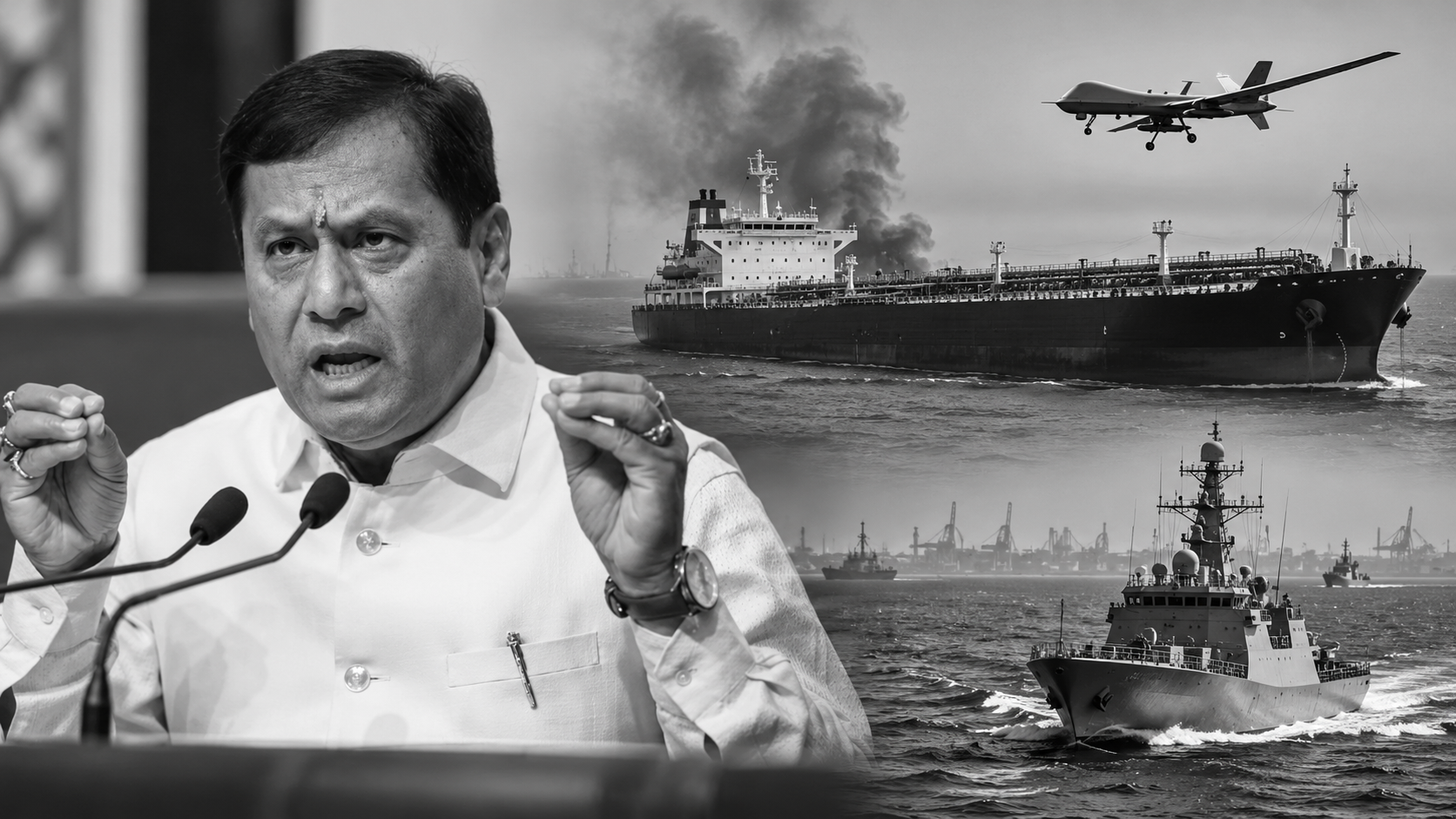
Drone Attack on Oil Tanker Near Sharjah Raises Maritime Security Concerns
A drone attack on a Panama-flagged crude oil tanker carrying 22 Indian nationals at Sharjah Anchorage in the United Arab Emirates (UAE) has intensified concerns over maritime security, the safety of Indian seafarers and the growing vulnerability of commercial shipping in conflict-affected waters. Union Minister for Ports, Shipping and Waterways Sarbananda Sonowal said all 22 Indian crew members aboard MT GEM NO. 2 were reported safe following the incident on October 9.
In a post on X, Sonowal said the government was continuously monitoring the situation and maintaining contact with the ship management company to ensure the crew's security. The attack comes amid escalating threats to merchant vessels in the Persian Gulf and Strait of Hormuz, where tankers have faced drone threats, attempted strikes and other security incidents.
According to Reuters, at least 12 attacks, attempted attacks and harassment incidents involving tankers were recorded between September 28 and October 5. The International Maritime Organization (IMO) listed 100 confirmed incidents across the Strait of Hormuz and the wider Middle East region as of October 9, highlighting the scale of maritime insecurity.
Other incidents have also endangered Indian seafarers. The tanker ON PEACE was damaged in the Strait of Hormuz on October 5, injuring 12 crew members. In June, three seafarers were killed in an attack on the Palau-flagged tanker SETTEBELLO near Oman. Separately, Russia rescued 23 Indian crew members from the Liberian-flagged tanker Aframax Rio after an unmanned-vessel attack sparked a fire off the Black Sea coast on October 6.
India has strengthened preparedness through Directorate General of Shipping Circular No. 08 of 2026, issued on February 28. It recommends voyage-specific risk assessments, security drills, testing Ship Security Alert Systems and timely incident reporting. Authorities are coordinating through the Indian Navy, the Information Fusion Centre–Indian Ocean Region and other agencies.
India and Liberia are also leading the Group of Friends on Safety and Security of Shipping and Seafarers, involving 25 countries, to improve international cooperation and protect civilian maritime workers.
The Strait of Hormuz remains a critical global oil and gas corridor. Disruptions can increase insurance and freight costs, delay energy shipments and create environmental risks. With all 22 crew members reported safe, authorities must establish the full circumstances of the attack, assess vessel damage and ensure continued protection of Indian seafarers.