
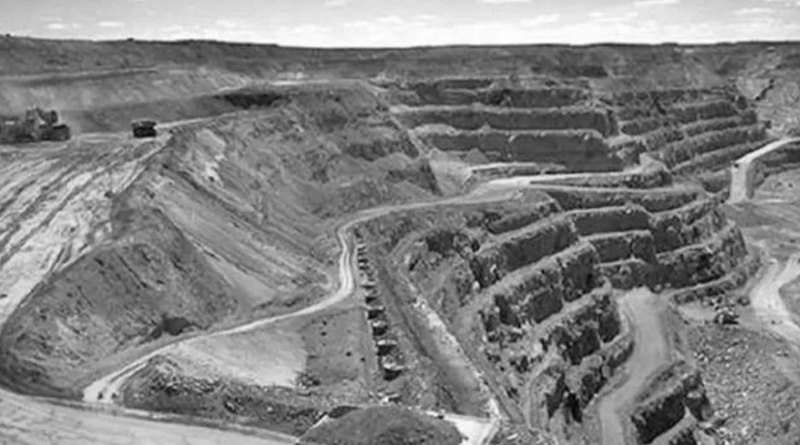
Drilling at Deccan Gold Mines critical mineral block in Chhattisgarh to begin in December
Drilling at Deccan Gold Mines Limited’s (DGML) critical mineral block in Chhattisgarh will commence in December 2025, marking a key step in India’s efforts to strengthen domestic production of strategic minerals essential for the clean energy, technology, and defence sectors.
Hanuma Prasad, Managing Director of DGML, said the company’s Balukona block in Chhattisgarh holds significant potential for multiple critical minerals, including nickel, copper, platinum, and palladium. “In Chhattisgarh, we have the Balukona block for nickel, copper, platinum, and palladium. Drilling will begin in December,” Prasad said. He added that the block is expected to yield around 10,000 tonnes of copper and 10,000 tonnes of nickel annually.
The Balukona block is among India’s key exploration sites for critical minerals, which are essential for high-tech manufacturing, electric vehicle (EV) batteries, renewable energy systems, and advanced defence technologies. In addition to nickel and copper, preliminary findings have also indicated the presence of platinum-group elements and chromium, all classified as strategic minerals due to their industrial and defence significance.
Deccan Gold Mines Limited, India’s only listed gold exploration company, also operates the Jonagiri Gold Project in Kurnool district of Andhra Pradesh. The project, developed by DGML’s associate company Geomysore Services (India) Private Limited, is the country’s first large-scale private gold mine to be commissioned in over 80 years.
“Jonagiri is fully commissioned. It will produce about 450 to 500 kilos of gold in the first year and reach 750 kilos at peak,” Prasad said. The project, located near Jonnagiri, Erragudi, and Pagadirayi villages in Tuggali Mandal, has received all necessary environmental and operational clearances. The mine operates through an open-pit model with a 1,000-tonne-per-day processing facility and is expected to contribute to reducing India’s dependence on imported gold, which exceeds 1,000 tonnes annually.
Beyond domestic projects, DGML is also expanding its footprint in the global rare-earth and critical mineral space. The company has three major overseas projects in Kyrgyzstan, Finland, and Mozambique. Its Altin Tor Gold Project in Kyrgyzstan, in which DGML holds a 60 per cent stake, currently produces 350 to 400 kilos of gold annually and is expected to reach 700 to 750 kilos in two to three years.
In Finland, DGML plans to begin operations by next summer, setting up a 1,000-tonne processing facility projected to produce around one tonne of gold annually for at least five years. The investment in the Finland project is estimated at around USD 40 million.
In Mozambique, DGML is undertaking a strategic lithium mining venture aimed at supporting India’s electric vehicle ecosystem. The project is expected to produce about 200 tonnes of lithium concentrate daily, with a processing plant scheduled for completion next year. The investment in Mozambique is valued between USD 30 million and USD 40 million. “We will bring the lithium concentrate to India,” Prasad said.
The company is also conducting due diligence for rare-earth metal assets in Europe and southern Africa and expects to finalise details within a month.
Prasad, who also serves on the executive committee of the National Mineral Exploration Trust (NMET), said the Indian government’s National Critical Mineral Mission (NCMM) is playing a vital role in driving exploration and development. The NCMM, launched in 2025, seeks to ensure a stable supply of critical minerals required for the energy transition, technology manufacturing, and defence applications. The mission aims to strengthen India’s mineral value chains through exploration, mining, and processing, while reducing import dependency through domestic production, international asset acquisition, and research and development.
“Exploration is the only solution to develop mines in this country. The government’s efforts are showing results,” Prasad said, while cautioning that auction premiums as high as 60 to 70 per cent may not be financially sustainable for private miners.
India currently imports nearly ₹70,000 crore worth of rare and critical minerals annually. “Whatever we supply may be small, but it’s a first step,” Prasad said.