
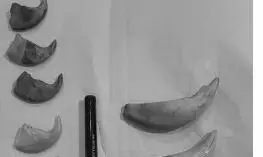
DRI seizes Tiger nails, canine teeth from two traffickers in Hyderabad
The Directorate of Revenue Intelligence (DRI) on Tuesday seized seven tiger nails and three tiger canine teeth from two traffickers in Nampally, Hyderabad, in a major crackdown against illegal wildlife trade.
Acting on specific information about traffickers attempting to sell tiger parts in the grey market, the Hyderabad Zonal Unit of the DRI executed a swift and coordinated operation on February 9. During questioning, one of the suspects produced a transparent zip-lock pouch from his backpack, which was found to contain seven tiger nails and three canine teeth.
The seized wildlife articles, along with the packing materials, backpack, and mobile phones used by the traffickers, were handed over to Telangana State Forest officials for further investigation under the Wildlife (Protection) Act, 1972 .
Tigers, classified as an endangered species, are often targeted for their body parts, which are in demand for traditional medicine, luxury items, jewelry, and superstition-related purposes . The DRI’s action highlights India’s ongoing efforts to combat wildlife trafficking and protect endangered species.
Wildlife trafficking in India is fueled by both domestic and international demand. Apart from tiger parts, other commonly trafficked animals include pangolins, rhinos, exotic birds, and reptiles , often sold illegally for medicinal use, ornaments, pets, or ritual purposes . According to the National Wildlife Crime Control Bureau (NWCCB) , hundreds of wildlife crime cases are recorded annually, with seizures of ivory, tiger parts, skins, and other wildlife articles becoming increasingly common.
India’s legal framework provides robust protection against such crimes. The Wildlife (Protection) Act, 1972 , along with the Environment Protection Act, 1986 , Indian Penal Code provisions , and international agreements like CITES , criminalize hunting, trading, and possession of endangered species, with penalties including imprisonment of up to seven years and heavy fines.
Authorities say that despite strong laws, wildlife trafficking persists due to high demand, making operations like the recent DRI seizure crucial in the fight against the illegal wildlife trade.