
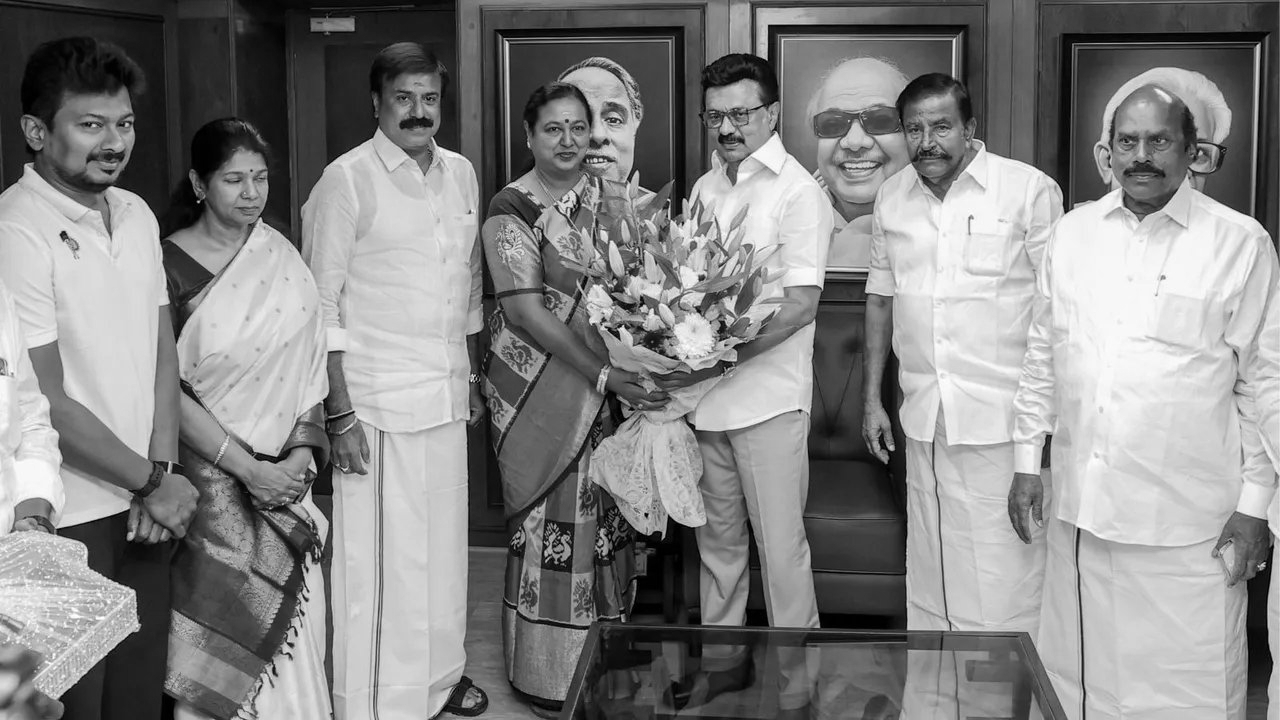
DMDK Joins DMK Alliance Ahead of Tamil Nadu Polls, Reshaping Political Equations
The Desiya Murpokku Dravida Kazhagam (DMDK) has formally joined the DMK-led Secular Progressive Alliance (SPA) ahead of the 2026 Tamil Nadu Assembly elections, ending weeks of speculation and marking a notable shift in the state’s evolving political alignments. The pact was sealed in Chennai after DMDK General Secretary Premalatha Vijayakanth met Chief Minister and DMK president M. K. Stalin at Anna Arivalayam, signalling the party’s entry into the ruling coalition’s electoral front.
Welcoming the development, Stalin described the alliance as a continuation of the state’s progressive and inclusive political tradition. He invoked the legacy of DMDK founder Captain Vijayakanth and DMK patriarch M. Karunanidhi , framing the partnership as part of a broader secular, progressive Dravidian alliance committed to safeguarding Tamil Nadu’s social justice model. Emphasising the continuation of the “Dravidian model” of governance, he said the partnership would contribute to stability, development, and welfare-driven growth.
Founded in 2005 by actor-turned-politician Vijayakanth, the DMDK emerged as an alternative Dravidian force positioned outside the traditional DMK-AIADMK binary. The party rose to prominence in 2011 when it allied with the AIADMK and Vijayakanth became Leader of the Opposition. However, subsequent electoral setbacks and shifting political currents led to fluctuating alliances — including partnerships with TTV Dhinakaran’s AMMK in 2021 and the AIADMK-led front in the 2024 Lok Sabha elections. Its decision to align with the DMK for the first time underscores a pragmatic recalibration amid changing political equations.
Strategically, the move strengthens the DMK-led alliance, which already includes national and regional partners such as Congress and Left parties, by expanding its social reach and regional appeal. Political observers note that the DMDK retains a loyal vote base in select constituencies, particularly among Vijayakanth supporters, which could prove decisive in closely contested seats. The alliance also signals an effort to consolidate anti-opposition votes and counter emerging political challengers competing for youth and regional support.