
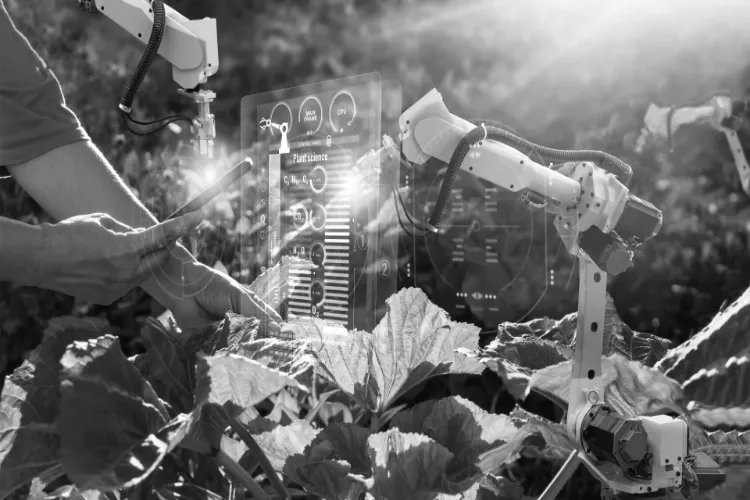
Digital revolution hits the fields
Researchers from the National Institute of Technology (NIT) Rourkela and the Azerbaijan State University of Economics in Turkey have examined how digital technologies and renewable energy can collectively boost agricultural productivity across 27 developing countries, including India.
Published in the journal Technology Analysis and Strategic Management , the study highlights the growing influence of internet usage, mobile connectivity, renewable-energy adoption, agricultural land usage and fertiliser consumption on food production systems in rapidly evolving global conditions.
“In today’s technology-driven environment, digital innovations are reshaping how we communicate, work and even farm,” said Narayan Sethi, Professor at NIT Rourkela. He noted that access to the internet enables farmers to check market prices, compare input costs and learn sustainable techniques, thereby improving transparency and decision-making.
The study also underscores the role of renewable energy in addressing long-standing rural challenges. “Solar-powered irrigation is helping smallholder farmers manage unreliable power supply and adapt better to climate pressures,” Sethi added.
However, the researchers caution that while internet access, mobile phones and renewable energy each positively impact agriculture, their combined influence may turn negative if rural regions continue to face unreliable electricity, poor network quality and low digital literacy.
To overcome such barriers, the study calls for targeted government interventions. Increasing investments in ICT infrastructure, expanding digital-literacy programmes, and offering credit support to small and medium farm holders could significantly enhance agricultural outcomes. Policies promoting subsidised internet and mobile services as well as higher adoption of renewable energy for irrigation and cold storage will be key to scaling sustainable production.
“Integrating renewable energy with digital tools can ensure food security, improve economic opportunities and support environmental sustainability,” said Litu Sethi, research scholar at NIT Rourkela.
The research is based on agriculture-related data from 2000 to 2021 across countries in Asia, Africa and Latin America where agriculture continues to support large populations and remains vulnerable to climate change.