
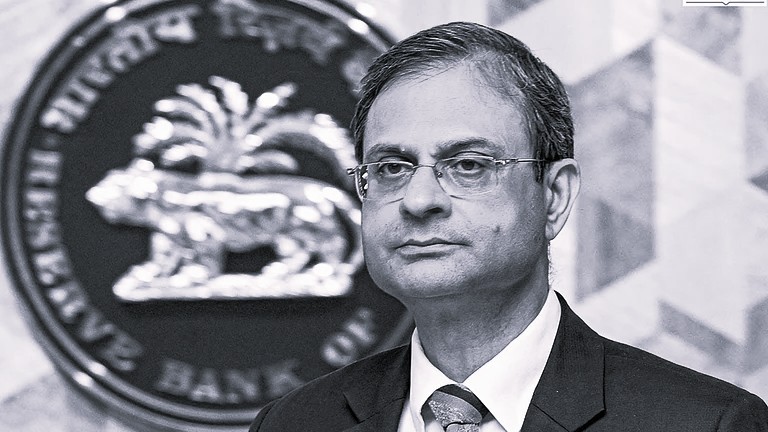
Digital innovations must serve consumers: RBI Governor
The Reserve Bank of India (RBI) Governor on Friday emphasized that digitalisation and financial innovations must prioritize fair outcomes for consumers , ensuring that customer interests remain at the core of a resilient financial system.
Speaking at the Third Annual Global Conference of the College of Supervisors in Mumbai , Governor Malhotra said, “Protecting customers’ interest is not just a priority, it has to become the cornerstone of a sustainable and resilient financial system.” He noted that digital channels enhance financial inclusion and convenience, but without proper safeguards, they can lead to opaque pricing, weak disclosures, and inappropriate recovery practices.
A key concern, he added, is the rising threat of digital frauds . “Banks and other regulated entities must continue to strengthen their tools, techniques, and processes to prevent and tackle digital frauds. At the same time, we need to collaborate to build analytics and tools to detect mule accounts and suspicious transactions proactively,” the governor said. For example, the Mule Hunter AI , developed by the RBI Innovation Hub , is designed to identify and flag suspicious accounts in real time, helping banks and regulators take pre-emptive action against potential frauds.
Governor Malhotra also highlighted the RBI’s efforts to improve data reporting and quality. Platforms such as CIMS (Central Information Management System) and DAKSH (Data Analytics and Knowledge Sharing Hub), along with the recently introduced Supervisory Data Quality Index (SDQI), have enhanced supervisory capabilities while reducing the burden on regulated entities. “I am happy to note that the quality of data has improved, and I am confident we will continue to collaborate to improve the system further,” he added.
On leveraging data more effectively, the governor suggested that the Department of Supervision could develop stronger analytics and supervisory dashboards to support continuous off-site monitoring and early risk detection. “Our goal should be to make supervision more off-site and near real-time rather than periodic. This will increasingly involve SupTech (Supervisory Technology) and AI (Artificial Intelligence) -enabled tools, while judgment and accountability remain firmly with supervisors,” he said.
The governor’s remarks underscore the RBI’s focus on balancing rapid technological advancement with consumer protection, data-driven supervision, and robust fraud prevention.